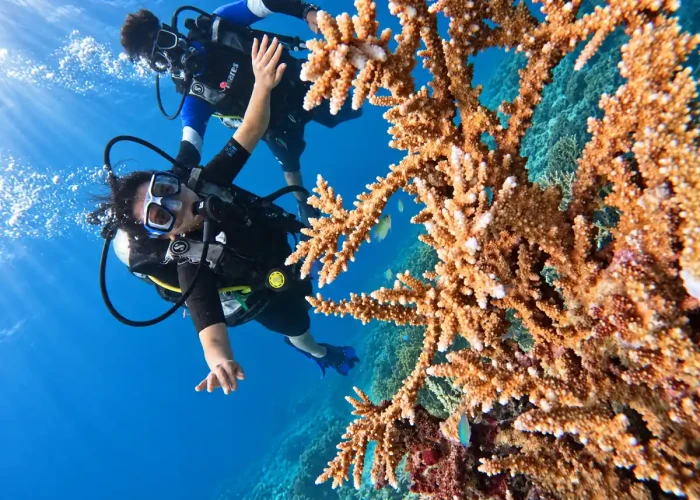
The real difference between a shore dive and a boat dive in Andaman is simple. A shore dive means walking into the sea from a beach, and it is the best choice for first-timers and non-swimmers: ₹3,500, about two hours in total with 30 to 40 minutes underwater. A boat dive takes you to deeper reefs with bigger fish: roughly ₹4,000 to ₹7,500, inclusive of GST, about half a day in total for the same 30 to 40 minutes underwater. Both are safe for beginners and non-swimmers, always with a 1:1 instructor. The shore is the calmest start, and the boat suits first-timers who want a little more adventure, at easier sites like Tribe Gate, Red Pillar, Lighthouse, Juvis, The Slope, Turtle Beach and Aquarium.
We get this question on WhatsApp almost every day, usually from someone who has already read five pages that end with “both are great”. That answer helps nobody. I have watched hundreds of people make this exact choice at our counter, so let me give you the version I give them, with real prices and the honest trade-offs.
What a shore dive actually looks like
A shore dive starts on the sand: you gear up, walk into the water, and the whole dive happens right off the beach. No boat anywhere in the plan.
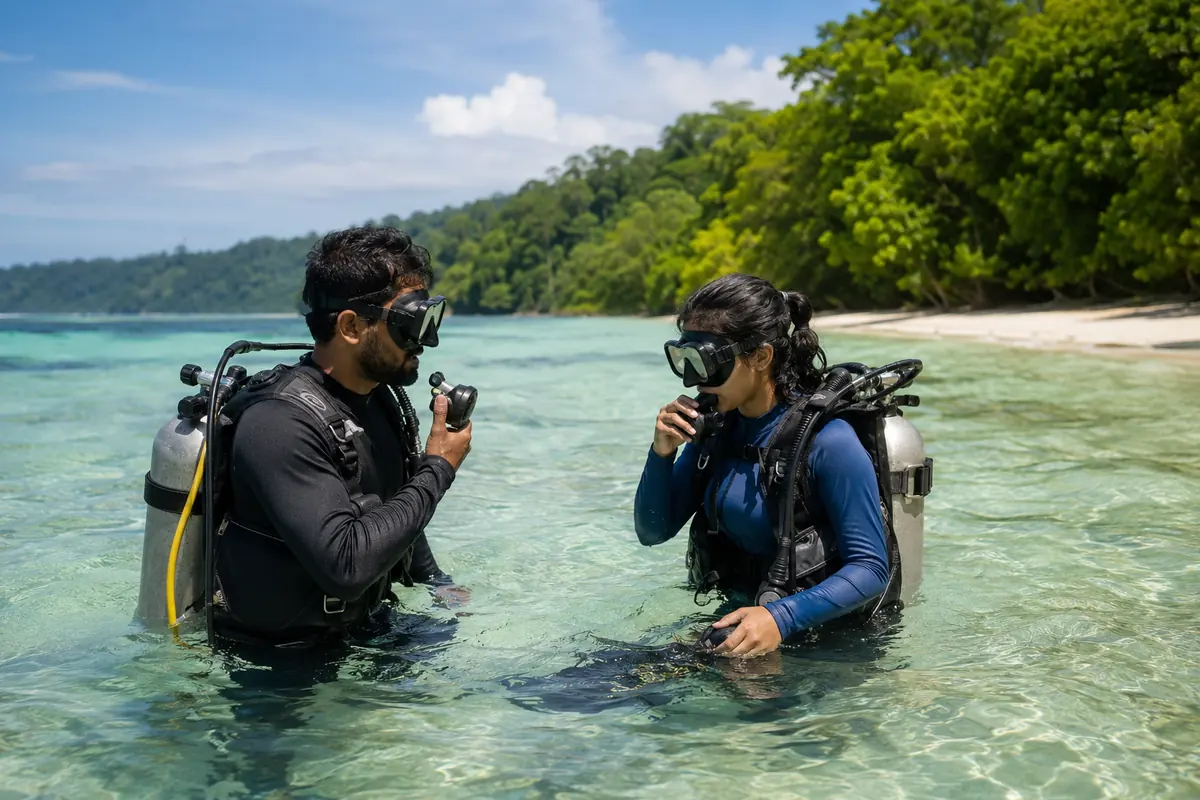
At Nemo Reef in Havelock, where most shore dives in the Andamans happen, you stand chest-deep on a sandy bottom while your instructor teaches you the basics. Breathing through the regulator. Clearing your mask. Popping your ears. Your feet can touch the bottom the entire time you are learning, and for a nervous first-timer that one fact does more than any pep talk.
When you are ready, and only when you are ready, you follow the gentle slope down. The reef starts at about 2 meters and eases down to 12, which is the legal limit for uncertified divers anyway. Door to door, with paperwork, training and a 30 to 40 minute dive, you are done in about two and a half hours. Back at your resort for lunch.
One more thing people forget: no boat means no seasickness. If you are the type who goes green on a bus, this matters more than you think.
What a boat dive actually looks like
A boat dive means riding out to a reef you cannot reach from land, then rolling backwards off the side into water too deep to stand in.
That last sentence scares people more than the actual moment does. You roll in wearing a jacket that floats you, you hold a line, and you go down at your own pace with your instructor right there. Most of our boat sites are about ten minutes from Havelock, so the ride is often shorter than the briefing. The far sites take 40 minutes or more.
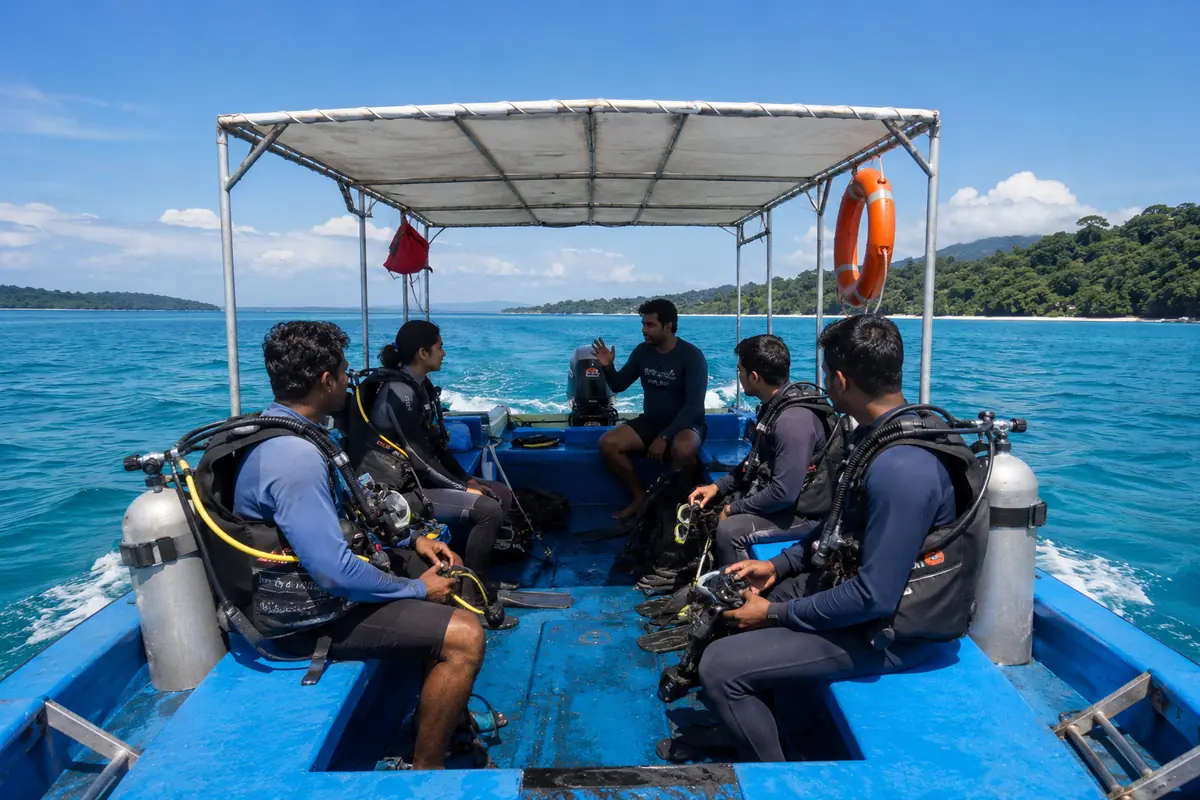
The thing that changes is the descent. For a moment you cannot see the bottom, just blue in every direction, and on a good day out there the visibility runs 15 to 25 meters. Certified divers chase that feeling. First-timers sometimes need a minute to like it, and both reactions are normal.
Plan half a day. With loading, the ride out, the dive and the ride back, a single boat dive in Havelock takes around three hours for 30 to 40 minutes underwater, and a two-dive morning for certified divers runs four to five.
The reefs are genuinely different
Shore and boat dives do not show you more or less of the same reef. They show you two different reefs.
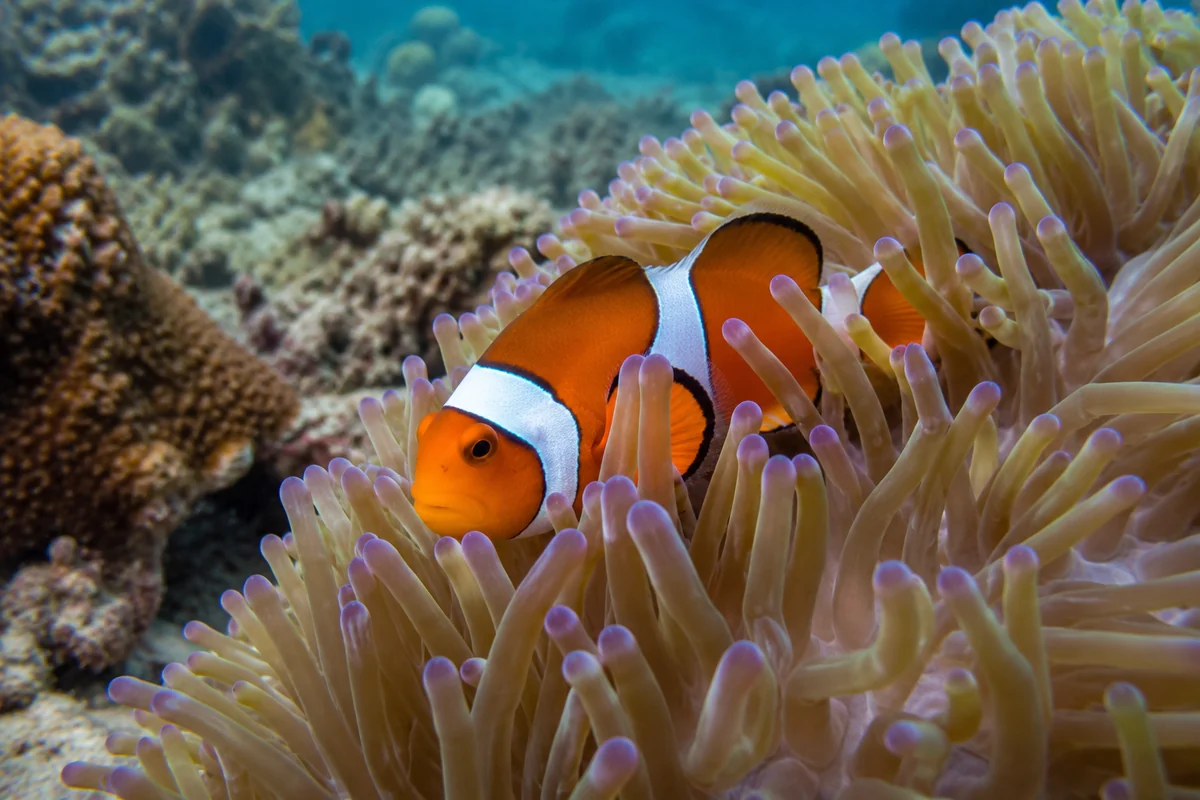
The shallows at Nemo Reef belong to the small, territorial characters. Clownfish charging out to defend an anemone from a diver forty times their size. Parrotfish you hear scraping coral before you see them. Butterflyfish, damselfish, sometimes an octopus that clearly wants you gone. It is slow, close-up diving, which is why people who like photographing small things love it.
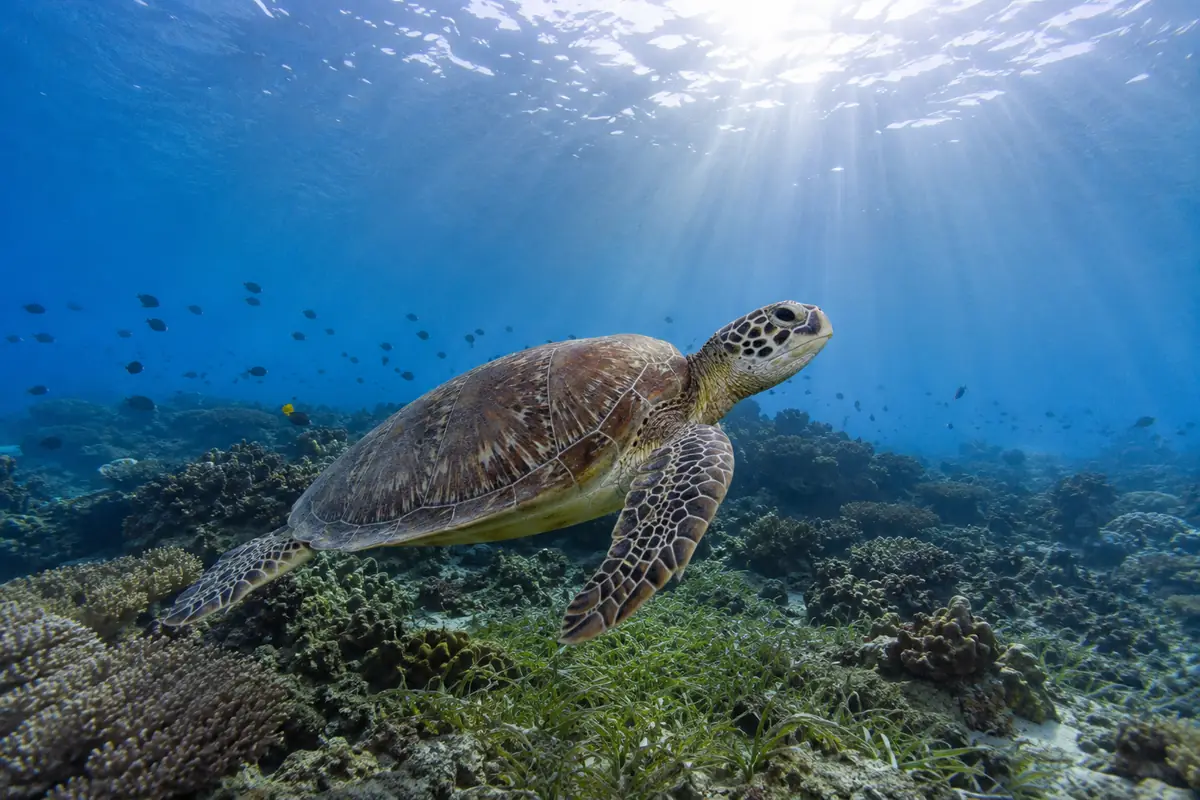
The boat sites are where the water opens up. Turtle Beach has seagrass, which is turtle food, so green and hawksbill turtles feed there often. Red Pillar is a soft coral garden with fusiliers streaming through it. And the deep sites (Jackson’s Bar, Dixon’s Pinnacle, Johnny’s Gorge) are a different sport: trevally hunting in packs, barracuda stacked in the current, rays resting on the sand, on a good day a reef shark passing through. Nobody can promise you a specific animal, and anyone who does is overselling. But the big stuff lives out there, not off the beach.
Cost and time, the honest version
A shore try dive costs roughly half of what the popular boat sites charge, and the gap is structural, not a trick. In Havelock a shore dive at Nemo Beach is ₹3,500. Boat dives run ₹4,000 to ₹7,500 depending on the site. Our prices are inclusive of GST, so the number you see is the number you pay. Many other centres still quote before GST, so always ask them for the final figure.
The boat price carries fuel, a captain, a crew and boat maintenance. A beach entry needs none of that. The extra money is buying you access to reefs you cannot walk to.
Two tips on money. If you are certified, ask about multi-dive packages, because the per-dive rate drops sharply once you commit to a few. And book directly with a dive centre (any dive centre, not only ours) instead of a hotel desk or an aggregator app. The middlemen add commission and you get nothing for it.
Where in the Andamans you can do each
Havelock does both properly, which is why the dive industry lives here. Shore dives at Nemo Reef, easy boat reefs, deep pinnacles for advanced divers, all a short boat ride away.
North Bay, near Port Blair, is where day-trippers do quick, cheap shore dives. I will be straight with you: it is convenient and it is crowded. On busy days the sand gets kicked up and visibility drops to a few meters. If Port Blair is all the time you have, take it. If you can get to Havelock, wait.
Neil Island is quieter, mostly boat diving, with calm shore entries at Bharatpur Beach near the jetty. The seagrass beds around Neil are also one of the few places in India where divers sometimes cross paths with a dugong between February and May. Sometimes. I am not promising you a sea cow. (We compared the two islands in detail in our Havelock vs Neil guide.)
And then there is Barren Island, an active volcano about 135 km out, with black rock walls and visibility that can touch 30 to 40 meters. That is a full-day boat expedition for experienced, certified divers with logged dives behind them. The most serious diving in India, and not a beginner trip.
So which one should you pick?
If you have never dived, if you are nervous, or if you cannot swim, take the shore dive. It is the gentlest first breath underwater you will find in India.
If you are comfortable in the water and want your first dive to feel bigger, a boat try dive works too. Same 12 meter limit, same instructor beside you the whole time. You just reach the reef by sea instead of by sand.
If you are certified, take the boat. That is what the card in your wallet is for. Our fun dives run to the boat reefs daily in season.
And if you have four days, think about doing it properly with the RAID Open Water course. You start shallow, finish with open water dives from the boat, and fly home certified to 18 meters. ₹29,000, inclusive of GST, and honestly the best value path if diving is the point of your trip.
Book earlier than you think you need to
The Andaman administration tightened diving rules in 2026, and the practical effect on you is fewer slots. Try dives now run one instructor to one diver. Uncertified divers stay above 12 meters. Every instructor is capped at four dives a day. And dive boats tie to fixed mooring buoys instead of dropping anchor on the reef, a newer rule I am glad exists. I support all of it, and it also means walk-in diving in peak season (October to May) has mostly ended. Message your dive centre with your travel dates before you book ferries, not after.
One more rule that surprises people: leave at least 18 to 24 hours between your last dive and your flight. Plan your dives at the start of your Havelock stay, not on the morning of your flight home.
Questions I get asked about this choice
Is a shore dive safer than a boat dive?
For a beginner the shore dive is gentler rather than safer. Both run under the same rules, one instructor per try diver and a 12 meter cap. The difference is that on a shore dive you can stand up during training, there is no jump into deep water, and there is no seasickness. That is why we point nervous first-timers to the sand.
Can non-swimmers do a boat dive in Andaman?
Yes, the rules allow it, and your instructor stays with you one on one. In practice, though, non-swimmers relax much faster when they can feel the sand under their feet during training, so I recommend the shore version for your first ever dive. We wrote a full guide on scuba diving for non-swimmers if that is you.
Which is better for seeing turtles?
Boat dives, usually. Turtle Beach has seagrass meadows, which is what turtles come to eat, so sightings there are common. At Nemo Reef a turtle passes through sometimes. No dive centre can promise either, whatever the brochure says. If you are picking between the two most popular boat sites, we compared Tribe Gate vs Turtle Beach in detail.
Do shore and boat dives run in the same season?
October to May is prime for both. The gap shows in the monsoon months: Nemo Reef sits in a protected bay, so shore dives keep running through most of the year, while boat sites depend on the wind and swell that day.
Can I do both on one trip?
Easily, and plenty of people do exactly that. A common pattern is a shore dive on day one to get comfortable, then a boat dive on day two once you know you love it. If you have four or more days, that second dive often turns into an Open Water course instead.
Still torn?
Message us on WhatsApp with two things, whether you can swim and how many days you have in Havelock, and we will tell you in one reply which dive fits. Book your dives before you lock your ferries, and keep your last dive at least a day before your flight. The rest is just showing up. The ocean handles the good parts.