For most divers, Havelock is the better base for scuba diving in the Andamans. It has more dive sites, more dive centres, the deep pinnacles with the sharks and the big fish, and the calm, shallow reefs where you do your first dive or your course. Neil Island is the better pick if you are after macro photography, quiet reefs, a lower bill, or a real chance at a dugong. If you have a week, do not choose. Dive both.
I should tell you something before you read another line. My dive centre is on Havelock. So when I say Havelock suits most people, you have every right to raise an eyebrow. That is exactly why I am going to be straight about everything Neil does better, because for some of you Neil is the right island, and I would rather you have a good trip than book the wrong one from me.
People ask me this almost every week, usually over WhatsApp while they are still booking flights. Havelock or Neil. The honest answer comes down to three things: how experienced you are, what you actually want to see down there, and how many days you have. Let me walk you through all of it.
How close are these two islands, really?
Closer than people expect. Neil and Havelock sit about 36 to 40 kilometres apart by sea, in the same little cluster called Ritchie’s Archipelago. The ferry between them takes 45 minutes to an hour. So you are not choosing between two different oceans. You are choosing between two moods of the same one.
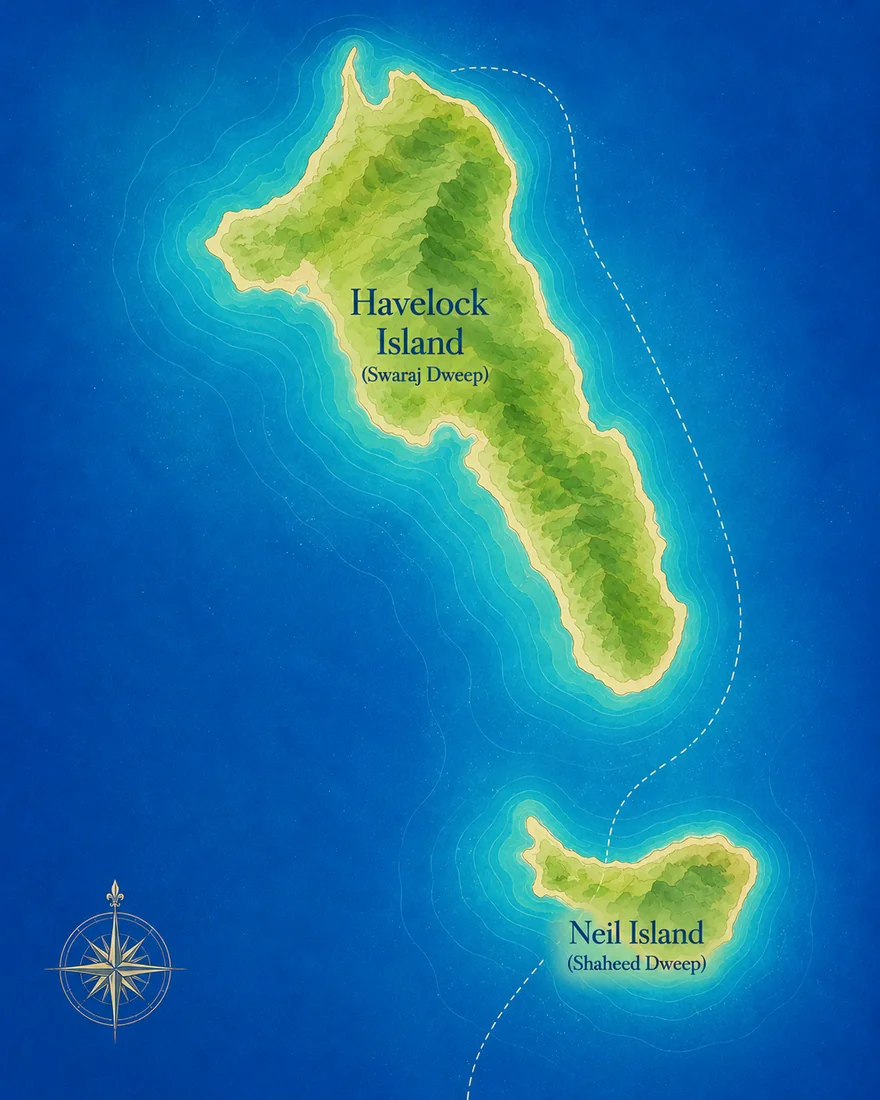
They share the season, too. Diving runs roughly October to May, with the best water from December to April. The sea stays around 27 to 30 degrees all year, so a thin 3 mm wetsuit or even just a rash guard is plenty. On a good day visibility runs 15 to 25 metres, and at the deep offshore sites it can open up past 30.
In the monsoon, June to September, most of the serious diving shuts down on both islands because crossing open water gets rough. Neil feels it more than Havelock, because it has fewer boats and sits a little more exposed to the swell.
What scuba diving in Havelock is actually like
Havelock is the busy one, and that is its strength. People call it the scuba capital of India, and the reason is plain: more dive sites, more centres, more boats heading out every morning. If one site is blown out by wind, there is always another in calm water. That matters when you have flown a long way and have only three or four days.
For your first ever dive, this is where you want to be. Nemo Reef, just off Beach No. 2, is about as gentle as the ocean gets. Ten, twelve metres, no real current, clownfish that dart out to bump your mask if you drift too near their anemone. It is where we run most Try Scuba dives and Open Water training. Tribe Gate and Red Pillar are the same easy, slow, pretty kind of diving. If you want the full rundown of where to start, I wrote a separate piece on the best places to scuba dive in Havelock by experience level.
Then there is the other end of the scale. About 18 kilometres offshore sit three deep sites the local instructors call the Holy Trinity: Dixon’s Pinnacle, Johnny’s Gorge, and Jackson’s Bar. These are not beginner dives. You need an Advanced card, decent buoyancy, and you have to be comfortable with current. But this is where Havelock earns its name.
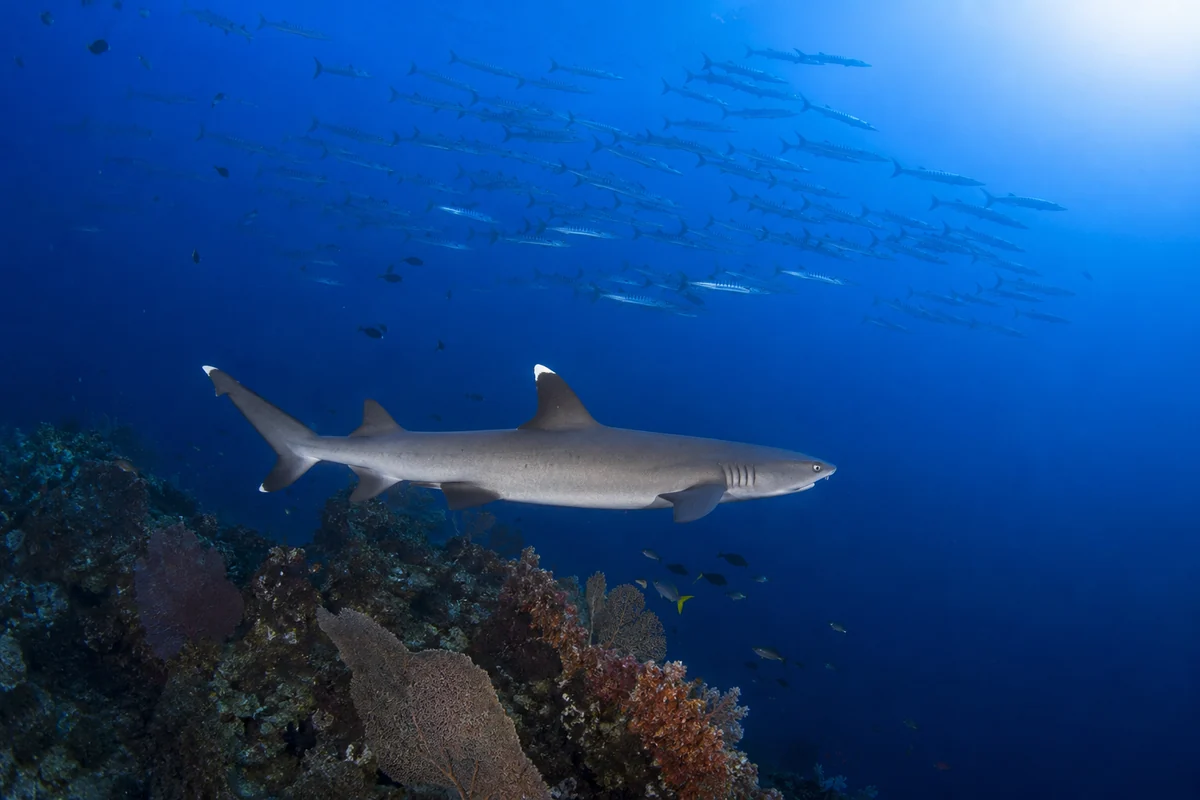
Johnny’s Gorge has a resident group of white-tip reef sharks and walls of barracuda and snapper hanging in the blue. Dixon’s is a cleaning station, so the big fish line up to get picked clean: Napoleon wrasse, giant trevally, and in season the chance of a manta ray or even a whale shark passing through. Nobody can promise you any one animal. But the odds here are about as good as they get in the Andamans, and certified divers can join these as fun dives without doing a course.
There is plenty in between, too. The Wall drops from about 10 metres to 55, draped in sea fans. Broken Ledge and Pilot Reef for turtles, rays, and the odd leopard shark resting on the sand. And for the wreck people, the SS Inchkeith, a cargo ship that went down in 1950, now split in two and home to groupers and lobster. So Havelock gives you the widest range there is: the calmest possible first dive and the most exciting advanced dives, on one island.
What scuba diving in Neil Island is actually like
Neil is the quiet one, and that is the whole point. It is small, about 18 square kilometres, the kind of island you can cycle across in a couple of hours. Far fewer dive operators, far fewer boats. On a normal day you reach a site and have the whole reef to yourselves. After a busy Havelock morning, that emptiness is its own kind of luxury.
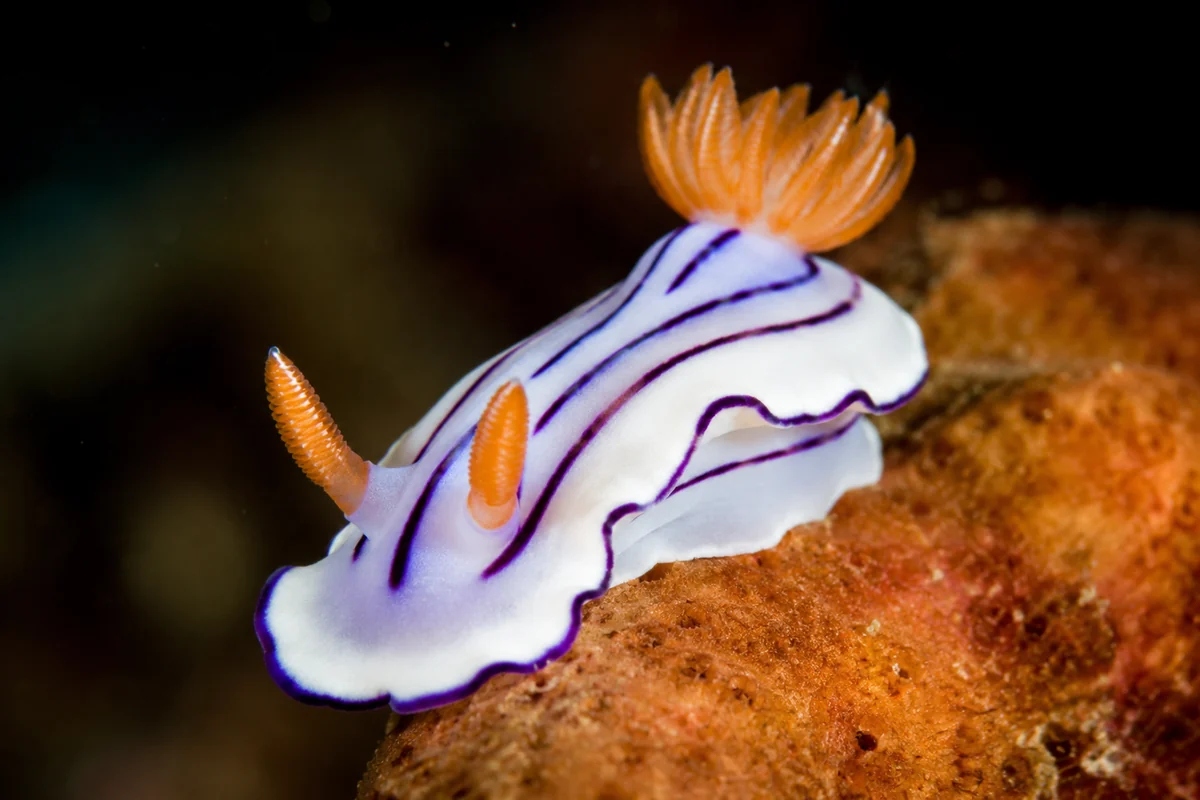
The near-shore water at Neil is often clearer than Havelock’s. Neil has less mangrove and less runoff, so the shallows hold that clean blue right up to the beach. That, plus the calm sites, makes it the best spot in the area for macro. If you are the diver who would happily spend twenty minutes photographing one nudibranch instead of chasing a shark, Neil is your island. Margherita’s Mischief is the classic: shallow, sandy, full of small strange life like ghost pipefish, mantis shrimp, and porcelain crabs.
It is not all tiny stuff. K-Rock is a submerged volcanic pinnacle with a resident Napoleon wrasse the size of a fridge, and a proper drift when the current runs. Junction and Eden are Neil’s deep, advanced sites, sitting between 28 and 40 metres, with their own sharks and rays for divers who have the card and the experience for it.
But here is the real reason serious divers make the trip to Neil. The dugong.
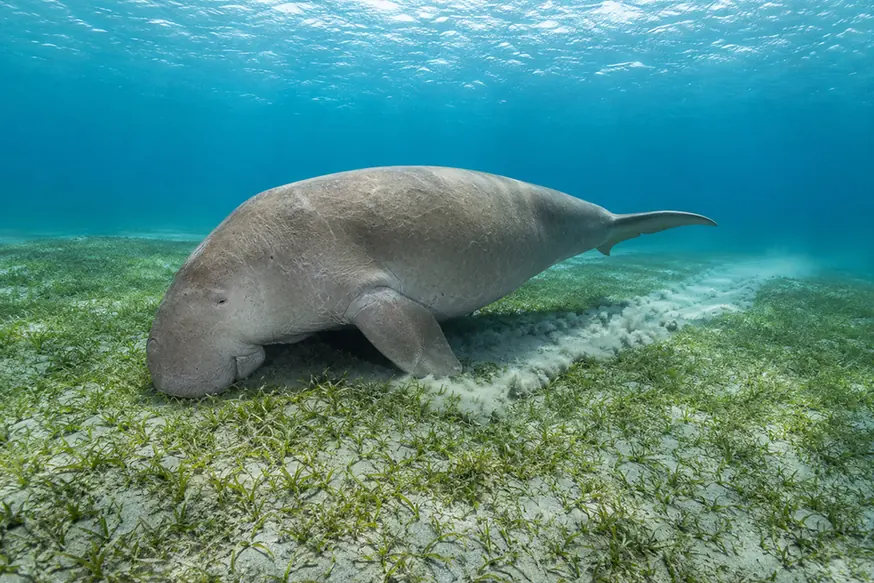
Neil has seagrass meadows that feed dugongs, the sea cows, which are endangered and almost never seen by divers anywhere in India. Around sites like Fish Slate and Dugong Dungeon, mostly between February and May, there is a genuine chance of watching one graze along the bottom, leaving a feeding trail in the sand behind it. I want to be honest about this. It is rare, and nobody can promise you a dugong. You can do everything right and still surface without seeing one. But Neil is one of the very few places on earth where the chance is real, and if that is on your list, you go to Neil and you go in those months.
So which island actually suits you?
Here is the straight version, sorted by the kind of diver you are.
- Never dived before, or doing your Open Water or Advanced course: go to Havelock. More training sites, more instructors, and calmer backup options if one reef is rough.
- Chasing sharks, big fish, and the buzz of a deep drift dive: Havelock. The Holy Trinity is hard to beat anywhere in India.
- In love with macro and underwater photography: Neil. Slow dives, clean shallows, and the small weird creatures that make a photographer’s day.
- Hoping to see a dugong: Neil, and time it for February to May. No guarantees, but this is the place to try.
- Want quiet reefs, no crowds, and a lighter bill: Neil. The whole island runs cheaper and slower.
- Got a week or more: stop choosing and do both. More on that below.
What does the diving cost on each island?
The diving itself costs about the same on both islands. It is the trip around the diving that differs. To give you real numbers instead of vague ranges, here is what we charge on Havelock. A try dive (Try Scuba) starts at 2,500 rupees for the Nemo Reef shore dive and runs up to about 6,500 for the better boat sites. A fun dive for certified divers is 3,000 a dive at the standard sites, or 5,000 a dive at the premium deep sites like Johnny’s Gorge and Dixon’s Pinnacle. A RAID or RAID Open Water course is 29,000, and Advanced is 27,000. All of those are inclusive of GST.
Prices do move year to year, so check our current scuba diving prices in Havelock before you set your budget. Neil’s dive prices sit in a similar band, give or take.
Where Neil saves you real money is everything else. Food, stays, and getting around tend to run 15 to 25 percent cheaper than Havelock, and the island is small enough to cycle, so you are not paying for scooters and taxis on top. Havelock has the wider spread, from cheap backpacker huts to actual luxury resorts, so you can keep it tight or splurge.
The big one both islands can reach: Barren Island
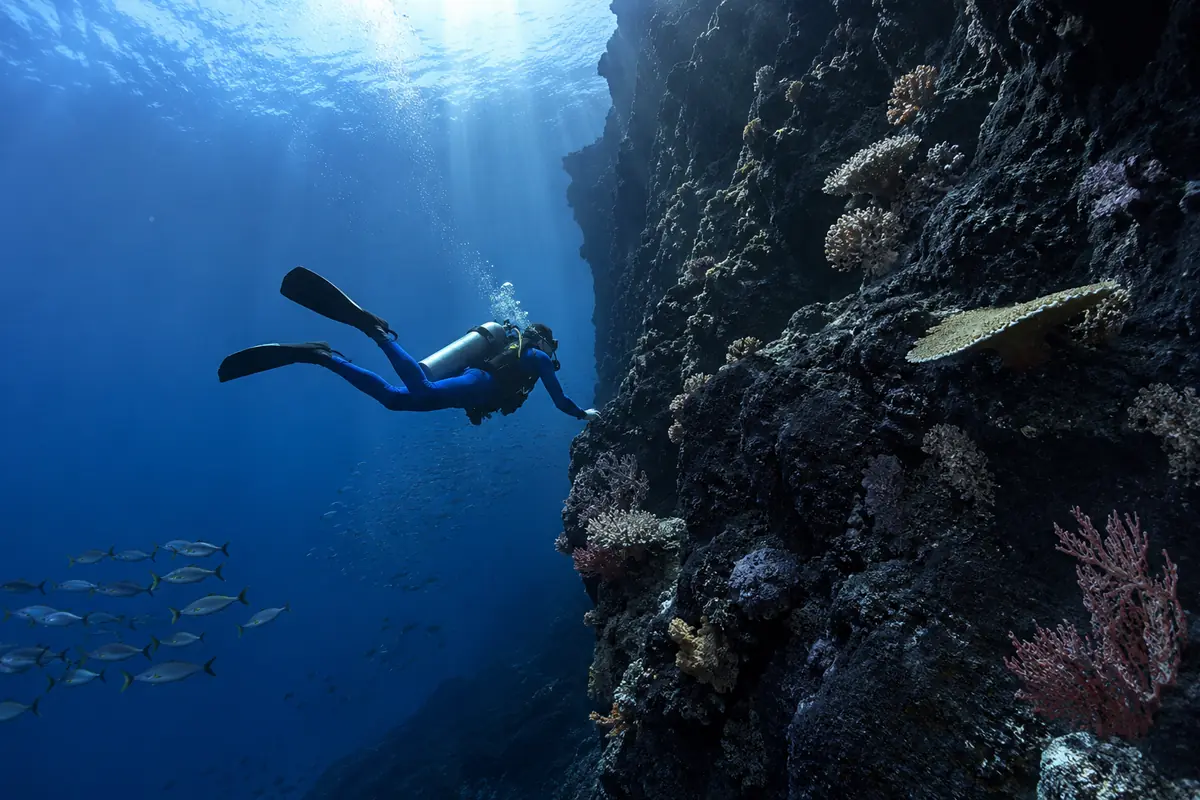
One thing worth knowing if you are already a confident diver. From Havelock you can run a charter out to Barren Island, the only active volcano in this part of the world, where you drop down black volcanic walls in 25 to 40 metre visibility. It is an expedition, not a casual dive: you need an Advanced card, Nitrox, a stack of logged dives, and a calm-weather window. If that sounds like your kind of day, here is how the Barren Island dive trip works. I mention it because it is the same answer on both islands. You base on Havelock or Neil and the volcano is a separate, bigger plan.
A word on safety, because it is identical on both islands
Same rules, same standards, whichever you pick. The Andamans brought in stricter diving rules in 2026: no diving when the waves or the visibility are bad, every centre has to carry oxygen and a written emergency plan, and instructors have to hold you to the depth limit for your certification. That is a good thing. It means a proper centre on either island is running you to the same standard.
One detail people do not know: there is only one recompression chamber in the whole territory, over in Port Blair. That is exactly why good instructors here dive conservative profiles, do their safety stops, and will not let you skip the no-fly window. Leave at least 18 to 24 hours between your last dive and any flight. It is not us being fussy, it is why you cannot fly straight after diving, and it is a big part of why the accident record out here stays as low as it does.
The honest answer if you can only pick one
If you are new to diving, or this is a short trip, pick Havelock. You get the gentlest first dive and the best advanced dives in one place, with the most backup if the weather turns on you. If you are already certified, you have dived a fair bit, and you want quiet water, macro, or a shot at a dugong, pick Neil and aim for February to May.
And if your dates allow it, the best trip is both. Dive the big, deep stuff at Havelock, take the morning ferry across, and spend a couple of days on Neil Island drifting slow over seagrass looking for a sea cow. That is the trip I would book.
FAQ
Is scuba diving better in Havelock or Neil Island?
For most divers, Havelock. It has more dive sites, more centres, the deep shark and pelagic dives, and the easiest beginner reefs for a first dive or a course. Neil is better if you want macro photography, quiet reefs, lower costs, or the rare chance of a dugong. If you can spare the days, do both.
Can a complete beginner dive in Neil Island?
Yes. Neil has gentle, shallow sites that work fine for beginners. But Havelock has more beginner reefs and more instructors, so for your very first dive or a full Open Water course, Havelock is the easier, better-supported choice.
Can you really see a dugong scuba diving in Neil?
Sometimes, and it is rare. Neil’s seagrass beds, around sites like Fish Slate and Dugong Dungeon, are one of the few places in India where divers spot foraging dugongs, mostly between February and May. Nobody can promise you one, but the chance is real, which is more than almost anywhere else can say.
How do you get from Havelock to Neil Island?
By ferry. The crossing takes about 45 minutes to an hour, and you should book ahead in peak season because the good boats fill up. Most divers base on one island and either day-trip or shift across to the other for a few days.
Is scuba diving cheaper in Neil Island?
The diving itself costs about the same. But food, stays, and transport on Neil run roughly 15 to 25 percent cheaper, and the island is small enough to cycle, so a Neil trip usually works out lighter on your wallet overall.
Should I dive both Havelock and Neil?
If you have a week or more, yes. They are only 45 minutes apart by ferry and the diving really is different on each. Havelock for the big, deep, exciting sites, Neil for the slow, quiet, macro and dugong dives. Doing both is what I tell anyone who has the days to spare.
Come dive with us
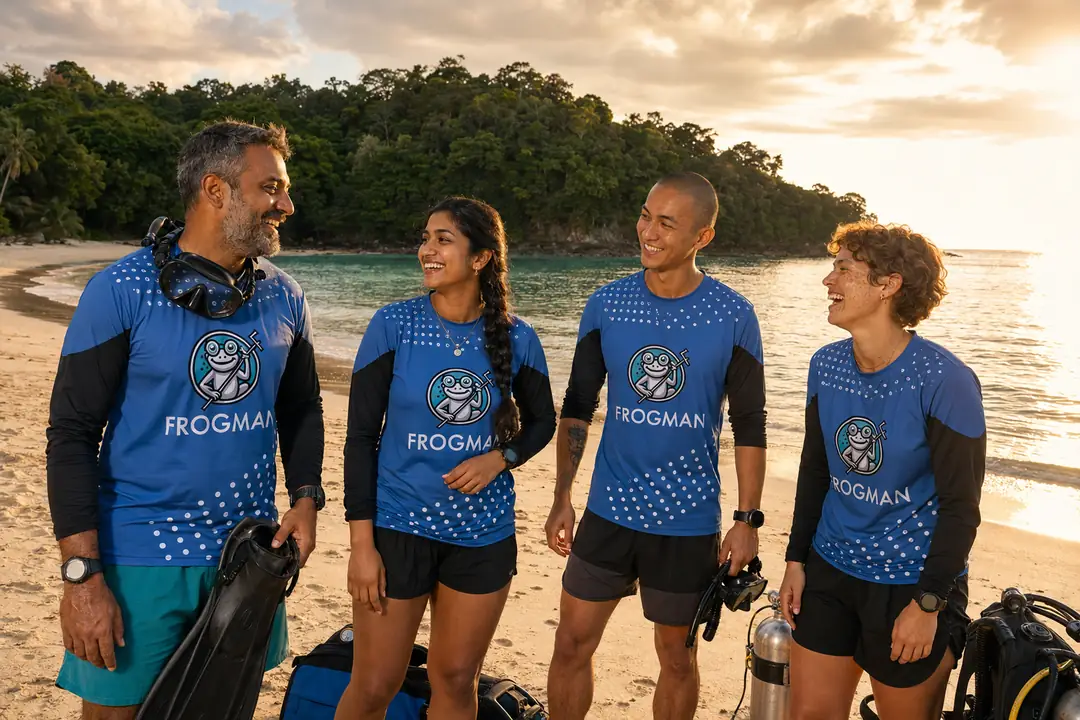
We are based on Havelock, so if you are starting there, come find us. Send us your travel dates before you lock in your ferries, and we will line your dives up with the boats and the season so nothing clashes. And if your heart is set on Neil’s dugong, tell us anyway. We will give you the honest timing and point you to good people on that island. Either way, do at least one dive while you are out here. Worst case, you tried something new. Best case, I see you back for your next course.