Ocellaris Anemonefish
Amphiprion ocellarisAlso called Clownfish or Clown Anemonefish
This is the "Nemo" clownfish. In a 2000-2005 survey of anemonefish across the Andaman and Nicobar Islands it was the most widespread kind, found at every site except Car Nicobar and Campbell Bay. The same survey found that anemonefish numbers had dropped.
Snorkel depth (about 0-5 m) Where it lives
- Family
- Damselfishes
- Size
- Up to about 11 cm
- In the Andamans
- The most widespread clownfish in an island-wide survey
- Habitat
- Sea anemones on shallow reefs
- Diet
- Plankton, algae
- Snorkel or dive?
- Snorkellers and divers
How to spot it
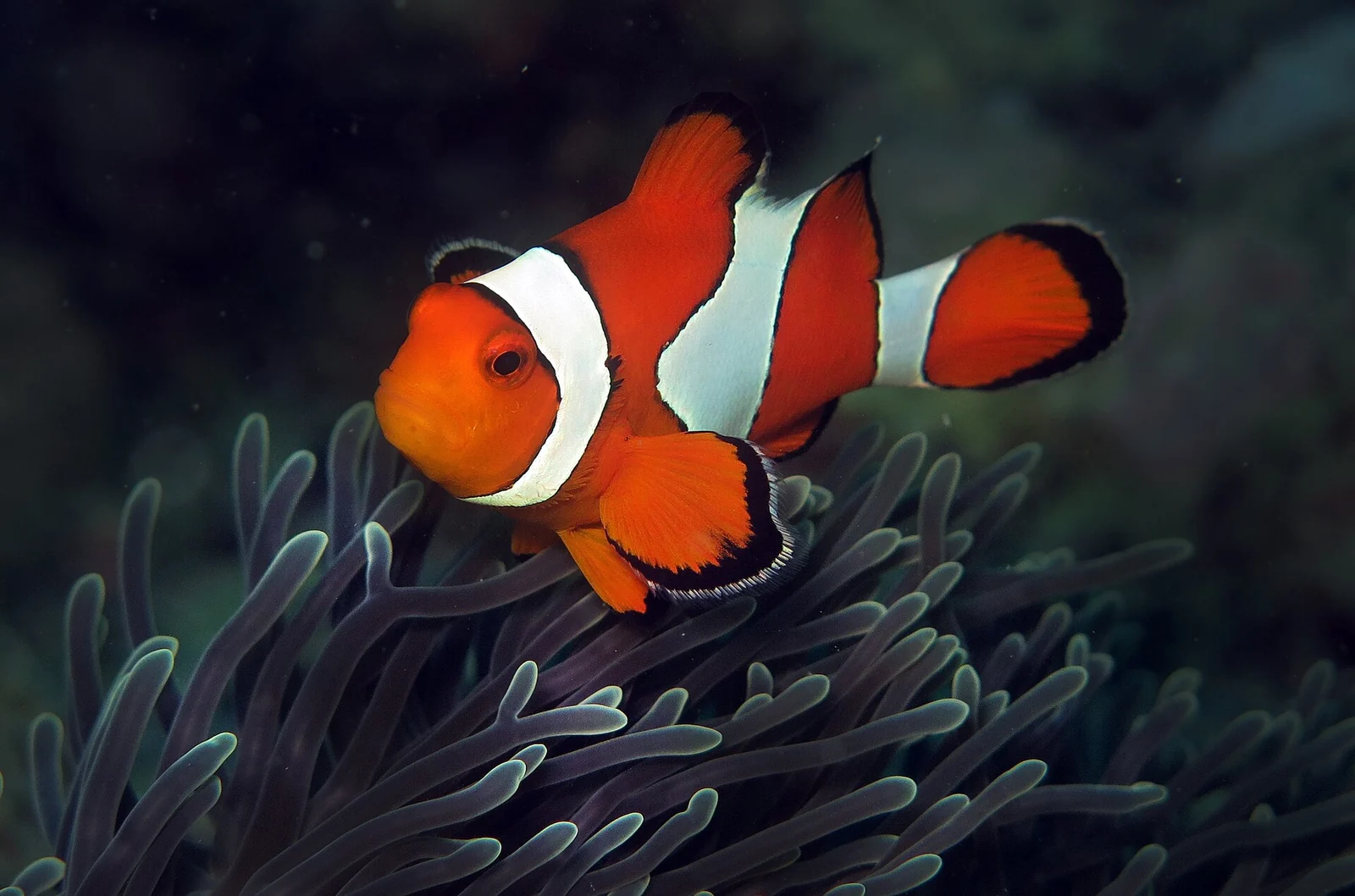
- Bright orange body with three white bars.
- Each white bar has a thin black edge.
- The middle bar bulges forward towards the head.
- Fins have black edges.
At Chidiyatapu, the survey found clownfish that were brown all over apart from their white bars. It was the only anemonefish in the islands with this dark form.
Where to see it in the Andamans
Always inside a large sea anemone, in calm, shallow lagoons and on coral reefs. In the Andamans it usually lives in the Magnificent Sea Anemone, sometimes in the Giant Carpet Anemone. The survey found it at Havelock (Swaraj Dweep), North Bay, Wandoor, Chidiyatapu and many other sites, and it lives on Neil (Shaheed Dweep) too.
Food and habits
One anemone holds one group. In the Andaman survey that meant a breeding pair and 1-3 young fish. All clownfish start life as males, and the biggest fish in the group is the female. The pair lays eggs on a rock next to the anemone, and the male guards and fans them.
Easy to confuse with
- Orange Clownfish (Amphiprion percula): Almost the same fish, with thicker black edges on the white bars. It lives far to the east, and its records from India are doubtful.
Sources: FishBase, Wild Life, CMFRI, Eschmeyer's Catalog of Fishes, iNaturalist