Most people land in Havelock with a list of twenty things and about three days to do them. Then the ferry timings, the early sunsets, and the boat rides eat half the list, and they end up doing four things properly instead of twenty badly. Which is the right way to do this island anyway.
I run a dive centre here in Havelock (Swaraj Dweep, if you want the official name), so I am hardly neutral about which activity sits at the top. But I have lived on this island long enough to send friends, family, and a lot of nervous first-timers off to do everything else too. So here is the honest list of what to actually do in Havelock, roughly in the order I would do it myself, with the real version of what each one is like.
1. Go scuba diving, even if it is just once
I will get my bias out of the way first. If you do one thing on this island, make it a dive.
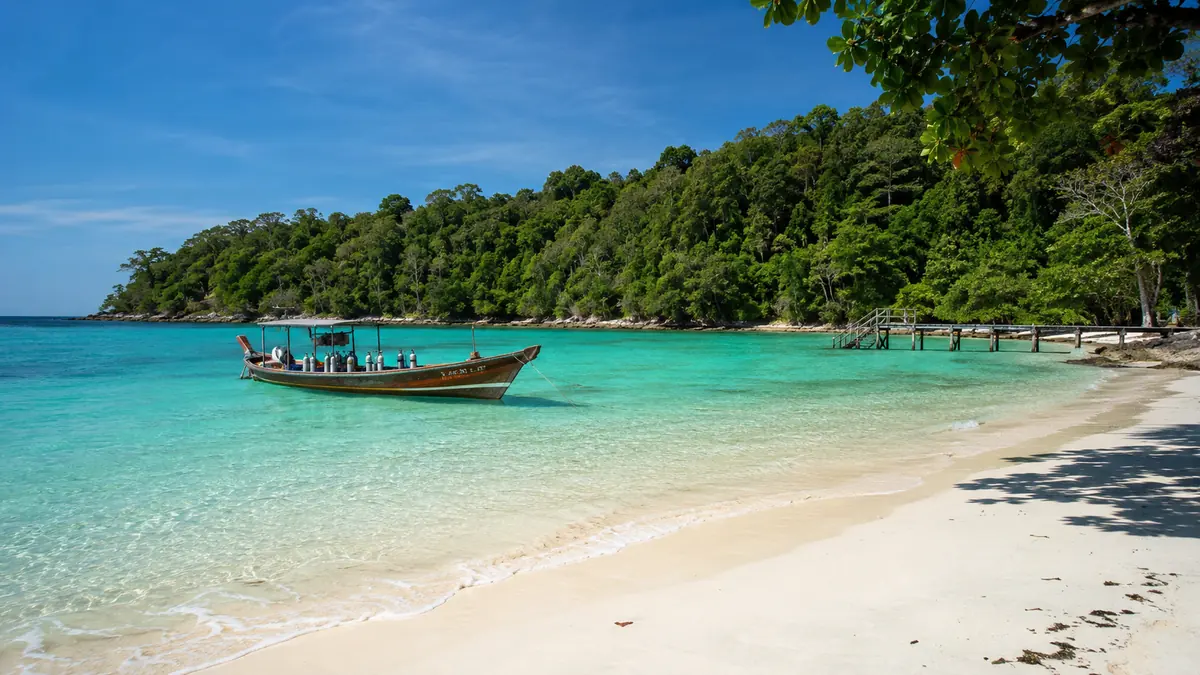
Havelock is the scuba capital of India for a boring, practical reason: the water is warm (around 27 to 30 degrees), the visibility runs 15 to 25 meters on a good day, and the boat ride to most sites is about ten minutes. You do not need to be a swimmer, you do not need any experience, and you do not need to have planned it in advance. A Try Scuba dive puts one instructor with one beginner, holds you the whole way, and keeps you shallow, usually between 6 and 12 meters.
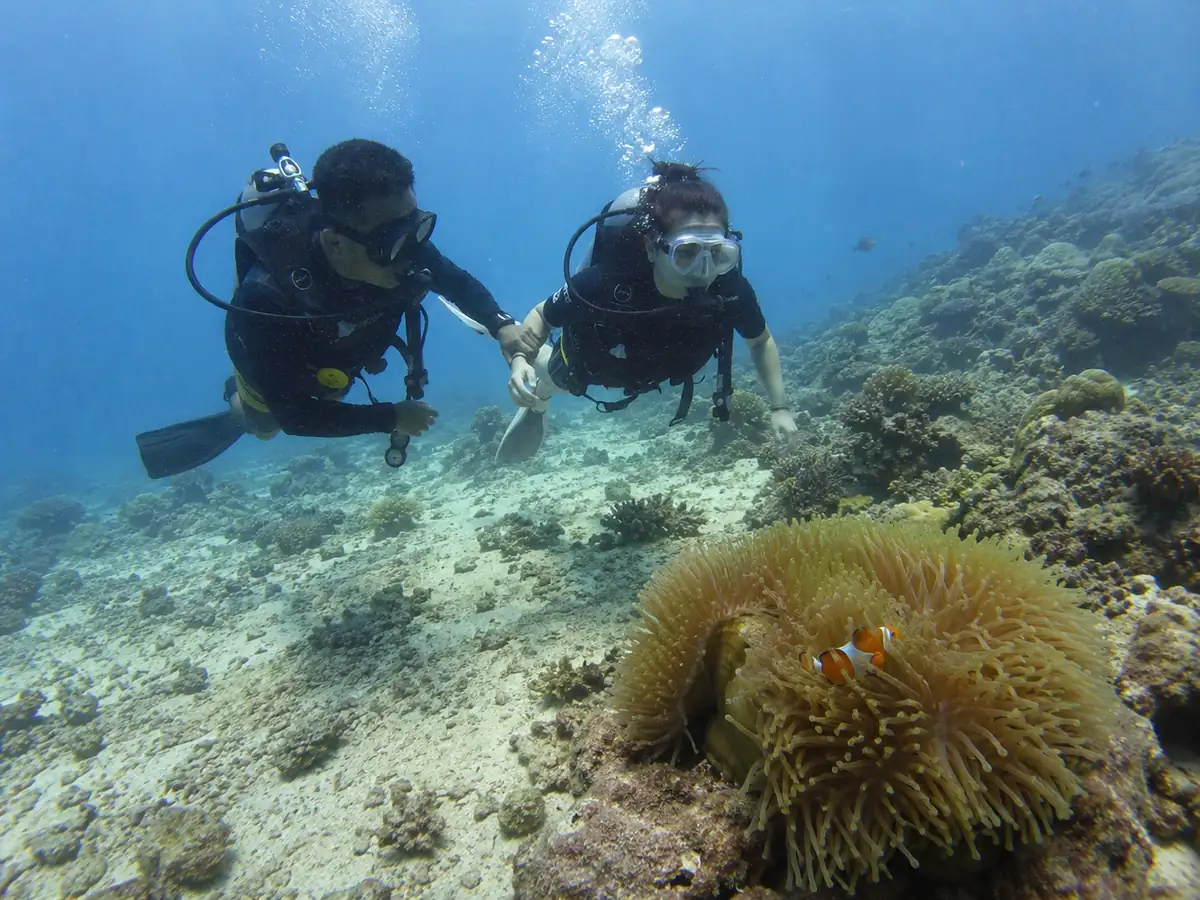
We run most first dives at Nemo Reef, where you walk in from the shore onto a gentle sandy slope. Clownfish guarding their anemones like tiny angry landlords, butterflyfish, the odd grouper looking unbothered. A beginner shore dive with us is ₹3,500 including all the gear and your instructor. If you want the full breakdown, the scuba diving in Havelock price list has it.
Here is the part nobody tells you: the first breath underwater is the strangest, best ninety seconds of most people’s whole trip. I have lost count of how many “just the one dive” people came back the next morning asking about the Open Water course. Already certified? Skip the intro and come do fun dives at the deeper sites instead.
2. Snorkel if you are not ready to dive yet
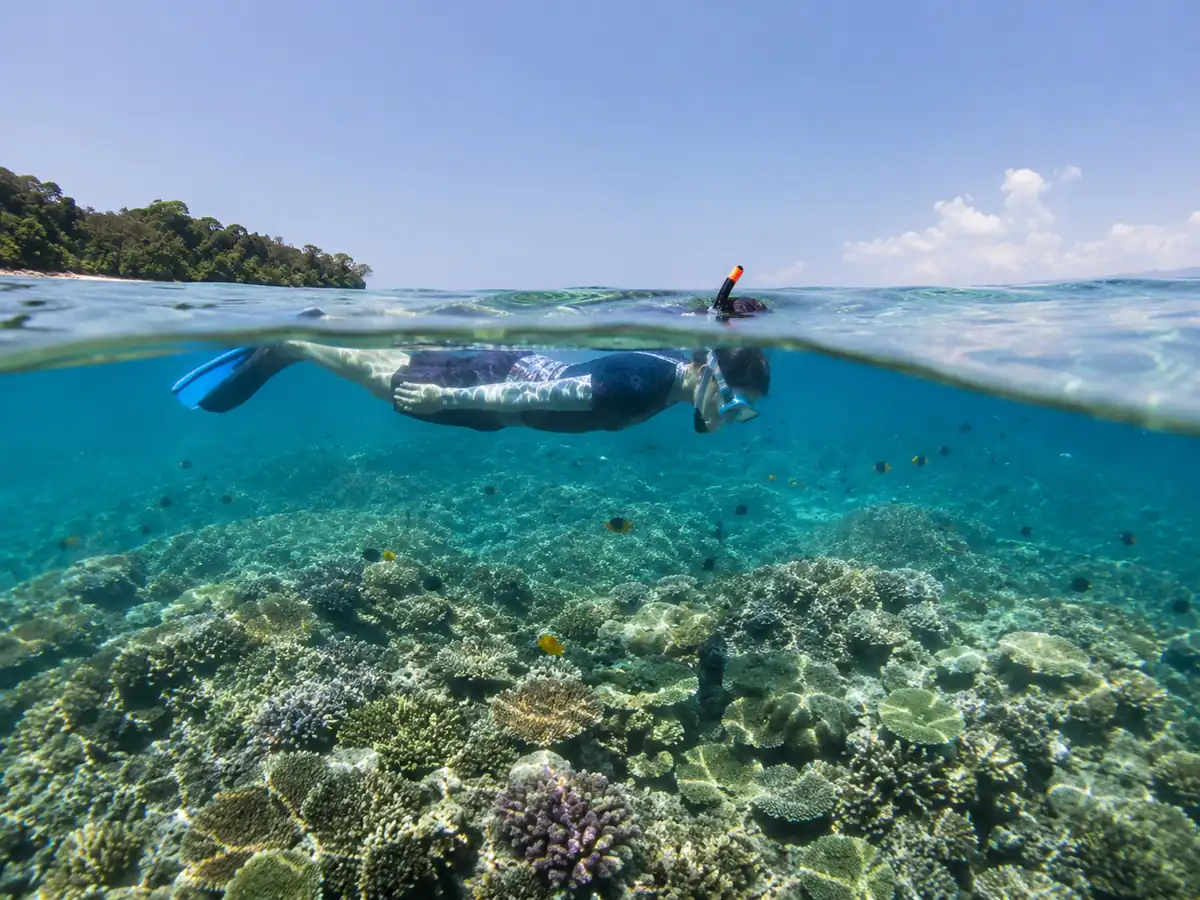
Not everyone wants to strap on a tank, and that is fine. Snorkelling gets you over the reef with nothing more than a mask, a snorkel, and fins, floating face down on the surface while the reef does its thing a few meters below you.
It is the easy middle path. No certification, no medical form, no equalizing your ears. You can do it with kids, you can do it if you are nervous about going under, and you still see a lot: hard coral gardens, parrotfish, the occasional turtle coming up for air right next to you. The honest trade-off is that you are looking down at the reef instead of hovering inside it, so it never quite matches a dive. But it is good here, and a lot cheaper.
The two practical things: get a mask that actually fits (a leaky mask ruins the whole thing), and never stand on or touch the coral, even when it looks like a handy place to rest. It is alive, and a single careless fin kick kills years of growth. If you would rather we sort the mask, the boat, and a guide for you, you can book a snorkelling trip in Havelock with us.
Sea walking, the no-swimming, no-diving option
If even snorkelling feels like a lot, there is sea walking, also called helmet diving, mostly run out of Elephant Beach. A weighted helmet goes over your head, air is pumped down from the boat, and you walk along the sandy bottom at about 7 meters with your face completely dry. You can wear your spectacles. It is safe for non-swimmers and kids over ten, runs ₹1,500 to ₹6,000 depending on the reef, and it is the gentlest way to get a look at the seabed. I would still nudge you toward a real dive, because hovering beats walking, but getting underwater somehow beats not at all.
3. Watch the sunset at Radhanagar Beach
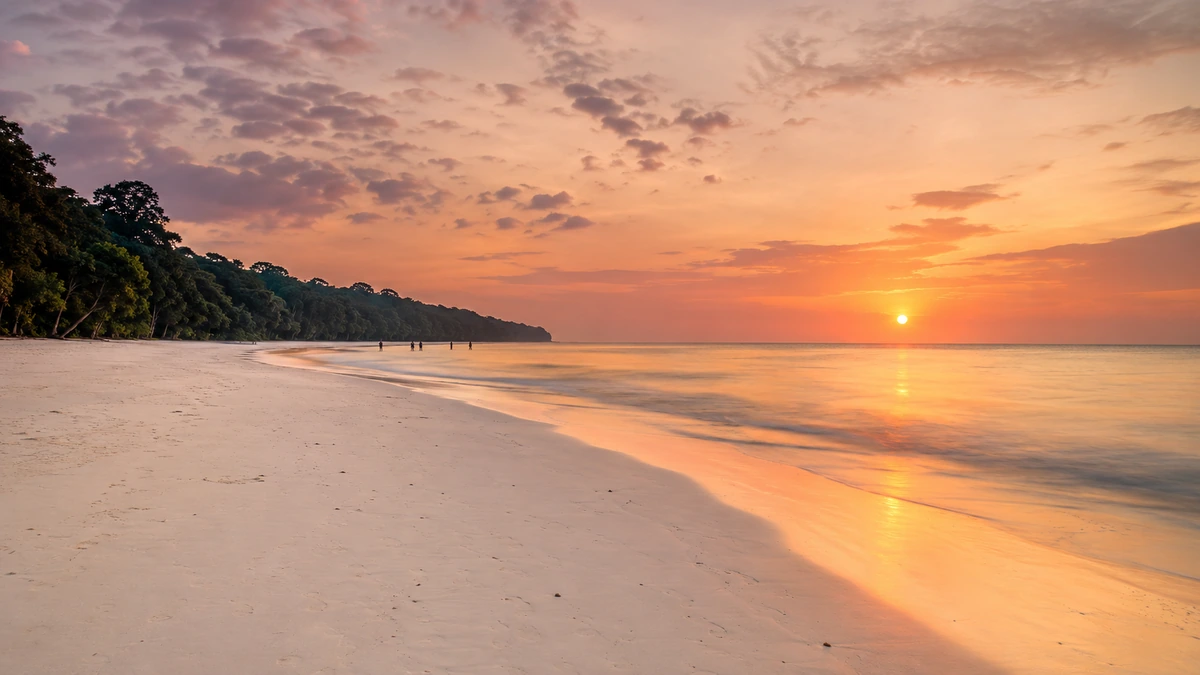
Radhanagar (Beach No. 7) is the famous one, and for once the fame is earned. Wide white sand, calm turquoise water, and a sunset that quiets the whole beach for a few minutes. It has a Blue Flag tag for being clean and well kept, which on a busy island actually means something.
The honest version: it gets crowded at the main entrance, especially around sunset when the day-trippers arrive. Two things help. One, go in the late afternoon and stay for the light rather than showing up at peak. Two, if you want quieter water, turn left when you enter and walk about fifteen minutes to Neil’s Cove, a half-moon lagoon with calmer water and overhanging trees. One real warning there: the cove connects to mangrove inlets that sometimes hold saltwater crocodiles, so do not swim at dawn or dusk, and take the posted signs seriously. The full story is in my Radhanagar Beach guide.
4. Catch the sunrise at Kalapathar Beach
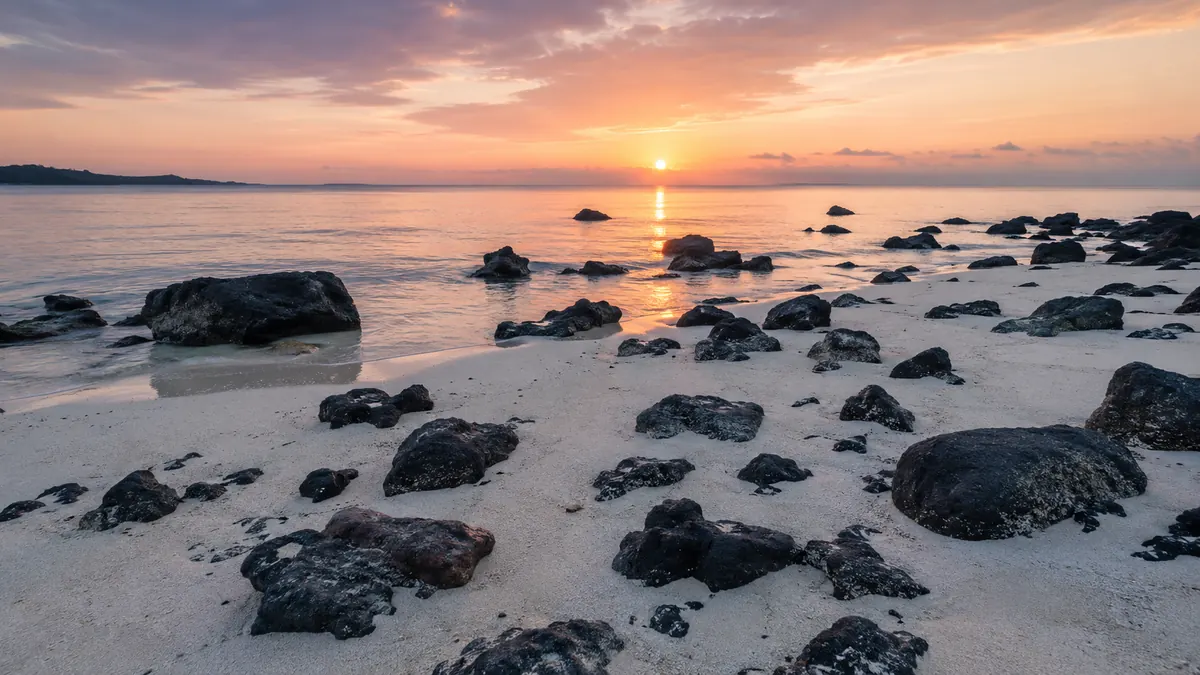
Radhanagar is the sunset beach. Kalapathar is the sunrise one, on the other side of the island, and it is the quieter, stranger, better-for-photos cousin. The name means black rock, and that is exactly what you get: dark volcanic boulders scattered along white sand, with the sun coming up behind them over the water.
Because it is a fair drive from the main jetty and the sun comes up early (think 5:15 to 5:45 in the morning here), most people skip it. Which is the whole point. Get there for first light and you might have a stretch of it to yourself, something you will not get at Radhanagar. The swimming is not great because of the rocks and the shallow shelf, so come for the light and the calm, not a dip. Details and timings are in the Kalapathar Beach guide.
5. Spend a half day at Elephant Beach
Elephant Beach is the watersports hub: shallow, clear water with hard coral starting just meters from the shore, which makes it a solid spot for snorkelling and the easiest sea walking. You cannot stay overnight there, it is a day-trip zone only.
Getting there is the part that catches people out. The usual route is a 15-minute speedboat from the main jetty, around ₹1,000 return, but those boats get cancelled the moment the sea turns rough or the tide drops too low, and people get stranded. The reliable alternative is a guided 1.2 km trek through the forest and mangroves, about 30 to 40 minutes each way, which turns into half the fun. If the weather looks iffy, take the trek. My Elephant Beach guide covers both routes and what nobody tells you.
6. Do the bioluminescence night kayak
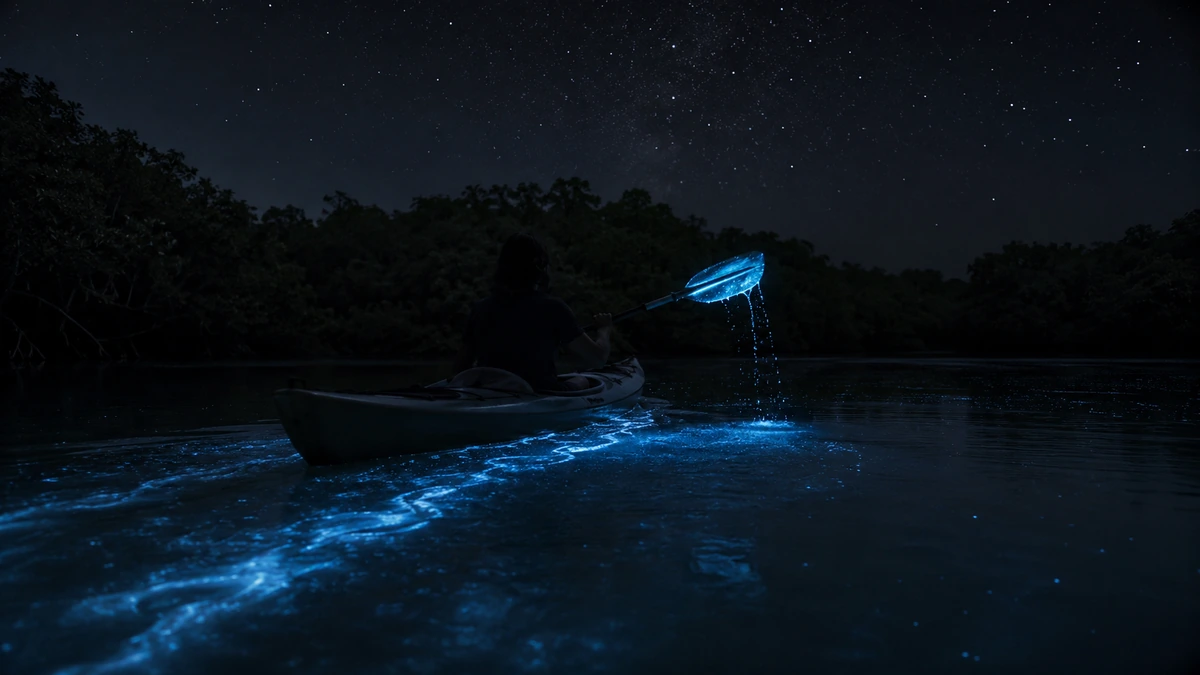
This is the one I send people to when they want something they cannot get anywhere else. On dark, low-moon nights between roughly November and March, the calm water near the jetty and the mangroves fills with plankton that lights up bright blue whenever it is disturbed. Drag a paddle and it glows. A fish darts past and you see a streak of blue.
The catch is the timing. Local rules only allow kayaking from 4 in the morning, and you need total darkness for the glow to show, so launches are some ungodly pre-dawn hour. You also want a new moon or close to it, because bright moonlight washes the whole effect out. It runs ₹2,500 with a guide and gear. It is a strange, quiet hour on the water with blue light coming off your own paddle, and it is worth losing the sleep for. Just set your expectations by the moon phase: on a bright night, it underwhelms.
7. Go island hopping or take a day on Neil Island
Havelock is one island in a small cluster called Ritchie’s Archipelago, and a short ferry gets you to Neil Island (Shaheed Dweep), which is slower, greener, and less developed. The Natural Bridge rock formation, the quiet beaches at Bharatpur and Laxmanpur, and a generally unhurried pace make it a good contrast to busy Havelock.
You can do Neil as a long day trip or stay a night, but the boats from Havelock reach a lot more than just Neil. We run island hopping from Havelock out to the smaller spots most day-trippers never see. South Button is the big one for me: a tiny marine national park island where you can snorkel straight off the boat onto coral, no trek, no crowd. Long Island is the slow one, a sleepy fishing village with an almost empty beach at Lalaji Bay, reached by a direct boat so you skip the public ferry. And if you want to build a wider loop around the archipelago, the island hopping in Andaman trip strings several of these together.
Whatever you pick, sort it a day or two ahead. The good boats and the Neil ferry seats both sell out, and turning up at the jetty hoping for a ticket is how people lose a day.
8. For the serious adventurers: fishing and the volcano
Two big-ticket trips, for a specific kind of traveller.
Game fishing off Havelock is as good as anywhere in India, because commercial fishing is restricted here, so the big pelagics (Giant Trevally, tuna, mahi-mahi) are still around in numbers. It is not cheap. A half-day charter starts around ₹70,000 for the boat, full days a lot more, so it only makes sense if you are splitting it across a group of keen anglers. Best months are the calmer October to April window.
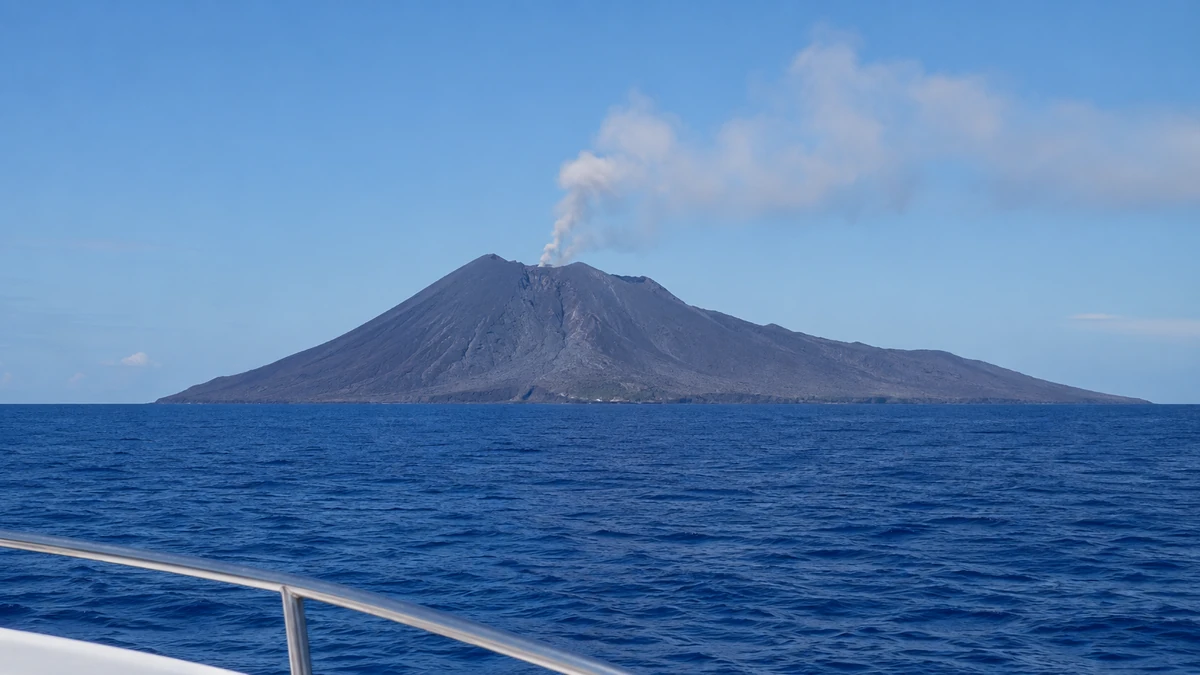
Then there is the Barren Island trip, out to the only active volcano in South Asia, sitting over a hundred kilometers from Havelock in the deep Andaman Sea. You cannot land on it, for obvious reasons, so the boat circles it while you watch ash and steam come off a black lava cone. A shared Saturday trip works out around ₹25,000 a head plus a permit, and the round trip is a long ten hours on open water. It is a serious commitment and not for anyone who gets seasick, but if you want a story nobody back home can match, that is it.
9. Slow down and eat well
Not everything here is an activity you book. Some of the best hours on this island are spent doing very little. Govind Nagar (Beach No. 3) is the cafe stretch, where the dive crowd eats. Big cheap breakfasts at the backpacker cafes, fresh catch of the day at the nicer ones, a beachside pizza as the sun goes down. You do not need a plan. Rent a scooter (carry your original licence, the checkpoints here are real, and wear the helmet), find a cafe, and let an afternoon go by. After a morning dive, that is exactly what your body wants anyway.
10. Get off the beach and into the forest
This is the part of Havelock almost nobody books, and it is the part I end up recommending most often. The island is more forest than beach, and once you walk into it with someone who can tell you what you are looking at, it stops being scenery and starts being interesting. All of these run about two hours and cost ₹2,000 per person, inclusive of GST.
The intertidal walk goes out at low tide, when the sea pulls back and leaves tide pools full of crabs, sea slugs and brittle stars sitting in the open. No swimming, and children love it. The mangrove walk takes you into the forest that grows in salt water, where the roots breathe through the mud and mudskippers walk about on their fins. Bird watching is worth an early morning if you have one to spare, because the Andamans have birds that exist nowhere else on the planet.
If you would rather just walk, there is a forest trail through the tropical woodland, a waterfall trail that is genuinely good after rain and honestly a bit thin in a dry spell, and a walk out to a quieter beach that stays quiet precisely because you cannot drive to it.
One practical reason to know about these: you cannot dive within 24 hours of a flight. That last day traps a lot of people. These are what you do with it.
How to fit it all in without burning your trip
The single biggest mistake I see is people treating Havelock like a checklist and trying to cram a sunrise, a dive, a snorkel trip, a beach, and a ferry into one day. The island does not work like that. Distances are short but everything runs on tide, weather, and boat timings, and sunset comes early.
So pick the morning for water (dives and snorkel trips are calmest before 11, when the sea picks up), keep afternoons loose, and build your beach sunsets around where you are staying. Stay near Govind Nagar if your days revolve around diving. Catch one sunset at Radhanagar, one sunrise at Kalapathar, and do not try to do both in the same 24 hours unless you enjoy alarms.
One more thing, and it is not optional: if you are diving, do not fly the same day. You need to wait before getting on a plane, and the reasons are real. I explain it properly in why you cannot fly straight after diving. Plan your dives for early in your trip, not the morning of your flight out.
If you want every activity on the island laid out with its price in one place, we keep a full Havelock Island activities list with 2026 prices up to date.
Quick answers to the questions I get every week
How many days do I need in Havelock?
Three days is comfortable for the main things: a dive or two, a snorkel trip, both the famous beaches, and a slow day. Two days works if you are disciplined. One day means you pick two activities and accept it.
What is the one thing I should not miss?
A dive, even an introductory one. I am biased, but the first breath underwater is the thing people talk about for years. If diving is genuinely not for you, then sunset at Radhanagar.
Can I do these activities if I cannot swim?
Most of them, yes. Scuba diving for beginners does not need swimming at all, and neither does sea walking. Snorkelling is doable with a float and a guide. The beaches obviously need nothing.
What is the best time of year for activities in Havelock?
The drier months, roughly October to April, give you the calmest sea, the best diving visibility, and the bioluminescence window. The monsoon months are quieter and greener but rougher on the water, and some boat trips get cancelled.
Do I need to book activities in advance?
Ferries and Neil Island seats, yes, book early. Dives, fishing charters, and the Barren Island trip are worth arranging a day or two ahead. The beaches and a casual snorkel you can decide on the morning. Message us your dates and we will line your dives up around the ferries.
Come do at least one thing properly
You do not need to do all nine of these. Honestly, you should not try. Havelock rewards the people who slow down: who watch one sunset all the way to the end instead of chasing the next photo, who spend forty unhurried minutes on a reef instead of ticking off three rushed activities.
If you are coming to the island anyway, do one dive while you are here. Message us your travel dates first so we can fit it around the ferries and your flight home, and tell us if you are a non-swimmer when you book. Worst case, you tried something new. Best case, I see you the next morning asking how to get certified.