
I run a dive centre on the other side of Havelock, so you would expect me to tell you the best part of this island is underwater. Most days I would. But Radhanagar Beach is the one famous thing here that actually deserves the fuss, and I send almost every guest there at some point, usually on their last day, when they cannot dive anyway because of the no-fly rule after diving.
So here is the local’s version of Radhanagar Beach, Havelock. How to reach it, when to go, what the rules are (there are more than you think), where not to swim, and the one or two things the brochures quietly leave out.
Why this beach got famous in the first place
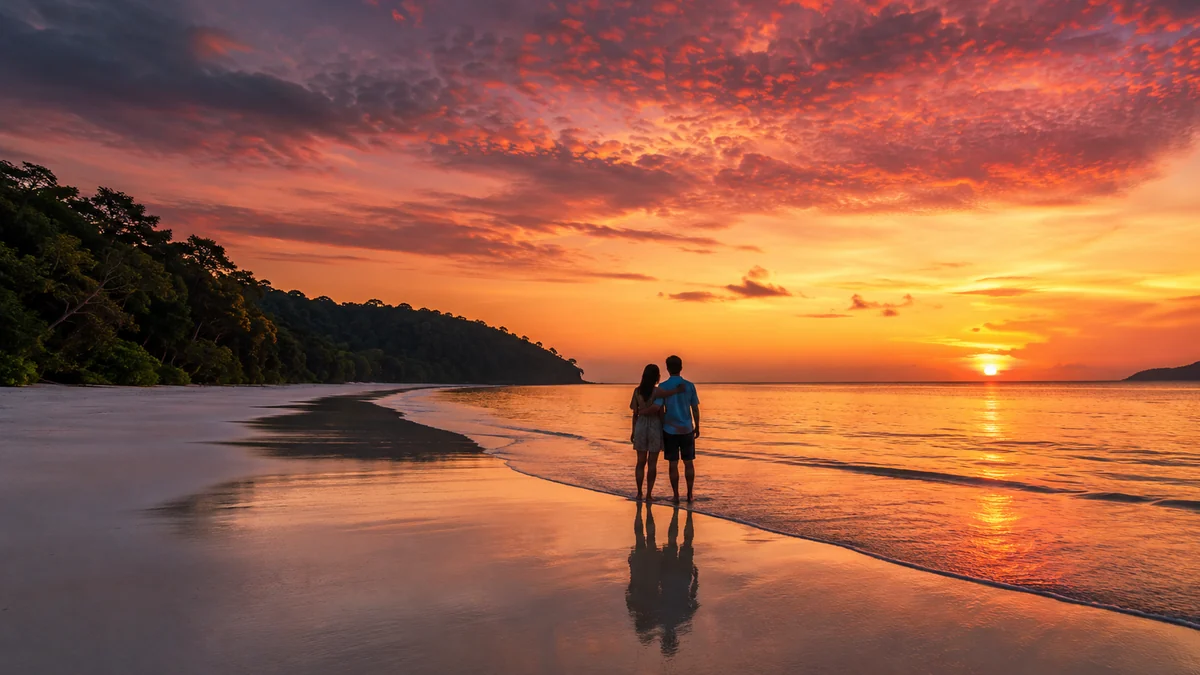
Radhanagar sits on the western coast of Havelock Island (officially Swaraj Dweep, but everyone here still says Havelock). Locals call it Beach No. 7. In 2004, Time Magazine named it the best beach in Asia, and that one line changed the island. Before that, Havelock was mostly a logging and farming outpost. After it, the ferries, resorts and dive centres followed.
Two things make it genuinely different from other Indian beaches.
First, the sand. It is fine, white and powdery, and it is not river sand. It comes from coral broken down by the sea over thousands of years. White coral sand reflects sunlight instead of soaking it up, so you can walk barefoot in the afternoon without burning your feet.
Second, the direction it faces. Almost every popular beach in the Andamans faces east, towards sunrise. Radhanagar faces west, straight at the open Bay of Bengal. The sun goes down into the sea, not behind a hill. That is why the whole island drifts towards this beach every evening.
The beach runs about two kilometres, backed by old forest, Mahua trees, pandanus and coconut palms, with no buildings on the sand itself. It is also the only Blue Flag certified beach in the whole Andaman and Nicobar islands, which I will come back to, because that certificate is the reason for half the rules here.
How to reach Radhanagar Beach
If you are starting from the mainland, the sequence is: fly to Port Blair, take a ferry to Havelock, then cross the island by road.
From Port Blair, the private ferries (Makruzz, Green Ocean, Nautika, ITT Majestic) leave from Haddo Jetty and take about 90 minutes. Fares move with the season, roughly Rs 1,100 to Rs 3,400 per person in peak months, cheaper in the off season. The government ferry from Phoenix Bay Jetty costs around Rs 300 to Rs 900 but takes 2 to 2.5 hours, and the tourist-quota tickets open on the STARS portal only 48 hours before departure. They sell out in minutes. If your dates are fixed, book a private ferry and stop worrying.
One thing that catches people every week: you need a printed ferry ticket at the jetty. A PDF on your phone gets rejected at the gate. Small shops near Haddo Jetty will print it for Rs 20 a page. Print it the night before.
If you are spending a night in Port Blair before the ferry, the evening light and sound show at Cellular Jail is the one thing worth doing there. I wrote a separate Cellular Jail guide if you want the details.
Once you land at Havelock jetty, Radhanagar is about 12 km away on the opposite side of the island, 20 to 30 minutes by road, through forest and farmland. Your options:
- Rent a scooter, around Rs 600 a day. This is what I tell most people to do. You stop where you like and you are not waiting for anyone.
- Auto-rickshaw or cab from the jetty or your hotel. Fix the fare before you sit.
- Most hotels will arrange a drop and pickup if you ask.
When should you go?
Two answers: which months, and which time of day.
For months, October to February is the best window. The air sits between roughly 20 and 30 degrees, humidity drops, the sea goes calm and flat, and visibility in the water is at its best. This is also peak season, so ferries and hotels cost more.
March to May is hotter, 32 to 35 degrees with the humidity creeping back, but the sea stays good. You spend more time in the water and less time walking around, which is not a bad trade. Prices ease off a little too.
June to September is the southwest monsoon, and the honest version is that it is a gamble. June alone averages around 19 rainy days, the rain comes as heavy afternoon bursts, and rough seas can cancel ferries with little warning, sometimes for a day or two at a stretch. The island turns deep green and the beach is nearly empty, which some people love. But do not plan a tight monsoon itinerary. Keep a buffer day before your flight home.
For time of day, everyone comes for sunset, and they are right to. But my favourite time at Radhanagar is early morning, around 7 to 9. The light comes soft through the trees, and you might have a two kilometre beach with twenty people on it. One more thing first-timers miss: the Andamans run on Indian time but sit far east of the mainland, so the sun rises and sets earlier here than you are used to. Check the sunset time for your date and reach at least an hour before.
The rules at Radhanagar (and why they exist)
Radhanagar holds a Blue Flag certification from the Foundation for Environmental Education, an international eco-label that very few beaches in India have. Keeping it means the administration enforces rules that surprise people used to regular Indian beach towns:
- No alcohol on the beach. At all.
- No single-use plastic. This applies across the Andamans, and at Radhanagar there are on-the-spot fines for littering.
- Swimming is allowed only in the flagged zones, watched by lifeguards during the day.
- No jet skis or motorised water sports in the swimming area. That is also why the water stays so clean.
- No campfires, no overnight camping.
- No drones without written permission from the authorities.
- Do not collect shells or coral, dead or alive. People genuinely get stopped at the airport over this.
I know that list reads strict. In practice it is the reason the beach still looks the way it did in the Time Magazine photos. I have watched plenty of coastlines get loved to death. This one is being defended properly, and as someone who makes a living from this sea, I am glad.
Swimming at Radhanagar: calm, but respect the flags
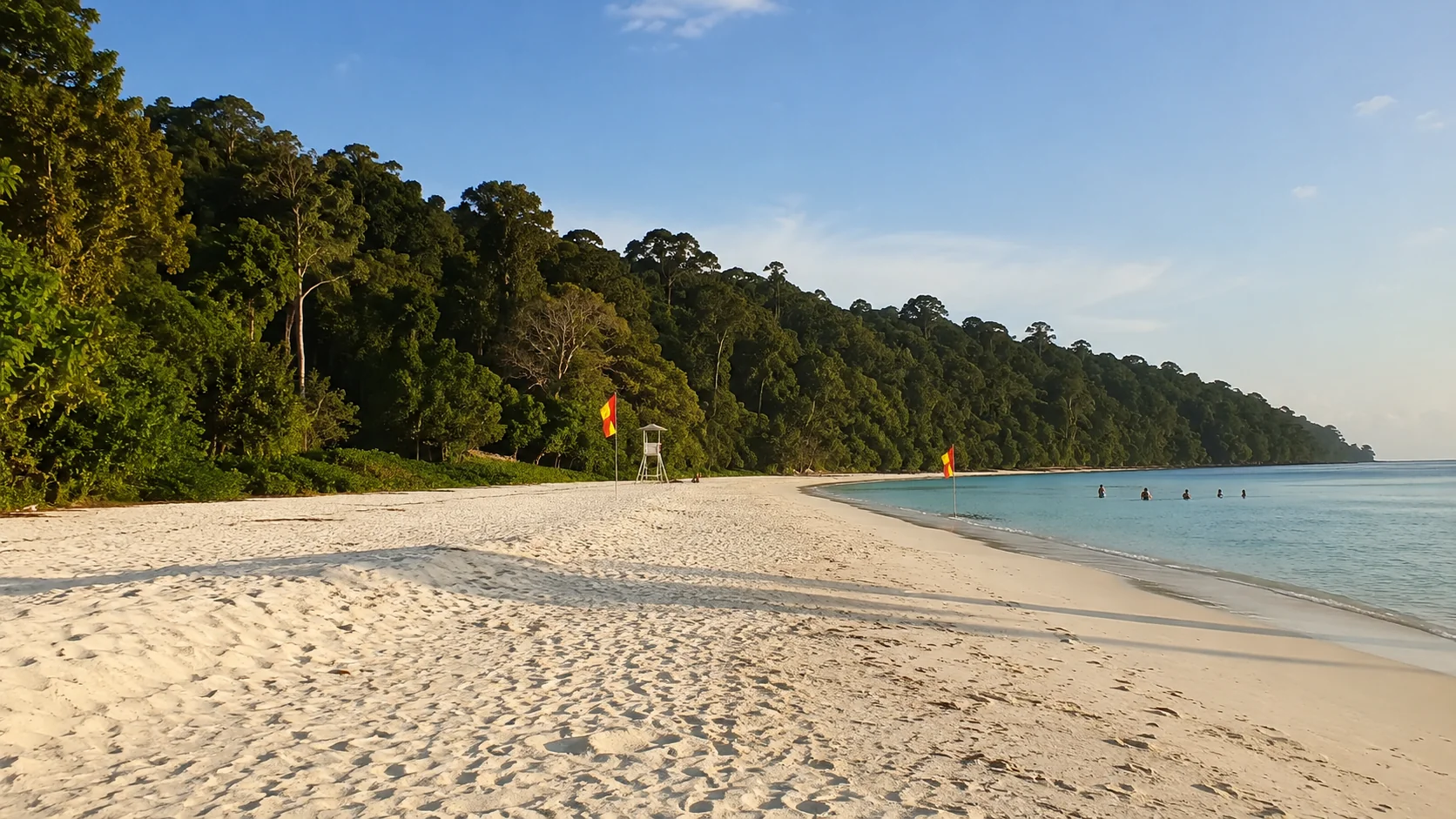
The bay curves in a way that blocks most of the big swell, so on a normal peak-season day the water is calm, shallow for a long way out, and lovely for swimming. Families with kids are comfortable here.
But calm-looking water is not the same as safe water everywhere. There are offshore currents along this coast that can pull a casual swimmer around, which is exactly why the flagged zones and lifeguards exist. Swim between the flags, stay out around high tide if the lifeguards signal it, and you will be fine. It is the same thing I tell people before their first dive: the sea is not out to get you, but it does not care about your plans either. Follow the people who watch it every day.
One honest note: Radhanagar is not a snorkelling beach. The shallows are sand, not coral, so there is not much to see with a mask right off the beach. The coral and the fish are on other parts of the island, which is where we come in. If that is what you are after, have a look at the dive sites around Havelock or our beginner diving page, where no swimming background is needed.
Neil’s Cove: beautiful, and not for swimming
Walk about a kilometre north along the sand, 10 to 15 minutes past where the crowd thins out, and the beach bends into a rocky corner with a small half-moon lagoon behind it. This is Neil’s Cove. Freshwater streams meet the sea here, the water sits in shades of green over dark rock, and at low tide you get little pools with trapped fish. Photographers love it. White-bellied sea eagles hunt over the lagoon.
Now the part you must take seriously: saltwater crocodiles live in this lagoon. Not “might occasionally pass through”. They use these sheltered brackish inlets to hunt and rest, and there is warning signage at the waterline saying exactly that. Do not swim at Neil’s Cove. Do not wade in for a photo. Stay on the open sand, keep a distance from the thick vegetation at the edges, and avoid dawn and dusk, when crocodiles are most active.
Go, look, take your photos. Just treat it as a wildlife spot, not a swimming spot. The swimming happens back at the main beach, inside the lifeguarded zone.
What nobody tells you before you visit
A few things I wish someone told every visitor:
- The crowd has one schedule. From about 4 pm the whole island funnels here for sunset. If you want the famous empty-beach feeling, come in the morning.
- Food is basic and at the entrance, not on the sand. Coconut water, snacks, some fried fish, plus the Mohwa Beach Cafe nearby, which runs from morning till late evening. Carry water if you are staying for hours.
- Mobile network is weak to non-existent on most of Havelock, and Radhanagar is no exception. Download your maps before you come. Treat the dead zone as a feature.
- Shade is at the tree line, not on the beach. Carry sunscreen, and if you are getting in the water anywhere on this island, make it reef-safe sunscreen.
- Give it more than a photo stop. Tour packages allot Radhanagar one rushed sunset. A full lazy afternoon is the right dose. You can also do sunrise at Kalapathar Beach on the east coast one day and sunset here the next. I covered that side of the island in my Kalapathar Beach guide.
Where diving fits into a Radhanagar day
I will keep this short because this is a beach article, not a sales page. The diving in Havelock happens on the reefs around the island, not at Radhanagar itself. The combination that works: dive in the morning, shower, eat, then ride across to Radhanagar for the late afternoon and sunset. You should not fly within 18 to 24 hours of diving anyway, so your last full day on the island is made for this beach.
If you have never dived, you do not need to know how to swim for a beginner dive, and I have written an honest answer for non swimmers if you are nervous about that. If you are staying four days or more, that is enough time to leave with a proper licence through the RAID Open Water course, with Radhanagar evenings built in around it. Couples can steal the structure from my Andaman honeymoon itinerary, which lines up the beaches, ferries and dives in a sensible order.
Quick questions people ask me about Radhanagar
Is there an entry fee at Radhanagar Beach? No entry fee for the beach itself as of mid-2026. You pay only for parking or anything you eat.
Can you swim at Radhanagar Beach? Yes, and it is one of the best swimming beaches in India when the season is right. Stick to the flagged zones where the lifeguards are. Do not swim at Neil’s Cove, the lagoon at the northern end, because saltwater crocodiles live there.
Is Radhanagar good for snorkelling? Honestly, no. The bottom near the beach is sand, so there is little to see with a mask. For coral and fish you want the reef sites around the island, by boat.
How much time should I keep for Radhanagar? Half a day. Reach by 3 or 3:30 pm, swim, walk to Neil’s Cove and back, and stay through sunset. Or come for a quiet morning instead.
Is Radhanagar Beach safe at night? It effectively closes after dark. No lighting, no lifeguards, camping and campfires are banned, and the forest behind the beach is genuinely wild. Watch the sunset, then head back for dinner.
Do foreigners need a permit for Havelock? Indian citizens just need a valid photo ID. Foreign nationals on a valid passport and Indian visa currently get the Restricted Area Permit free on arrival at Port Blair airport, good for 30 days, with a few nationalities needing prior approval instead. Rules change, so check the official Andaman tourism site close to your travel date.
Come for the beach, stay for what is under the water
Radhanagar earned its reputation the honest way and is still earning it, partly because the rules protect it and partly because getting here filters out the day-trip crowds. Plan it for a late afternoon, and let the place be slow.
And if standing waist-deep in that water makes you wonder what the rest of it looks like, that is roughly how I ended up living here. Come see for yourself, one easy morning dive before your Radhanagar evening.
Message us on WhatsApp at wa.me/919531924029 or call 095318 53676 with your travel dates, and we will line up your dives around the ferries so the beach days take care of themselves.