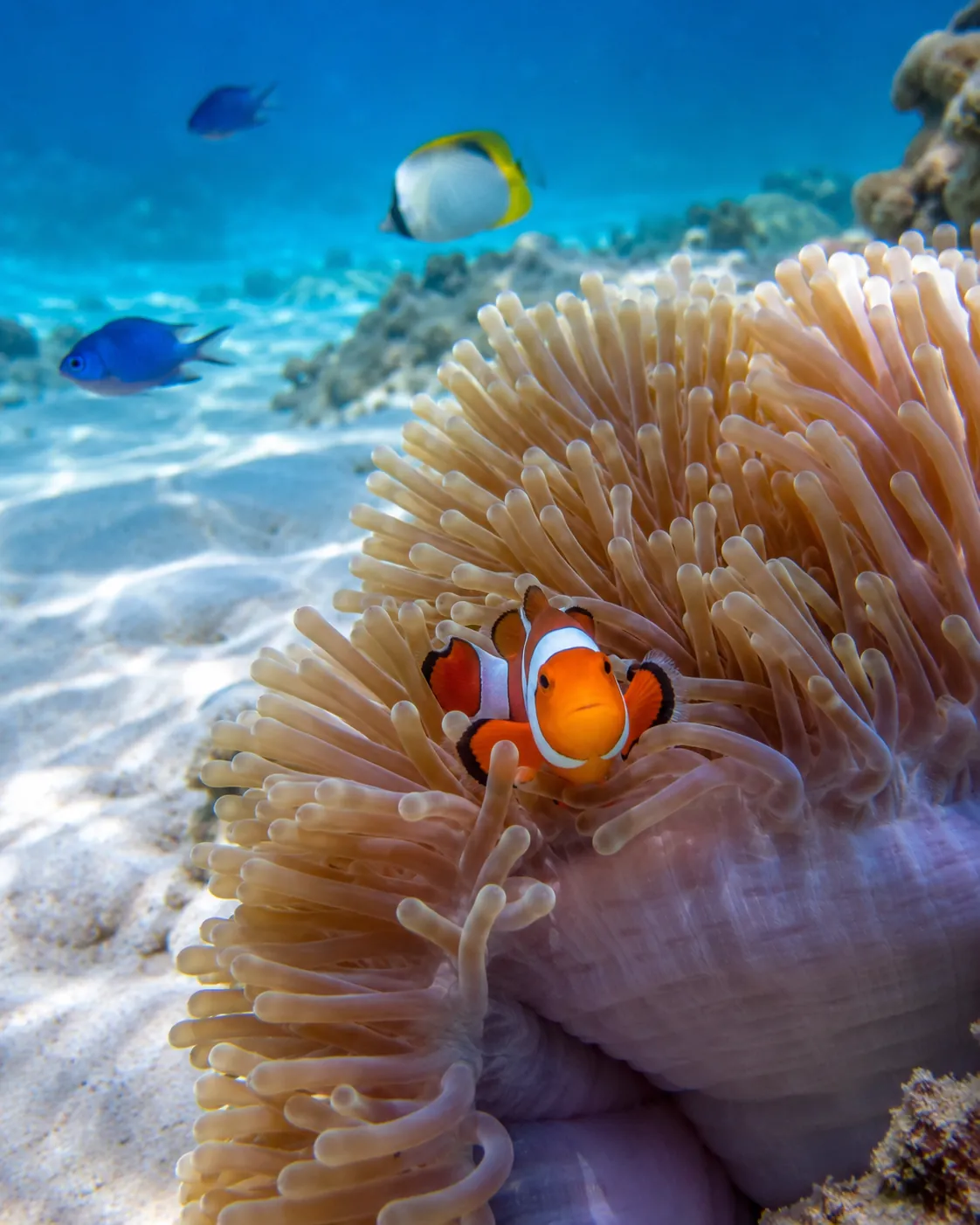
You do not need to know how to swim to put your face in the sea here and watch a clownfish defend its anemone like it owns the place. That is the honest appeal of snorkeling in Andaman. You float on the surface, you breathe through a tube, and a whole reef carries on below you as if you are not there.
I run a dive centre in Havelock, so most of my day is spent underwater with a tank on my back. But I send people snorkeling all the time, and I do it myself on a calm afternoon when I just want to look. Let me give you the real version: where to go, what you will actually see, the one rule that surprises everyone, and when you should pick scuba instead.
What snorkeling actually is, and how it differs from scuba
Snorkeling is the easy door into the ocean. A mask over your eyes and nose, a snorkel tube so you can breathe while your face stays down, and fins to push you along. In Andaman you also wear a life jacket, every single time, which I will come back to. That is the whole kit. No certification, no training course, no heavy gear.
Scuba is the deeper version. You carry air on your back, you go down to the reef instead of looking at it from above, and there is a short briefing or a full course depending on what you book. Both are good. They are just different distances from the fish.
Here is the thing I tell every family that asks me: snorkeling shows you the top of the story. Scuba lets you turn the pages. From the surface you see the bright shallow stuff, the schooling fish, the coral heads in clear light. Drop down ten meters on a beginner dive and the reef opens up in a way the surface never shows you. If you are even a little curious, do one of each and decide for yourself.
The Andaman snorkeling rule that surprises people
Almost nobody expects this one, so I will say it plainly. In Andaman you are not allowed to snorkel on your own. The rule across the islands is that you go in the water with a certified guide next to you. At busy spots like Elephant Beach the forest department staff actually watch the shoreline, and they will stop people who try to wander off alone with a mask. At some protected zones they even check bags and hold any private snorkeling gear until you leave.
I know that feels strict if you have snorkeled freely in Thailand or the Maldives. But there is a reason behind it. A lot of visitors here cannot swim well, the currents can change, and the reef gets damaged when hundreds of people stand on it every day. So the guide is partly for your safety and partly for the coral.
The second part of the rule: a life jacket for everyone, swimmer or not. It keeps you on the surface, which keeps your fins off the reef. Before you get in, your guide spends ten to fifteen minutes on the basics, how to seal the mask so it does not leak, how to blow water out of the snorkel, how to float flat and relaxed. That short briefing is what makes the difference between a panicky first try and an easy one.
Nemo Reef: the easy one near the jetty
If it is your first time, start at Nemo Reef. It sits a short walk south of the Havelock jetty, along the top end of Govind Nagar Beach, and you can walk straight in from the sand. The water is shallow, a couple of meters in most places, the bottom slopes in gently, and there is almost no current. That calm is exactly why we use it for first-timers, kids, and training.
Now the honest part. The coral right at Nemo took a beating over the years, from old damage and from the warm-water bleaching that has hit these reefs more than once. So the seabed is patchy in places, not a wall of perfect coral. But there is a mangrove forest right next to it, and those tangled roots act like a fish nursery. The result is a lot of life in shallow water: clownfish in their anemones, young batfish, the usual reef crowd. Sometimes a banded sea snake threading through the rocks, which looks alarming and is actually shy, so you just give it room and watch.
We run our Nemo Reef snorkeling session here with a GoPro, so you get photos to take home without holding a camera and missing the fish. If you want the full list of where we take people, the Havelock snorkeling page lays it out.
Elephant Beach: busy in the middle, better at the edges
Elephant Beach is the famous one, and it is the most crowded snorkeling spot in the whole region. You get there either by a two kilometer walk through the jungle or by a speedboat ride of about fifteen to twenty-five minutes from the Havelock jetty. The middle of the beach is a circus of jet skis, banana boats, and sea walking. Not my favourite place to put my face in the water.
But here is the trick most people miss. Walk to the far left or far right edge of the main beach. The reef out at those sides is in much better shape because fewer feet have trampled it, and you can see proper coral and good fish in water shallow enough for a complete beginner. If your guide knows the beach, ask to snorkel at the flanks, not the centre. That one piece of local knowledge turns Elephant Beach from average into genuinely good.
Neil Island: shallow lagoons for families
If you are travelling with parents or small kids, Neil Island (now called Shaheed Dweep) is the gentlest option. It is a short ferry from Havelock, and the snorkeling happens mostly at Bharatpur Beach, which is about five hundred meters from the jetty.
Bharatpur is a wide, shallow lagoon. The sand slopes out slowly for a long way before it drops off, and there are no sharp corals or jagged rocks in the entry zone, so it is about as safe as the sea gets for a nervous swimmer or a senior citizen. Go a bit further out and the coral gardens start. The water is usually calm and clear, which is why glass-bottom boats and beginner activities all run from here. Laxmanpur Beach on the other side is more of a sunset and walking beach than a snorkeling one, so plan your day around that.
Neil pairs nicely with a slower trip. If you are putting an itinerary together, our Andaman honeymoon guide has a sensible way to split your days between the islands.
What you will actually see down there
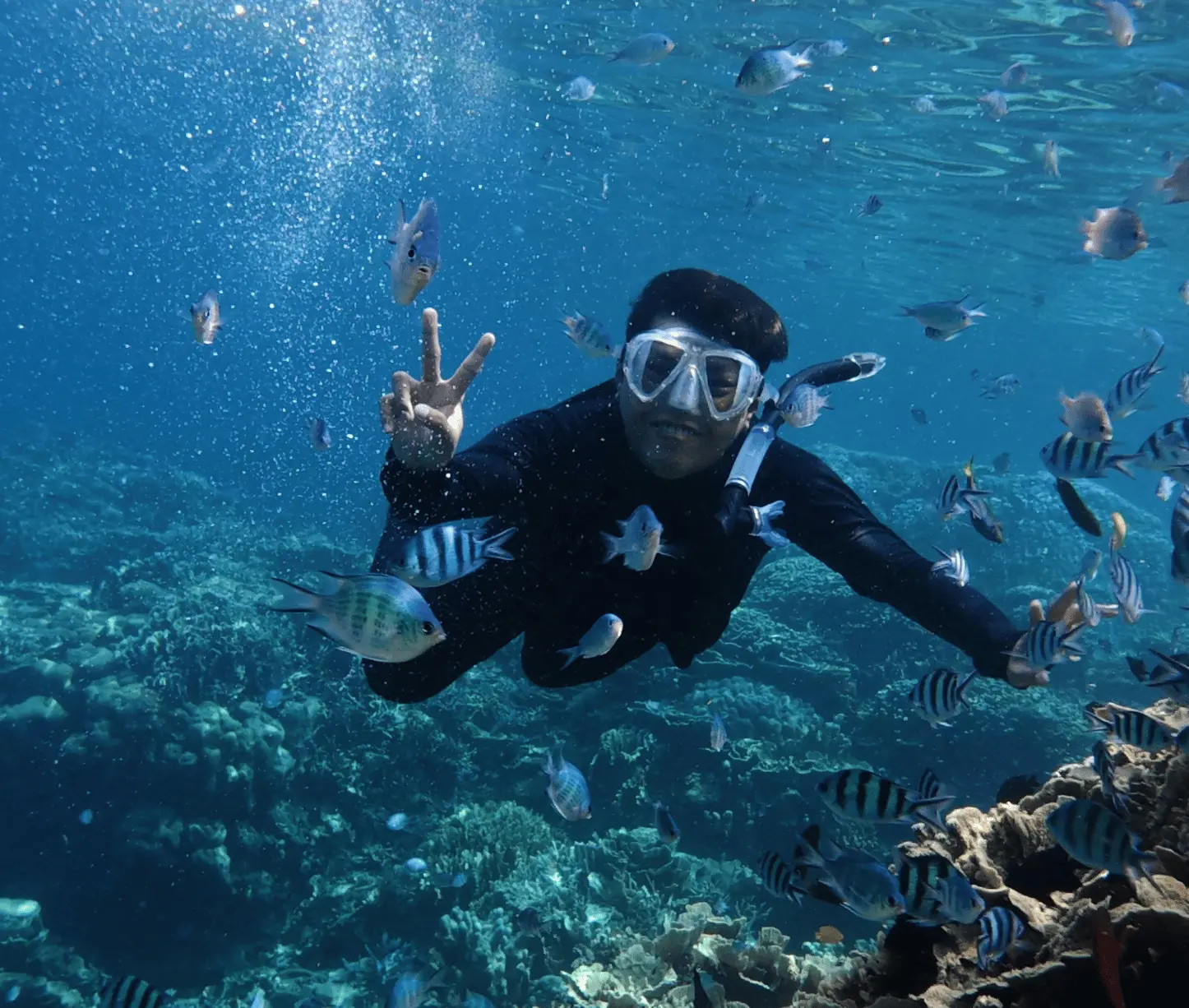
I never promise a specific animal, because the ocean does not take orders. But here is what is genuinely common in the shallows.
Clownfish, the orange-and-white ones, tucked into anemones and far braver than their size suggests. Butterflyfish drifting in pairs. Parrotfish, and if you stay still you can actually hear them scraping algae off the coral, a soft crunching sound that becomes the background music of your swim. Bright angelfish along the reef edges. Now and then a green or hawksbill turtle grazing in the shallows, which is the moment most people remember for years.
A couple of honest cautions. The titan triggerfish guards its nest and can get bossy if you swim straight over it, so give it space and it will leave you alone. And those banded sea snakes I mentioned are venomous but calm and not interested in you. Look, do not touch, and you are fine.
One more honest word on the coral itself. These reefs are beautiful, but they are also under stress from warming water, and you will see some patches that are bleached or recovering rather than perfectly colourful. That is real, and it is part of why we are careful: no standing on coral, no touching, fins up and off the bottom. Real snorkelers leave the reef exactly as they found it.
When to come and what time of day
The good season for snorkeling in Andaman runs roughly from October or November through April. In those months the sea is calm, the sky is bright, and visibility at the better sites can reach twenty meters or more.
The monsoon, around June to September, is the other story. The wind picks up, the water turns murky from river runoff, and water sports are often suspended for safety. So if you are reading this in the middle of the year, check with us before you plan your snorkeling day, because some days the sea simply will not allow it.
Time of day matters too. The light is best from about 9 in the morning to noon, when the sun comes down straight through the water and lights up the real colours. Late afternoon snorkeling looks flatter and greyer underwater. Book the morning slot if you can.
Snorkeling or scuba: which should you pick
Straight answer: if your budget and time are tight and you mostly want to dip into the sea and see fish, snorkel. It is cheaper, it is quicker, and at the right spot it is lovely.
But if part of you is curious about going under properly, do a Try Scuba dive at least once. You do not need to swim and you do not need a course. An instructor holds your gear and takes you down slowly, and the reef from inside it is a different world from the reef seen from the top. Plenty of people come to Havelock planning only to snorkel and leave having done their first dive. Some go further and sign up for the Open Water course before they fly home. No pressure either way. You can see what our reef looks like on the Havelock dive sites page and decide.
FAQ
Can non-swimmers snorkel in Andaman? Yes. The life jacket keeps you floating, your guide stays right next to you, and at calm spots like Nemo Reef and Bharatpur the water is shallow with no current. If you are anxious about the water in general, this blog on whether scuba is safe for non-swimmers will calm a lot of those nerves too.
What is the minimum age for snorkeling? Most operators here take children from about 10 years old. If you have a younger or older family member with a health condition, message us first and we will tell you honestly whether it works.
Do I need to bring my own snorkeling gear? No, and at some protected zones private gear is not even allowed. We provide the mask, snorkel, fins, and life jacket, all cleaned between groups. Just bring yourself and sunscreen that does not run into your eyes.
Will I get good photos? Our Nemo Reef snorkeling session includes GoPro photos and video, so you actually look at the fish instead of fumbling with a camera. The footage never quite matches what your own eyes see, but it is a nice thing to take home.
Is snorkeling or scuba better value? For a quick, low-cost taste of the reef, snorkeling wins. For seeing more of it, scuba is worth the extra money. Many people do both on the same trip and tell me the dive was the part they could not stop talking about.
Come find us in Havelock
If snorkeling is your speed, we will put you at the right spot at the right time, with a guide who actually knows where the good coral hides. And if you decide you want to go a little deeper while you are here, the tank is ready.
Message us your travel dates on WhatsApp before you lock your ferries, so we can fit your sea day around the weather and the tides. You can also call us on 095318 53676. Worst case, you floated over a reef for an hour. Best case, you are booking a dive before you leave.