I have watched a lot of newlyweds do their first dive together. There is a moment, about a minute after they go under at Nemo Reef, where one of them reaches over and grabs the other’s hand. Nobody teaches that. It just happens. They are weightless, breathing slow, a clownfish is yelling at them from its anemone, and for a few minutes there is no wedding, no relatives, no booking confirmations to chase. Just the two of them and the reef.
That is the version of an Andaman honeymoon I want you to have. So this is the honest planning guide I would give a couple over coffee before they book. I run Frogman, a dive centre in Havelock, so yes, I want you to dive with us. But most of what follows is just logistics and plain opinion, because an Andaman honeymoon itinerary lives or dies on the boring stuff: flights, ferries, and tides. Get those right and the romantic parts take care of themselves.
What this itinerary is, and who it is for
This is a 6 to 7 night plan across three places: Port Blair, Havelock (Swaraj Dweep), and Neil (Shaheed Dweep). It suits couples who want a mix. Some real underwater time, some doing nothing on a quiet beach, one or two big-moment evenings, and not a schedule so packed that you need a second honeymoon to recover from this one.
You do not need to know how to swim. You do not need to be divers. I will get to that.
Sort the logistics first, then think about romance
Here is the thing first-timers miss. The single biggest reason a honeymoon in Andaman goes sideways is not the weather. It is a missed ferry, or a flight that lands too late to catch one. So we plan backwards from the boats.
Fly to land in Port Blair by mid-morning. The early direct flights from the mainland get in around 9 AM. That one detail changes your whole trip. Land by 9 and you can catch an afternoon ferry straight to Havelock the same day and skip a wasted night in Port Blair. Book your flights at least three weeks out. Fares jump a lot closer to the date, and April and May are the priciest months to fly in.
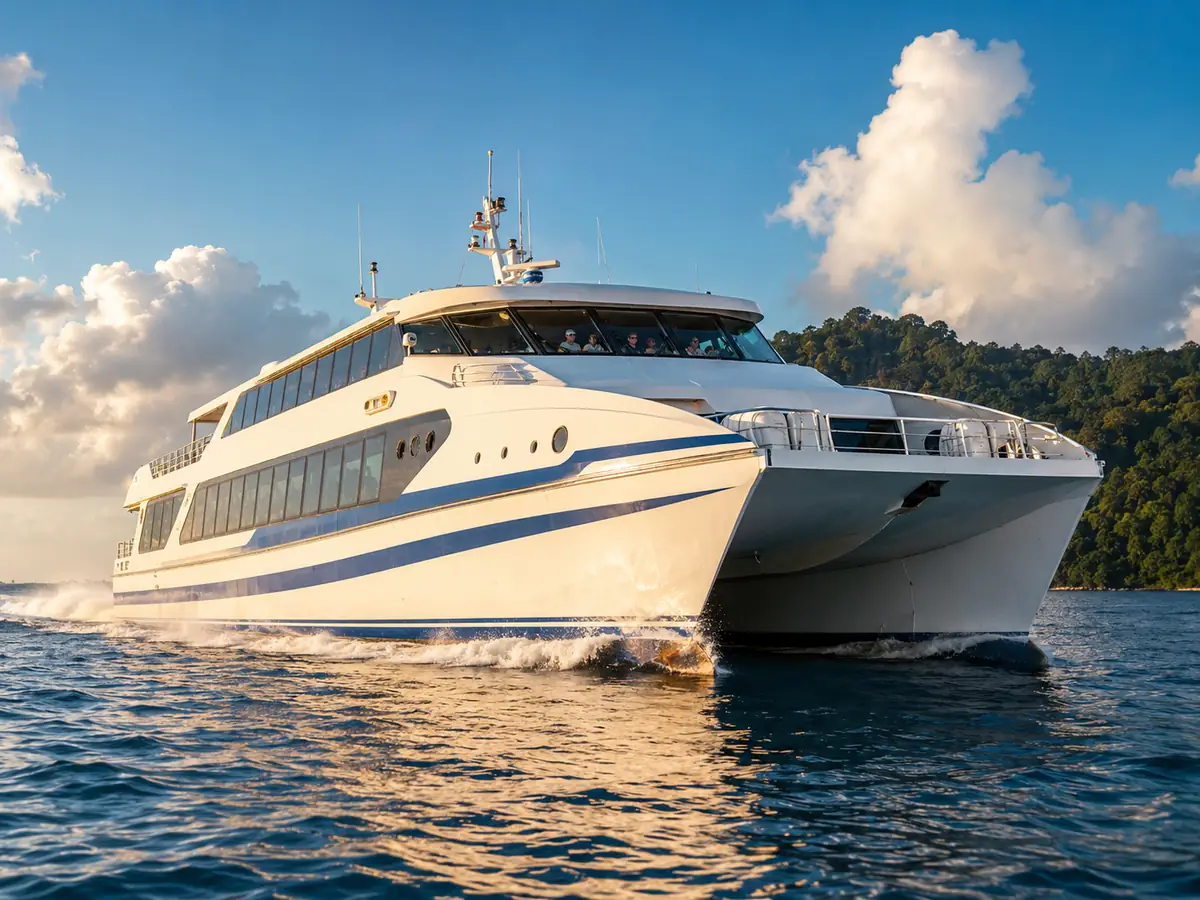
Take a private ferry, not the government one. Port Blair to Havelock is about 90 minutes on a fast catamaran like Nautika or Makruzz. Book the morning sailing. It is cheaper than the afternoon one (the afternoon boats carry a real time-of-day premium) and it lands you in time for the standard noon hotel check-in, so you are not sitting in a lobby in your travel clothes. Buy tickets directly from the operator’s own website. The aggregators add a markup and make refunds a headache if a sailing gets delayed by weather. Skip the government ferries unless you enjoy stress: those tickets open only two days before, online, and sell out in minutes.
Pre-book a cab for the whole trip. I know it feels like overpaying. It is not. A dedicated AC cab across all three islands for a week runs somewhere around ₹22,000, and the version where you haggle with a different driver at every jetty costs you about the same once you add it all up, plus the indignity of bargaining on your honeymoon. The real reason though is the drivers know the tides. You will need that for Neil, and I will explain why.
The actual day-by-day
This is a skeleton. Stretch or trim it to fit your dates.
Day 1, Port Blair. Land, breathe, see the Cellular Jail. The evening Light and Sound Show there is genuinely moving, not a tourist trap. One catch most people get wrong: the Hindi show is daily at 6 PM, but the English one runs only on Monday, Wednesday and Friday at 7:15 PM. Plan your day around that if English is what you want. If you land early enough and have energy, Chidiatapu for sunset is a quiet, pretty drive through old rainforest.
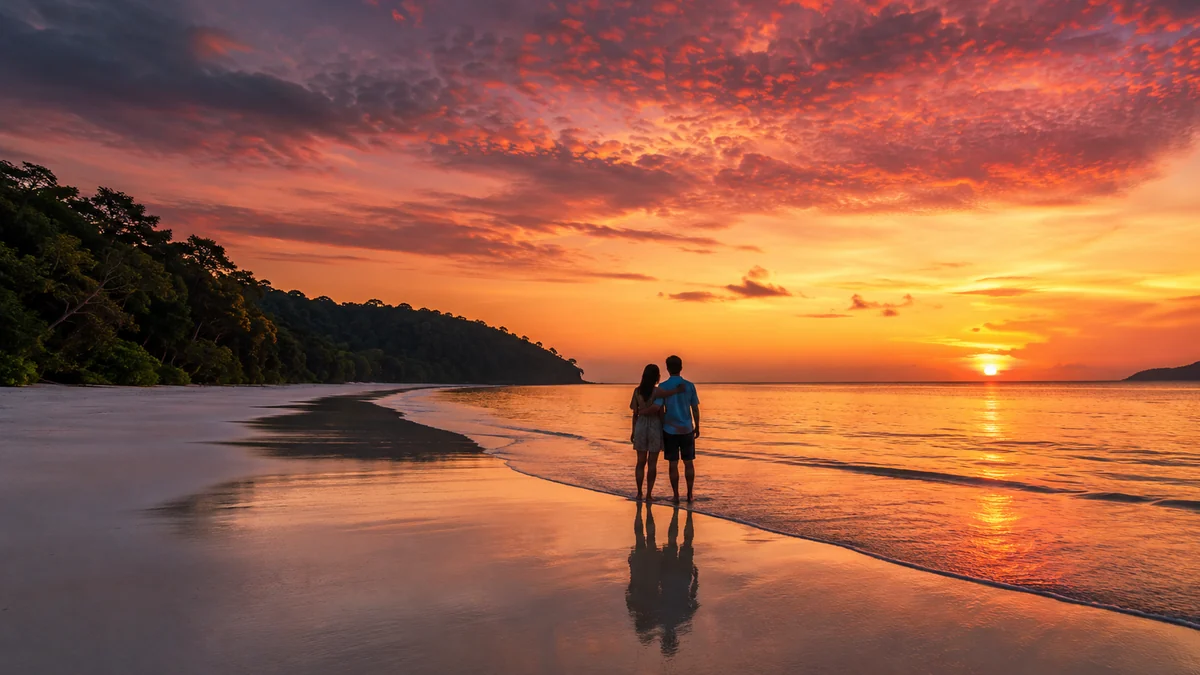
Days 2 to 4, Havelock. This is your base. Diving, Radhanagar Beach for the famous sunset, Kalapathar on the sunrise side if you are early risers, and the evenings I will get to below. Three nights here is the sweet spot.
Days 5 to 6, Neil Island. Havelock to Neil is a short hop, 45 minutes to an hour on the fast boat. Neil is slower, quieter, fewer people. This is the do-nothing part of the trip, and after the activity of Havelock you will want it.
Day 7, back to Port Blair to fly out. Give yourself a buffer here. Do not book a same-day ferry-then-flight with a tight gap, and remember there are rules about how long you have to wait to fly after scuba diving, so keep your last dive well clear of your flight. Sea conditions get a vote too.
Doing your first dive together: andaman honeymoon scuba, the real version
If you take one thing from this guide, take this: do at least one dive together. You can read about it, you can watch reels of it, and none of that prepares you for your own first breath underwater. It is the single most shared, most “we did that” thing on the whole trip.
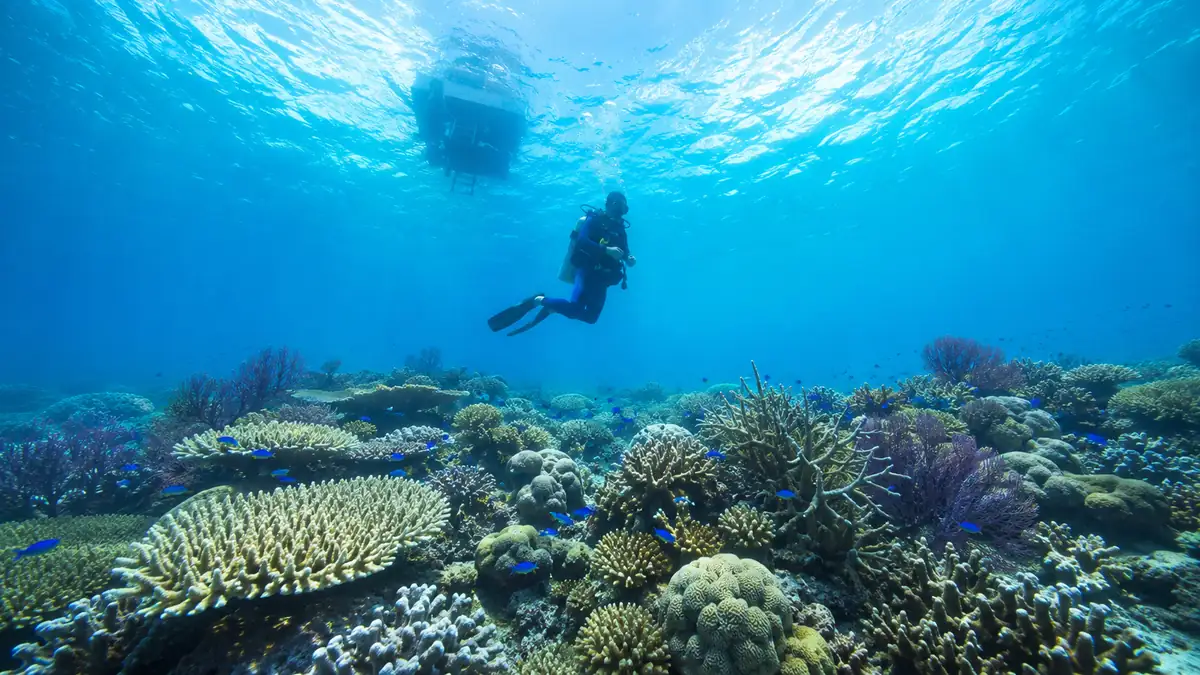
You do not need certification or any swimming background for a first dive in Havelock. We call it a Try Scuba dive. Here is exactly how it goes. We do a relaxed briefing on land, then we go in shallow and slow, usually at Nemo Reef, which is calm and protected and sits between about 6 and 12 meters. I am holding onto you the whole time. You breathe, you look around, and if at any point you want to come up, you give me a thumbs up and we come up together. That is the entire deal. No backward roll off a boat into deep water, no test, no drama.
Almost everyone is sure they will panic. Almost nobody does. It feels strange for about ninety seconds, then it feels normal, then it feels like the best thing you have done in years.
Water here sits around 27 to 30 degrees, so you are not cold. On a good day you can see fifteen to twenty-five meters down the reef. You will probably see clownfish, a lot of reef fish, soft corals, and on a good day a turtle that could not care less you are there. I will not promise you a specific animal. Nobody honest can. The reef shows up how it shows up, and that is part of why it is worth it.
Our entry dives start at ₹3,500 per person and include your photos and videos, because trust me, you will want them. One real piece of advice though: the footage never looks as good as it did in your mask. Do the dive for the dive, not the camera roll.
A couple of honest notes. There are minimum age rules and a few medical conditions that need a doctor’s sign-off before you dive, so fill the medical form honestly and just ask us if you are unsure. And the old “you cannot dive in the rain” line is nonsense. You are already underwater. More on that below.
The bioluminescence kayak, and why timing is everything

This is the other thing I push couples toward, and you do not need to swim a stroke for it. On the right night you paddle out and every stroke lights up the water in a blue-green glow, because tiny plankton flash when the water moves. Drag your hand through it and your fingers trail light. It looks fake. It is not.
But it is fussy, so listen. It needs darkness, real darkness, which means it works best on no-moon nights, and the strong season runs roughly November through February, trailing off into April. The good tours launch in the pitch dark, often around 3:30 in the morning, because that is when the sky is darkest and the water is stillest. Yes, that is a brutal alarm on your honeymoon. Do it anyway. You can sleep on the beach later.
We run these as small groups with stable tandem kayaks and proper life vests, and you do not need any kayaking experience. Message us your dates well ahead so we can line you up with a dark night, because you cannot just decide on the day. The moon does not negotiate.
The candlelight dinner: what is worth it and what is not

Every operator on these islands sells a private beach candlelight dinner, and they are stacked into tiers. A simple beachfront setup with a five-course meal runs maybe ₹6,000 to ₹9,000 a couple. Add a heart of candles and a cake and you are at ₹9,000 to ₹14,000. A private floral canopy with rose petals and actual privacy is ₹14,000 to ₹20,000. And there is a floating-boat ultra-luxury version that can hit ₹40,000 to ₹50,000.
Here is what I think. The mid-tier canopy dinner is the one that is actually worth it, because what you are really paying for is privacy and not having forty other tables nearby. The basic one feels a bit exposed. The ₹50,000 floating version is gorgeous in photos and, in my opinion, not five times better than the canopy. Spend the difference on a second dive. Whatever you book, give them notice for any dietary needs (Jain, vegan, allergies) and check they have an indoor backup, because these are outdoor setups and a sudden shower will happen sooner or later.
Neil Island and the tide that runs your morning
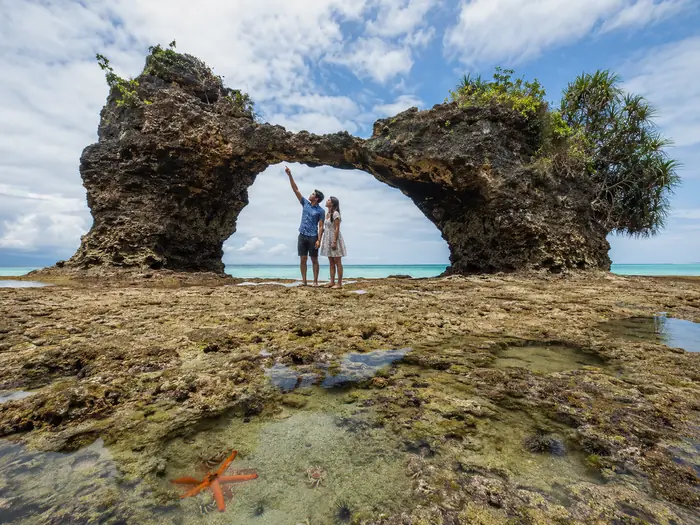
Neil’s signature spot is the Natural Bridge, a big natural rock arch the old Bengali settlers nicknamed the Howrah Bridge. It is genuinely worth the visit, but it comes with a hard rule the brochures bury: you can only reach it at low tide. At high tide the path is underwater and the sea there is rough, so you simply cannot go. This is the whole reason your cab driver’s knowledge of the tide matters.
Wear proper grip shoes. The walk out is a few hundred meters over sharp, fossilized coral and slippery rock, and flip-flops will end your honeymoon early in a way nobody wants. When the tide pulls back it leaves shallow pools full of life: starfish, sea cucumbers, little crabs, urchins. Look, do not touch, and watch where you step. Those pools are protected and fragile, and that is just how decent people behave around them. Entry is a nominal fee, and the site closes before dusk because wet rock in the dark is dangerous.
When should you actually come
The easy answer is the dry winter months, roughly October to May, and that is the busy, postcard season. But let me give you the contrarian version, because it saves people real money.
The monsoon months get a bad reputation they do not fully deserve. Andaman is not like the mainland in the rains. It gets short heavy bursts and then long dry sunny stretches, and crucially, rain does not stop diving. You are underwater. What actually closes diving is wind and big swell, and that mostly affects the far offshore sites, not the sheltered reefs around Havelock where you will be doing your first dives. So if you come in the shoulder months you can get good scuba diving in Andaman, near-empty beaches, and much cheaper resorts. The bioluminescence season is the trade-off there, so pick your priority. Want the glowing water? Come in winter on a no-moon night. Want quiet and value with great diving? The shoulder season is an underrated honeymoon move.
What nobody tells you, and what to skip
A few real things before you book.
Pick your resort for how it behaves, not just how it photographs. The Andaman crowd has gotten serious about this, and so have I. There are gorgeous-looking places that treat the island and its animals badly, and a few that have been called out hard for it. Read recent reviews, not just the glossy ones, and reward the places that look after their patch of beach. Properties with a private or mangrove beach are worth it on a honeymoon, mostly because you skip the crowds.
Do not over-schedule. The instinct is to cram all three islands plus every activity into six days. Resist it. The couples who enjoy this trip most leave gaps. An empty afternoon on a quiet beach is not wasted time on a honeymoon. It is the point.
And do not blow the budget on the flashiest version of everything. The fastest ferry class and the slowest one arrive at the same time. The ₹50,000 dinner and the ₹15,000 one both end with the two of you on a beach. Spend where it actually changes the experience, which underwater, usually means one more dive.
Quick questions couples actually ask me
Is Andaman good for a honeymoon if neither of us can swim?
Yes. Your first dive and the bioluminescence kayak both need zero swimming. We hold you for the dive and you sit in a stable kayak for the other. Plenty of the best moments here do not need you to be a swimmer at all.
How many days do we need for an Andaman honeymoon itinerary?
Six nights is comfortable, seven is better. Less than five and you spend too much of it on boats and not enough on islands.
Can we dive together on the same dive?
On a first Try Scuba dive we keep the groups tiny and yes, couples go down together. It is honestly half the reason to do it.
Will we see turtles and sharks?
Often turtles, sometimes a reef shark on the deeper certified dives, plenty of reef fish almost always. I will never promise you a specific animal though. The ocean does not take requests.
Is the rainy season really fine for diving?
For the sheltered Havelock reefs, mostly yes. Rain does not affect a dive. Wind and swell do, and that hits the far offshore sites more than the ones beginners use. You also get fewer crowds and lower prices.
When is the bioluminescence at its best?
No-moon nights between about November and February, with an early pre-dawn launch. Message us your dates and we will tell you honestly whether your nights line up.
Come dive with us
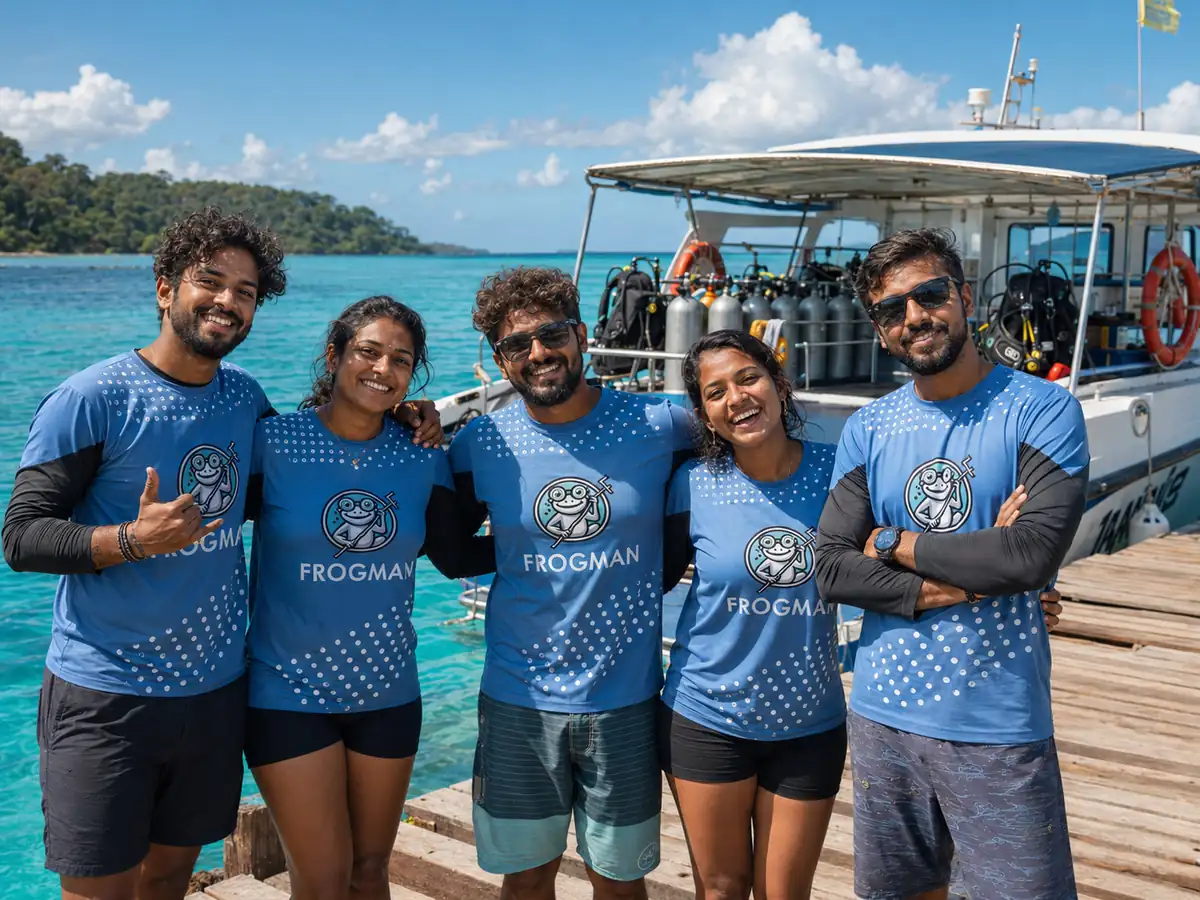
If you are planning a honeymoon in Andaman, build it around the boats, leave room to do nothing, and do at least one dive together. That is the whole secret.
When you have rough dates, message us before you lock your flights and ferries. We will fit your dive and your kayak around the tides and the moon, which is the one bit of this you cannot fix later. Worst case, you tried scuba on your honeymoon and have the photos to prove it. Best case, I see you back here in a year for your Open Water course.