Our dive centre sits a few minutes from Govind Nagar Beach, near the Forest Office in Havelock. I walk this stretch of sand almost every working day, usually carrying a tank or chasing a student who forgot their mask. So when I write about Govind Nagar Beach, I am not describing a tourist spot I visited once. I am describing my office.
Here is the short version for anyone planning a trip: Govind Nagar Beach (Beach No. 3, on the jetty side of the island) is the easiest place in Havelock, and honestly one of the easiest places in India, to put your face in the water and see a living coral reef. The reef starts right off the sand. No boat, no long swim, no jumping into deep blue water. You wade in. That one fact changes everything for beginners, and it is why most of the island’s dive schools, including ours, operate from this side.
Where is Govind Nagar Beach and how do you reach it?
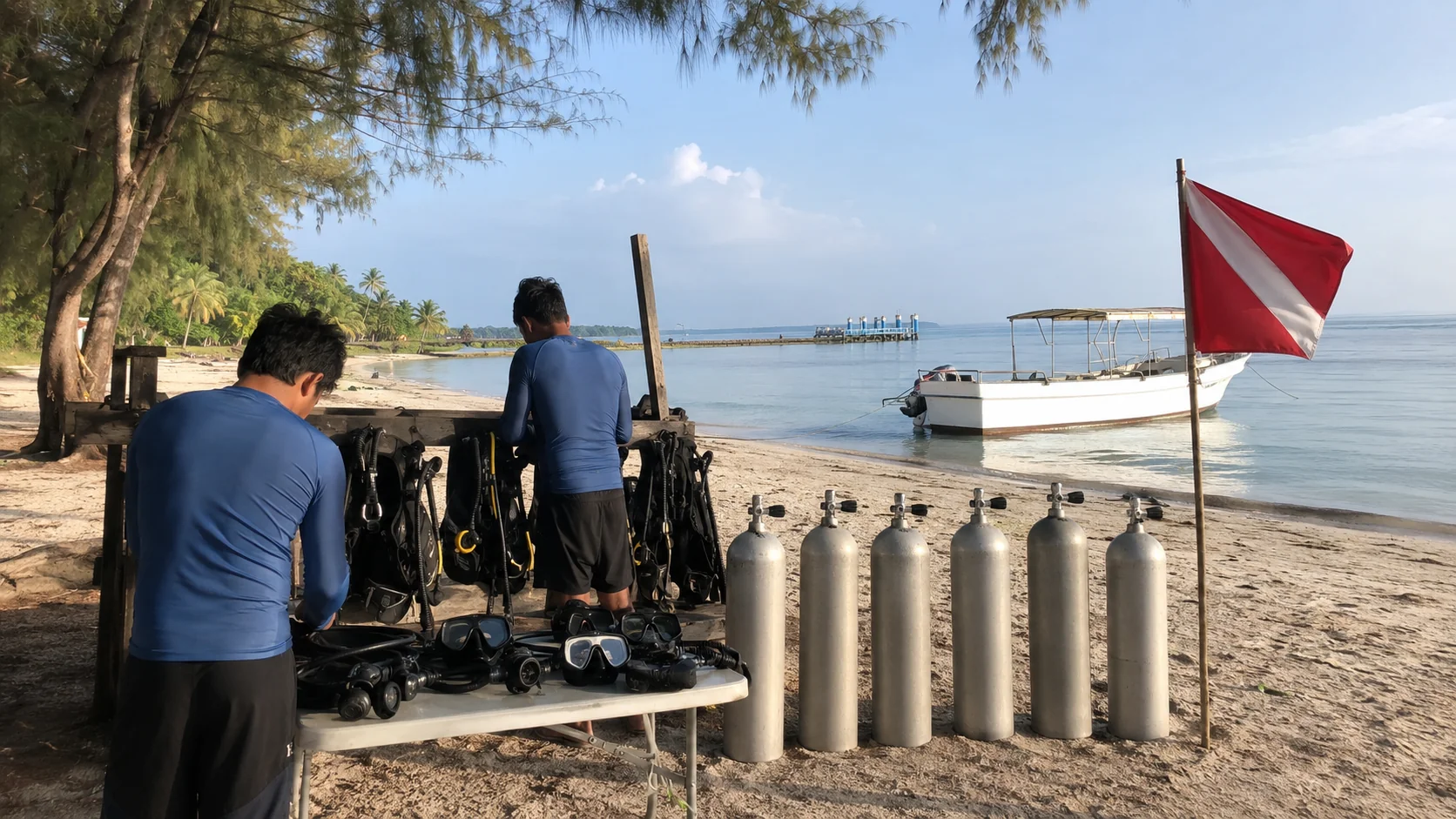
Govind Nagar is on the jetty side of Havelock Island (the official name is Swaraj Dweep, but everyone still says Havelock). When your ferry from Port Blair docks, you are already in the neighbourhood. The beach runs along the main market area, so most hotels, cafes and dive shops are a short walk or a five minute scooter ride away.
The sand is white and fine, the water stays shallow a long way out, and the bay is sheltered from open ocean swell. On a calm morning the sea here looks less like the Bay of Bengal and more like a very large swimming pool, which is exactly why we train students here.
One thing the brochures get wrong: Govind Nagar is not the postcard beach. Radhanagar (Beach No. 7) wins that contest, no argument from me. Govind Nagar is the working beach, the one with fishing boats, dive flags and people learning to breathe underwater. Sunset photo, go to Radhanagar. The sea itself, come here.
Nemo Reef: the reef I know better than my own street
The reason Govind Nagar Beach matters to divers is Nemo Reef, the shore dive site that sits right off the beach. I have done more dives here than I can count, and I still find something new on slow days.
The layout is almost designed for beginners. There are two fringing reefs with a wide sandy channel between them, what we call the sand highway, sitting at about 1 to 3 meters. The depth builds up gently:
- 0 to 1 meter: sandy entry. You walk in from the beach.
- 1 to 3 meters: shallow coral gardens and the sand highway. This is snorkelling territory.
- 3 to 8 meters: the main reef, where most of the fish life is. This is where the clownfish families live, and where first-time divers spend their dive.
- 8 to 16 meters: the deeper slope, mostly for certified divers and training dives.
That sand highway is a gift for teaching. We can kneel students on plain sand to practise skills like mask clearing and equalising, with zero risk of anyone kicking the coral. Once you are steady, the reef is right there on either side.
Tide matters here, and nobody tells visitors this. High tide usually gives cleaner water and better visibility. Low tide squeezes the fish into the shallow pockets, dense fish life but milky water. If your timings are flexible, ask us which slot has the better tide that day. We check it every morning anyway.
The Ghost Jeep
My favourite oddity on a Nemo Beach scuba dive is the Ghost Jeep, an old Mahindra Commander sitting on the bottom at about 6 to 8 meters. It was sunk on purpose years ago to act as an artificial reef, and the sea has fully claimed it. Barnacles, sponges and hard coral cover the body, and small fish use it as an apartment building.
Reefs can feel alien on your first dive. A jeep is not alien. I have watched stiff, white-knuckle beginners relax completely the moment it comes into view. It also makes a great photo, which matters to roughly one hundred percent of our guests.
What will you actually see in the water?
I never promise specific animals, because the ocean does not take bookings. But here is what Nemo Reef and the Govind Nagar reefs deliver on a normal day.
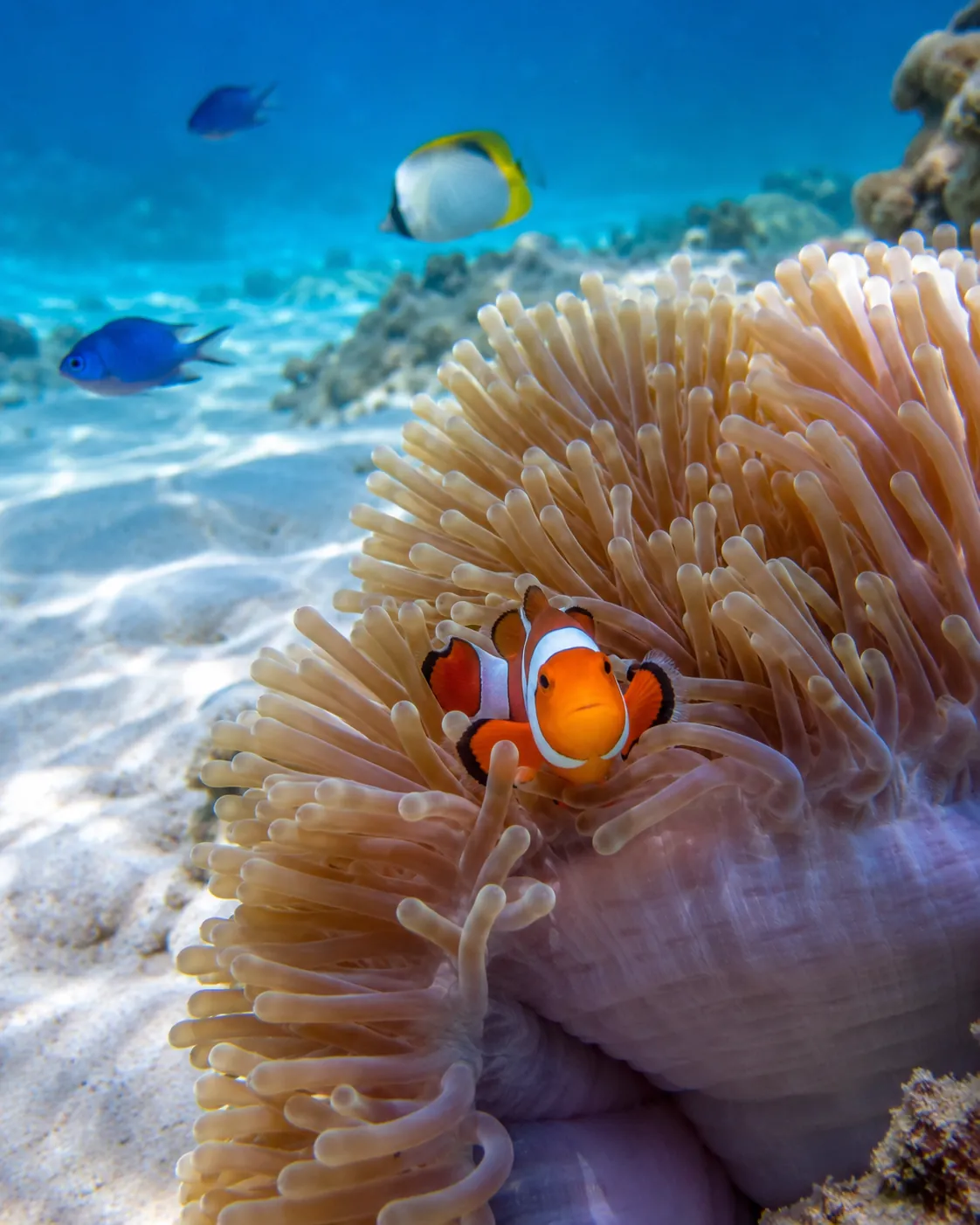
Clownfish are close to guaranteed. The reef is named after them for a reason, and several species live in the anemone patches between 3 and 8 meters. You will also see damselfish, parrotfish, butterflyfish, surgeonfish, bannerfish, snappers and angelfish, plus the odd sweetlips hanging under a coral head looking grumpy.
On a good day you get the bigger stuff: a bumphead parrotfish cruising past like a small bus, a giant grouper holding its ground, barracuda or trevally hunting in the blue above the reef. On the sand you often find blue-spotted stingrays resting, and moray eels tucked into the rocks watching you with that permanently offended expression. If you like the small things, there are octopus and cuttlefish doing their colour-change tricks, nudibranchs for the photographers, and sometimes a banded sea krait gliding through the shallows. It looks dramatic and it is extremely uninterested in you. Give it space and enjoy the sighting.
The coral itself is worth your attention too. Staghorn thickets, table corals, brain corals, mushroom corals. This is the architecture everything else lives in, which is why we are strict about fins and hands staying off it. Not as a rule from above. It is just how real divers behave.
Snorkelling at Govind Nagar Beach
Snorkelling is the simplest way into all of this. No course, no certificate, no heavy gear. Mask, snorkel, fins, a float vest if you want one, and you are looking at the reef within minutes of leaving the sand.
The shallow lagoon at 1 to 4 meters is calm enough for genuine non-swimmers. On our guided snorkelling sessions, a guide stays in the water with you the whole time. If you cannot swim, the guide tows you on a float ring, which keeps you safe and keeps your feet off the coral. The Nemo Reef snorkelling session starts at ₹1,500 and includes GoPro photos and videos, so you have proof for the family group.
My honest take: a lot of people book Elephant Beach for snorkelling because every package tour pushes it. It is fine, but crowded and rushed. Snorkelling here at Govind Nagar is calmer, cheaper to reach, and the reef is healthy. Most days I would pick it over the famous option.
Scuba diving here when you have never dived before
Your first dive at Govind Nagar Beach is a Try Scuba dive, a try dive. You do not need any experience and you do not need to know how to swim. I wrote a full piece on that if you are doubtful: is scuba diving in Andaman safe for non-swimmers? Short answer, yes, and the shore entry here is the reason.
The session starts in chest-deep water with a briefing and practice, usually 15 to 30 minutes. You learn three or four simple skills: breathing through the regulator, clearing water from your mask, popping your ears as you go down. Then your instructor takes you on the actual dive, 30 to 45 minutes underwater, one instructor to one guest. Not one to four. One to one, holding your gear the whole time.
Depth stays modest on purpose. Try dives from shore are capped at roughly 8 to 12 meters, which at Nemo Reef is plenty, because that is exactly where all the life is. You are not missing anything deeper.
A shore dive at Nemo Reef costs ₹3,500 with us, including your photos and videos. If you want a boat dive instead, sites like Red Pillar, Tribe Gate and Lighthouse run between ₹4,000 and ₹6,000 depending on the site. Everything you need to know as a first-timer is on our beginners page.
Two rules worth knowing before you book. We follow RAID’s rules: the minimum age for a try dive in the sea is 10, and children aged 8 and 9 can do a shallow Try Dive Cadet session up to 2 metres. And everyone fills a standard medical form; conditions like asthma, heart problems, epilepsy or pregnancy mean diving is off for safety reasons, and if you are above 45 or so we may ask for a doctor’s fitness certificate. Fill the form honestly and ask us if anything is unclear.
One more thing people forget: do not fly within 18 to 24 hours of diving. Plan your dive for early in the trip, not the morning of your flight. I explain why in this post on flying after scuba diving.
What if you are certified, or want to be?
Beginners are only half the story at Govind Nagar Beach. Everything else in Havelock diving also starts from here.
If you are already certified, the boat sites start five to fifteen minutes offshore, and Havelock has more than twenty of them, from easy reefs to deep advanced sites. Browse the full list on our dive sites in Havelock page and message us about a fun dive day.
If your try dive lights something up in you (it happens more often than people expect), the natural next step is certification. The RAID Open Water course takes three to four days, and Nemo Reef is where your confined-water training happens, on that same sand highway, before you graduate to boat dives. The course runs ₹29,000 with us, inclusive of GST. Fair warning that certification, unlike a try dive, does include a swim test. That is the line between trying diving and becoming a diver.
When should you come?
The main season is October to May. The sea is flat, the water sits between 26 and 30 degrees, and visibility on the reefs ranges from 10 meters on an average day to well beyond 20 on a great one. December to early January is the most crowded and the most expensive window across the island, so book ahead if you are coming then.
Now the honest monsoon answer, because it is June 2026 as I update this and I get the question on WhatsApp daily. From June to September the southwest monsoon brings rain, wind and rough open sea. Boat dives to exposed sites get cancelled, and ferries can be delayed, so keep buffer time before your return flight.
But here is what most travel guides miss: Govind Nagar bay is sheltered. Even when the open ocean is angry, the water inside the bay often stays calm enough for shore dives and snorkelling at Nemo Reef. We dive here through most of the monsoon, and hotels drop their rates sharply in these months. If you want a quiet, cheap Havelock trip and you are flexible about weather, it is genuinely workable. Just message us before you book travel so we can tell you what the sea is doing that week.
A few small things that make your visit better
Mornings and late afternoons are the nicest times on the beach: softer light, fewer people, usually calmer water. Carry reef-safe sunscreen, because the normal kind washes off you and onto the coral, and bring a refillable bottle since single-use plastic is banned on the islands. In the water, the rule is simple: look at everything, touch nothing, keep your fins off the bottom.
After your dive, do what we do. Find a cafe near the market, order something fried and a fresh coconut, and watch the fishing boats come in. Havelock’s best feature might be how little there is to do once you are out of the water.
Quick answers to common questions
Can non-swimmers snorkel or dive at Govind Nagar Beach? Yes, both. For snorkelling, a guide tows you on a float ring in the shallow lagoon. For a try dive, your instructor handles everything underwater, one to one. Thousands of non-swimmers do their first dive here every season.
How deep is the water at Nemo Reef? It slopes gently from the sand: 1 to 3 meters in the snorkelling zone, 3 to 8 meters on the main reef where try dives happen, and down to about 16 meters on the outer slope for certified divers.
Is high tide or low tide better? High tide usually gives clearer water. Low tide concentrates the fish but can reduce visibility. We check tides daily, so ask us when you book.
Can I dive at Govind Nagar Beach during the monsoon? Usually yes, for shore dives. The bay is sheltered, so Nemo Reef often stays diveable from June to September even when boat dives are cancelled. Confirm with us a day or two before, since weather decides.
How much does it cost? Snorkelling at Nemo Reef starts at ₹1,500 and a shore try dive is ₹3,500, both including photos and videos. Boat dives for beginners run ₹4,000 to ₹7,500 depending on the site.
Is Govind Nagar Beach good for a regular swim? Yes. The water is shallow, calm and sandy near the shore, which makes it one of the safer swimming beaches on the island. Just stay aware of the marked dive and boat zones.
Come say hello
If you are coming to Havelock, you will probably end up at Govind Nagar Beach whether you plan to or not. It is where the island actually lives. Walk down to the water, and if you see our flag, come say hi. Worst case, you get a free chat about fish. Best case, you take your first breath underwater a hundred meters from where you were standing.
Message us on WhatsApp or call 095318 53676 with your travel dates, and we will line up the right slot, the right tide and the right dive for you. The reef is right there. You just have to wade in.