Bird Watching — Frogman Adventures, Havelock Island
Course Code: FRG-BRD-HVL

Bird Watching in Havelock Island, Andaman

₹1,500 + GST
4.9 1,991 Google reviews

Two slow hours in Havelock's forest with a naturalist, following calls and movement through the canopy. The Andaman Islands have birds found nowhere else on earth. Beginners welcome, no birding experience needed.

Want more details?
Things to Know
Booking confirmation sent via WhatsApp within 30 minutes
Free cancellation up to 24 hours before your walk
Secure payment 10+ years experience 4.9★ rated

Bird Watching in Havelock Island

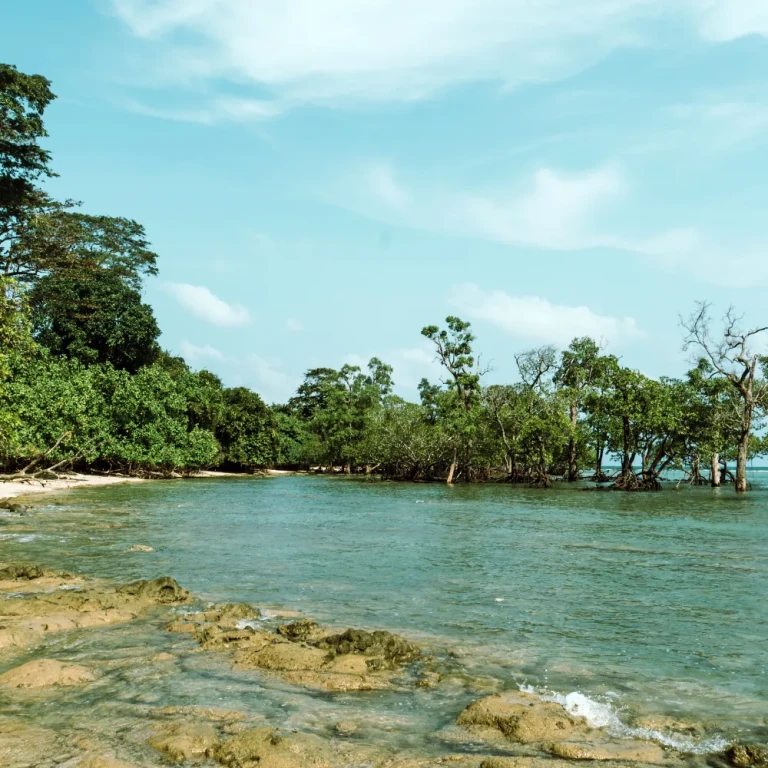
The Andaman Islands broke away from the mainland long enough ago that the birds here went their own way. The result is a list of species that exist on these islands and nowhere else on earth, sitting in forest that starts a few minutes inland from the beach most visitors never leave.

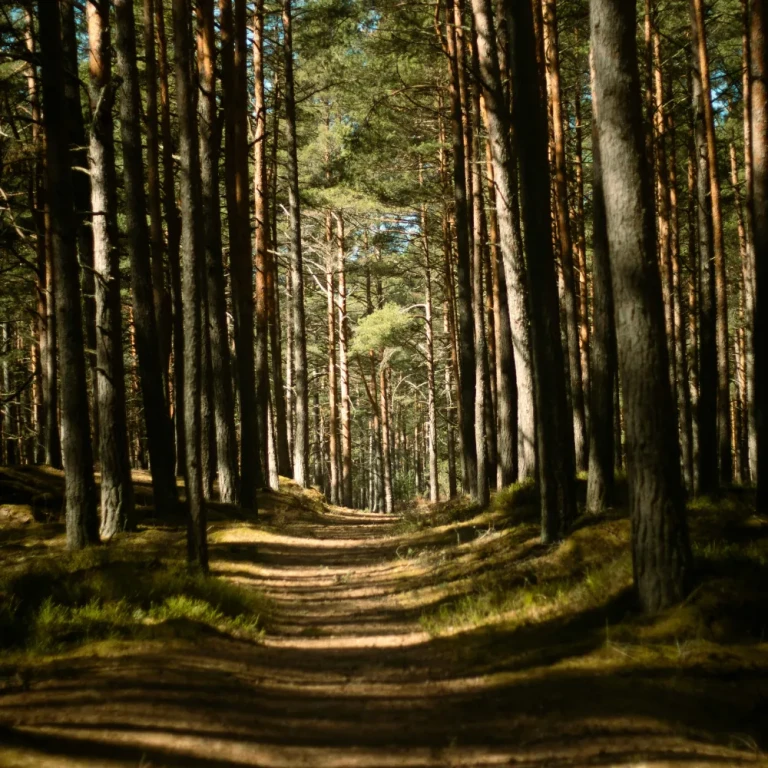
This is a slow two hours in that forest with a naturalist. You follow calls, watch for movement in the canopy, and stop a lot. It is the opposite of a scuba dive in pace and it suits a different mood. You do not need to be a birder, and you do not need to own binoculars. Most people who book this have never deliberately looked at a bird in their life, and they leave able to recognise five or six.

Duration
Around 2 hours
Timing
Early morning or late afternoon
Group Size
Small guided group
Suitable For
Complete beginners to experienced birders
Best Conditions
The cool hours, with light wind
Meeting Point
Confirmed at the time of booking

Why do a bird watching walk here?

  • Endemic species - birds you cannot see in mainland India, or anywhere else, because they only exist on these islands.
  • Easy forest - Havelock's woodland is walkable and close to where you are staying, so this is a two hour outing rather than an expedition.
  • Beginners genuinely welcome - the guide's job is to find and identify, yours is to look where you are pointed.
  • A different rhythm - after a few days of boats and dives, two quiet hours in the trees is a real change of pace.
  • Works around a dive schedule - the best birding hours are early morning and late afternoon, so it slots either side of a dive day.

What a walk actually looks like

You will not be marching. A good birding walk covers a short distance slowly, with long pauses. Your guide will usually hear a bird before anybody sees it, work out roughly where it is, and get the group looking in the right part of the canopy before it moves. A lot of birding is standing still and being quiet, which sounds dull and is not.

Bird activity varies with weather, season and time of day, and no walk can promise a particular species. What we can promise is the right hours, the right habitat and a guide who knows the calls. If weather makes the walk pointless we move it or refund it in full.

The birds of the Andaman Islands

The Andaman and Nicobar Islands have well over two hundred recorded bird species, and an unusually high share of them are endemic, meaning they occur here and nowhere else. That is a direct consequence of geography. These islands sit far out in the Bay of Bengal and were never joined to the Asian mainland in a way that let birds move freely back and forth, so populations that arrived here evolved in isolation and became their own species.

For a visitor this means something simple and quite rare: on a two hour walk in Havelock you have a real chance of seeing birds that a lifelong birder from Delhi or Bengaluru has never seen.

Andaman endemics to look for

Andaman Bulbul

Olive and yellow-green with a darker head, common along forest edges and clearings. Often the first endemic people get a clean look at, because bulbuls are less shy than most forest birds.

Andaman Drongo

Glossy black with a forked tail, usually perched in the open watching for insects. An accomplished mimic, so a call you have already identified as another bird may turn out to be this.

Andaman Treepie

Rufous and grey with a long tail, moving through the canopy in twos and threes and calling to each other as they go. Noisy, which helps.

Andaman Woodpecker

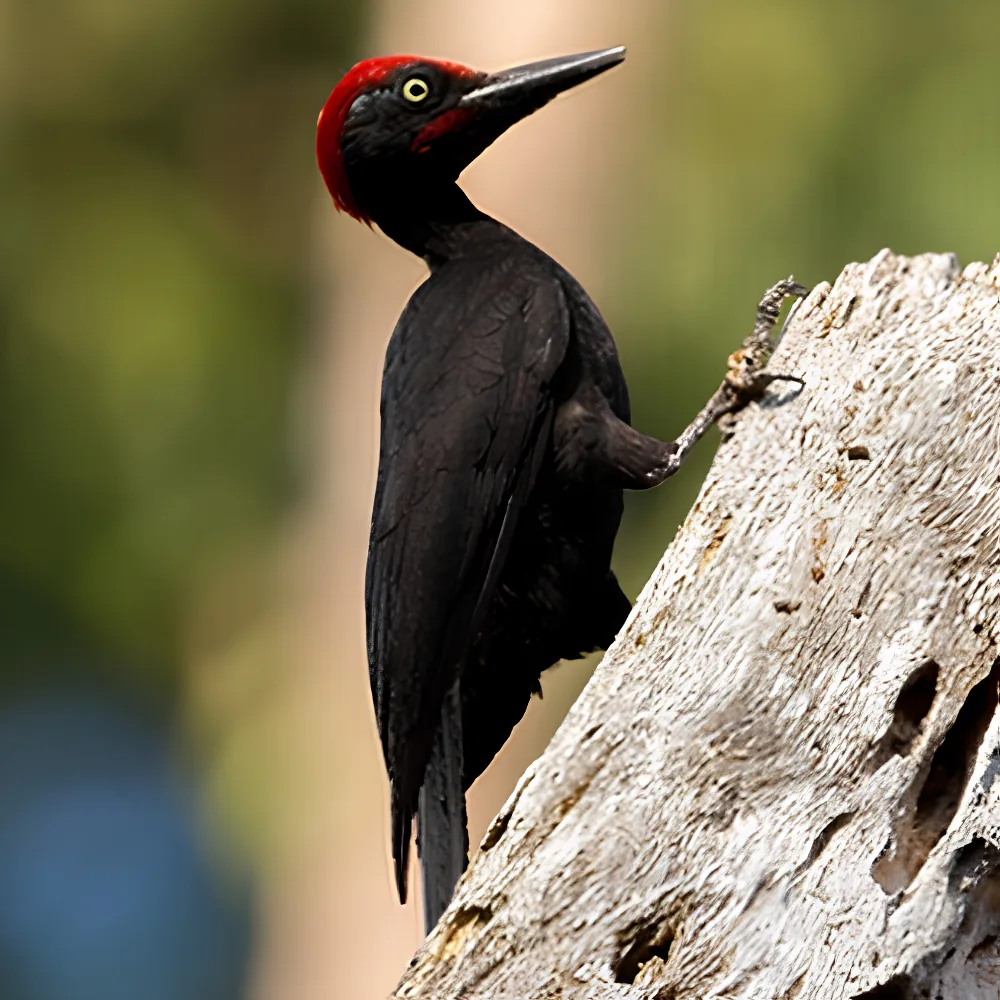
A large all-black woodpecker with a red crest, endemic to these islands and not common. Listen for drumming and for heavy wingbeats between trunks.

Andaman Serpent Eagle

A dark, thickset raptor of the forest interior. More often heard than seen, with a distinctive whistling call from a perch inside the canopy.

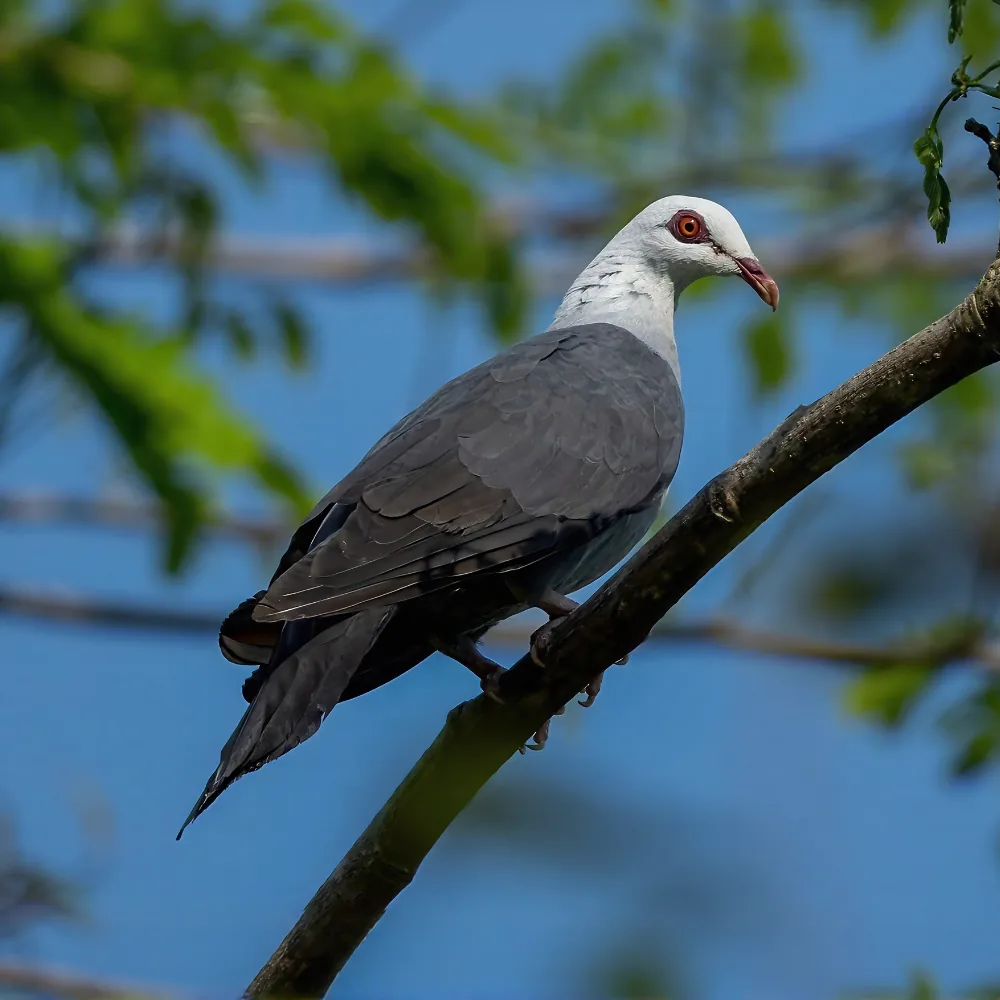
Andaman Green Pigeon

Green and well camouflaged, feeding quietly in fruiting trees. Easy to walk under without noticing until the whole group bursts out.

Others on the endemic list include the Andaman Cuckoo-Dove, Andaman Coucal, Andaman Flowerpecker and Andaman Shama. Which ones turn up depends on the day, the season and a fair amount of luck.

Birds you are very likely to see

  • White-bellied Sea Eagle - a very large raptor, brilliant white underneath with grey wings, nesting in tall trees along the shore. Frequently seen over the coast, and hard to mistake for anything else.
  • Brahminy Kite - chestnut body, white head, common along the coastline and around fishing activity.
  • Collared Kingfisher - bright blue and white, loud, and much more visible than its size suggests. Common in coastal trees and mangrove edges.
  • White-throated Kingfisher - turquoise back, chestnut head, white throat patch, often perched on wires and posts well away from water.
  • Pacific Reef Egret - worth knowing that this species comes in two colour forms, one pure white and one dark slate grey. Both are the same bird, which surprises most people.
  • Olive-backed Sunbird - tiny, fast, the male with a metallic blue-black throat, feeding at flowers in gardens and forest edge.
  • Oriental Magpie-Robin - black and white, and one of the best singers on the island.
  • Shorebirds - whimbrel, sandplovers and other waders working the tideline, particularly between November and March.

Best time of day, and best time of year

Early morning
The strongest window

The first couple of hours after first light are far and away the most active period. Birds feed after the night, calls carry, and the light is on your side. If you only do one walk, do this one.

Late afternoon
The second window

Activity picks up again as the heat drops, roughly the last two hours before sunset. Quieter than dawn but still productive, and easier if you are not a morning person.

November to March
Peak season

Resident endemics are around all year, but the winter months add migratory waders and raptors, and the weather is at its most settled. April onwards is hotter and the middle of the day goes very quiet.

How to actually see birds in dense forest

Forest birding is a skill and most of it is unlearning habits. What works:

  • Listen before you look. Your guide is navigating by ear. In thick canopy sound tells you where to point your eyes far more often than sight does.
  • Look for movement, not for colour. A bird in shade is a grey shape. The flick of a tail against still leaves is what gives it away.
  • Move slowly and stop often. Standing still for two minutes shows you more than walking for ten.
  • Scan the sunlit edge of the canopy, and the gap between the canopy and the understorey. Birds work edges.
  • Wear muted colours and keep conversation low. Bright clothing and loud voices clear a patch of forest ahead of you.
  • Follow the pointing, not the description. "Second branch, left of the split trunk" beats "over there" every time, and your guide will use the clock face on the tree.

What your ₹1,500 covers

Naturalist with you throughout

Someone who knows the calls, which is the entire difference between a walk in the woods and a birding walk.

Small guided group

Kept small because a large, noisy group empties the forest ahead of it.

Around 2 hours

In the productive hours, either early morning or late afternoon, at a deliberately slow pace.

Identification help

By appearance, by behaviour and by call, so you can start recognising birds yourself by the end.

Context, not just names

How the endemics came to be here, what each bird does, and how it fits into the forest.

Meeting point confirmed at booking

Sent on WhatsApp along with your start time.

What to bring

  • Water
  • A cap or hat
  • Comfortable walking shoes
  • Muted colours - greens, browns, greys. Bright clothing works against you
  • Binoculars if you own a pair. You do not need them to enjoy the walk, but they change what you get out of it
  • Insect repellent

Weather and rescheduling

  • Heavy rain or strong wind flattens bird activity, so we would rather move you than take you out in it.
  • Free rescheduling to another slot during your stay.
  • Full refund if nothing suitable is available before you leave.
  • Free cancellation up to 24 hours before your walk.

This pairs naturally with the forest trail, which covers the same woodland from the plants-and-insects side, and with the mangrove walk, where kingfishers and herons work the root edges.

Bird watching in Andaman: frequently asked questions

Do I need binoculars or any birding experience?

No to both. The guide finds and identifies the birds, and plenty of people book this having never deliberately looked at a bird before. If you do own binoculars, bring them, because they change how much detail you get. If you do not, the walk still works.

How many bird species are found in the Andaman Islands?

Well over two hundred species have been recorded across the Andaman and Nicobar Islands, and an unusually high proportion of them are endemic, meaning they exist here and nowhere else in the world. On a single two hour walk you would typically encounter a much smaller number, somewhere in the range of fifteen to thirty species depending on conditions.

What does endemic mean, and which birds in Andaman are endemic?

Endemic means a species is found in one place only. Because these islands were never connected to the mainland, birds that arrived here evolved separately into their own species. Andaman endemics include the Andaman Bulbul, Andaman Drongo, Andaman Treepie, Andaman Woodpecker, Andaman Serpent Eagle, Andaman Green Pigeon, Andaman Cuckoo-Dove and Andaman Coucal, among others.

What is the best time of day for bird watching in Havelock?

The first two hours after first light, comfortably. Birds are most active and vocal then, and the light is behind you rather than above you. Late afternoon, roughly the last two hours before sunset, is the second best window. The middle of the day is quiet and not worth walking in.

What is the best time of year?

Resident endemics are present all year, so any month works. November to March is the strongest period, because settled weather makes for comfortable walking and migratory waders and raptors add to the resident list.

Will we definitely see the Andaman endemics?

No, and any operator who promises you a specific bird is not being straight with you. Wild birds do not take bookings. What the walk gives you is the right habitat, the right hours and a guide who knows the calls, which is what actually moves the odds. Most walks produce several endemics.

Is bird watching suitable for children?

It depends on the child. The walk is easy underfoot and short, but it involves standing still and being quiet, which some children take to and others do not. Children who like looking for things usually enjoy it. If yours would rather be finding crabs, the intertidal walk is a better fit.

What should I wear?

Muted colours, greens, browns and greys, since bright clothing is visible to birds at a distance and clears the forest ahead of you. Comfortable closed walking shoes, long sleeves if mosquitoes bother you, and a hat. Insect repellent is worth having.

How much does the bird watching walk cost?

₹1,500 per person plus 18% GST, which comes to ₹1,770 per person. That covers the naturalist for a walk of around two hours in a small group. Free cancellation up to 24 hours before.

Loved by Travelers

See why we are the top rated dive center in Andaman (Havelock) on Google & TripAdvisor