Short answer: yes, scuba diving in Andaman is safe for non swimmers. Beginner dives like Try Scuba Diving do not need any swimming at all. You get your own personal instructor (one instructor for one diver), your depth stays within 12 meters, you fill a simple medical form before you touch any gear, and the instructor holds you and controls everything underwater for the entire dive. The Andaman government’s 2026 scuba diving rules also make sure every dive centre is licensed, equipment is tested, and safety is checked on the ground. Every season, thousands of people who do not know swimming dive here and come up smiling.
That is the short version. Now let me give you the longer one, because I run a dive centre in Havelock and I answer this exact question on WhatsApp roughly five times a day. Usually from someone in Delhi or Bangalore who has already booked flights and is now lying awake wondering if they have made a terrible mistake. You have not. Here is why.
Ready to book? All our packages and prices are on the scuba diving in Andaman for non swimmers page. Try dives start at ₹3,500, inclusive of GST, photos and videos included.
Why you do not need to swim to scuba dive
Here is the thing most people get backwards. Swimming and scuba diving are almost opposite skills.
Swimming is about effort. You thrash your arms and legs to stay on the surface so you can breathe air. Take away the effort and you sink, which is why not knowing how to swim feels so dangerous.
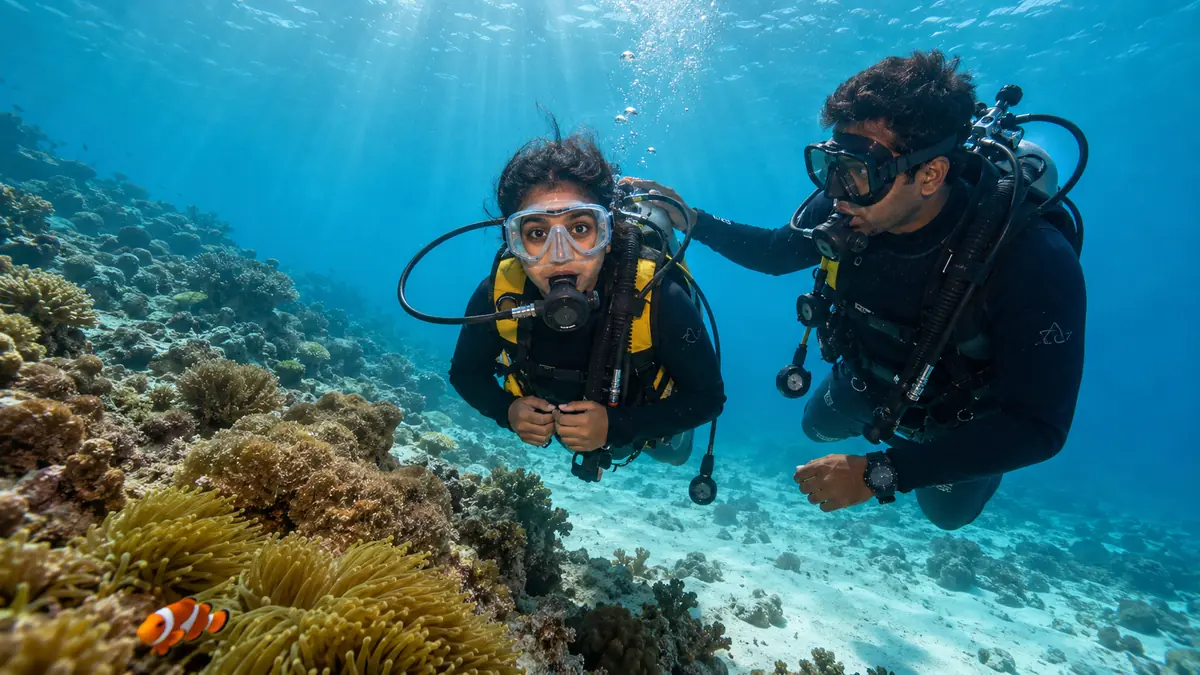
Scuba removes the entire problem. You carry your air with you, on your back, in a cylinder. You do not need to reach the surface to breathe, so you do not need to fight the water at all. Your job underwater is to do almost nothing: breathe slowly through the regulator, look around, and let your instructor do the rest.
In fact, on a first dive I actively tell people not to swim. A nervous beginner who starts paddling burns through air faster, tires themselves out, and works themselves toward panic. Someone who stays relaxed and lets me drive uses half the air and sees twice as much. Honestly, non swimmers are often my easiest students. They have no habits to unlearn. They hold the line, they breathe, they listen. The confident swimmers are the ones I have to keep grabbing by the fin. I have collected everything else that helps on day one in my scuba diving tips for beginners guide.
Your buoyancy, meaning whether you float up, sink down, or hover in place, is handled by an inflatable jacket called a BCD. On a beginner dive, I control it, not you. You physically cannot drift up or sink away on your own, because the person managing that jacket has done it a few thousand times.
What actually keeps a non swimmer safe
People imagine safety underwater comes from being a strong swimmer. It does not. It comes from layers, and on an introductory dive in the Andamans there are several stacked on top of each other.
The medical form comes first
Before you wear a single piece of equipment, you fill out a medical questionnaire, and you need to answer it honestly. Conditions like asthma, heart problems, epilepsy, recent ear or sinus surgery, and uncontrolled diabetes can rule you out, or require a written fit-to-dive letter from a doctor before we can take you. Pregnancy is a straight no.
I will be blunt: this form matters far more than whether you can swim. Hiding a condition to avoid missing out is the one genuinely dangerous thing a beginner can do. If you are unsure about something on the form, message us before your trip and we will tell you straight whether it is a problem.
The training before the dive
Your dive does not start in deep water. It starts on land with a proper briefing, then in water that is roughly waist to chest deep, where you can simply stand up. The whole preparation usually takes about 90 minutes before the actual dive.
Standing in the shallows, you put your face in the water and take your first breaths from the regulator. It feels strange for about a minute or two, then it feels normal. Almost everyone laughs through their regulator at this point, which is its own skill to manage.
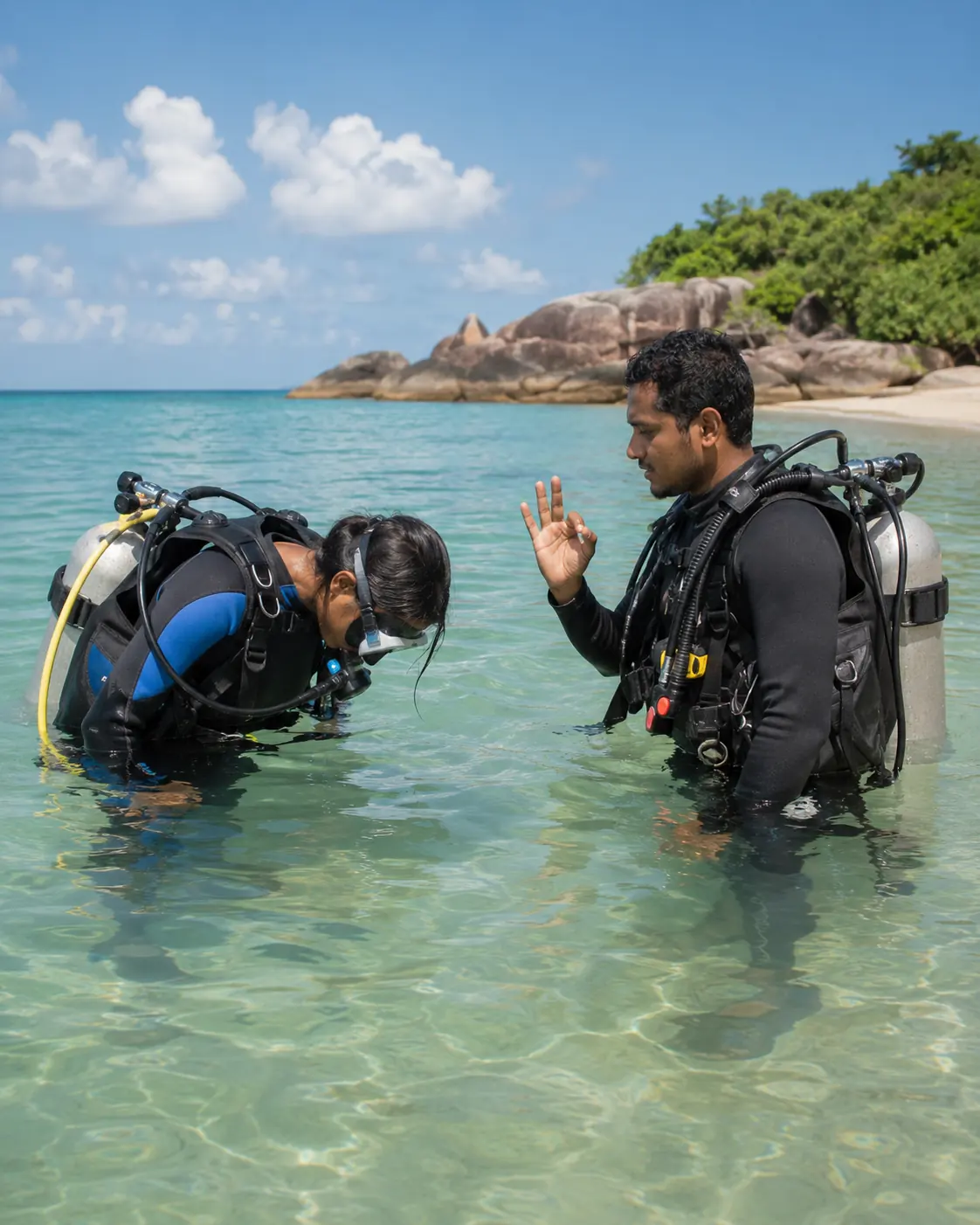
Before we go anywhere deeper, you practice three things until they feel easy: equalizing your ears (pinch your nose and blow gently, the same trick as on a flight), putting your regulator back in if it ever comes out of your mouth, and clearing water from your mask. Only when you can do all three calmly do we move on. Not before.
One instructor, one diver, the whole time
This is the big one, and it is where the Andamans go beyond what global agencies require. International standards technically allow one instructor to handle up to four beginners in open water. For non swimmers on introductory dives here, the working standard is one to one. One instructor, one diver, physical contact throughout.
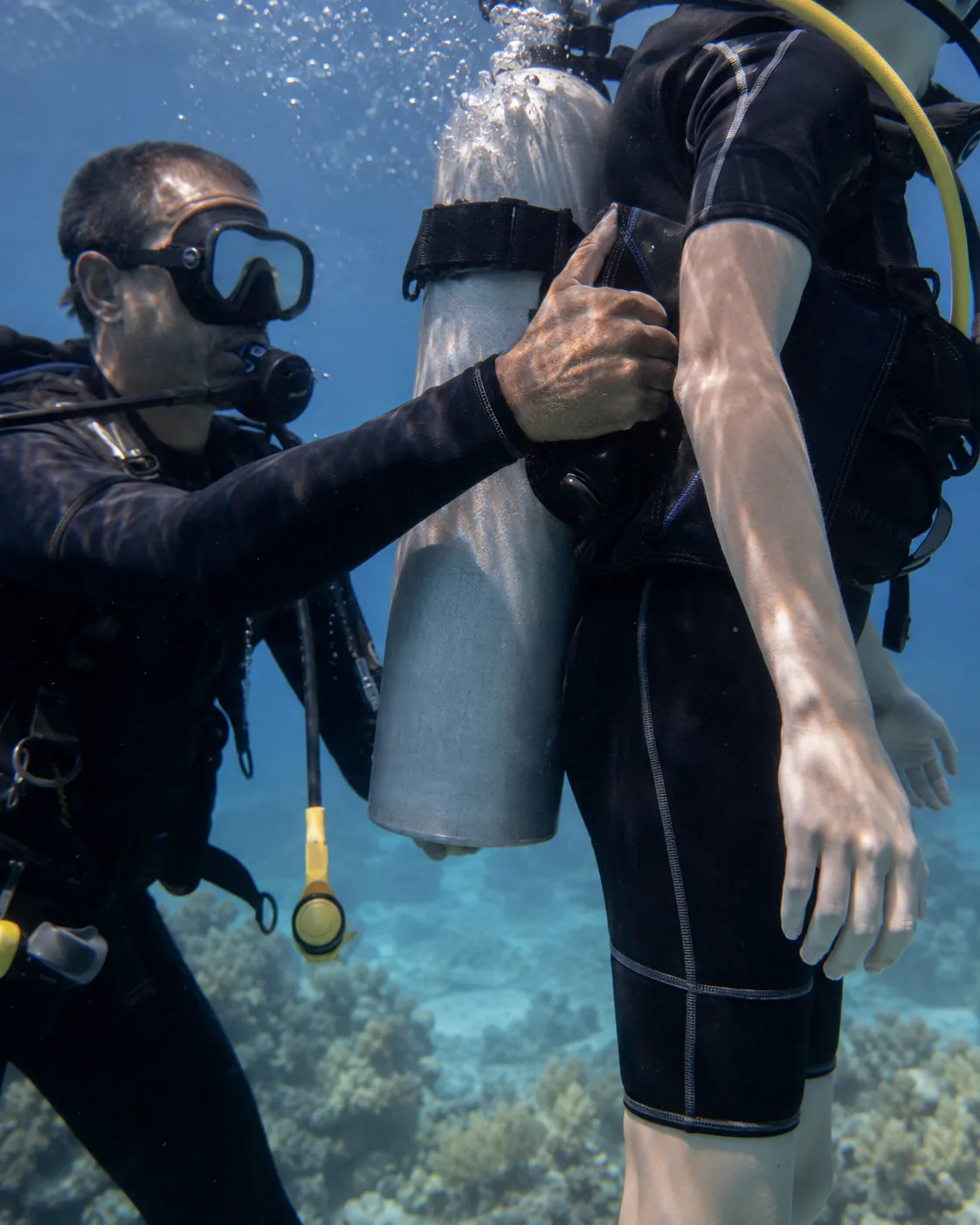
I am beside you or right behind you for the entire dive, usually holding your tank valve or your BCD. I do the swimming. I steer. I watch your air gauge. I watch your eyes. If anything about your body language changes, I know before you have even decided you are uncomfortable. You can end the dive at any moment with one thumbs-up signal, and we go up together, slowly, no drama.
The 12 meter limit, and why it matters
Uncertified beginners are limited to a maximum depth of 12 meters, and most first dives stay well above that. This number is not random. At 12 meters, the pressure is low enough that your body absorbs so little nitrogen that decompression sickness (what divers call the bends) is practically impossible. Your tank will run low long before you could ever stay down long enough for it to become a concern. The maths simply does not allow it.
At that depth there is also no nitrogen narcosis, no complicated dive planning, nothing for you to calculate. The depth profile itself is part of the safety system.
The 2026 Andaman diving rules, in plain words
You might have read that the Andaman administration brought in big new scuba diving rules that changed the whole industry. As an operator, I can tell you these rules are strict and actually enforced. As a customer, they work in your favour.
Dive centres now have to be registered and categorised, with documented instructor credentials. Every centre must keep medical-grade oxygen on site and on every dive boat. Cylinders have to be pressure tested at an authorised facility every three years. Centres must hold proper insurance and maintain a written, rehearsed emergency plan that loops in the Coast Guard, police, and health department. Boats cannot drop anchors on the reef anymore; they tie onto fixed mooring buoys instead, which protects the coral and keeps the boat parked directly above the divers.
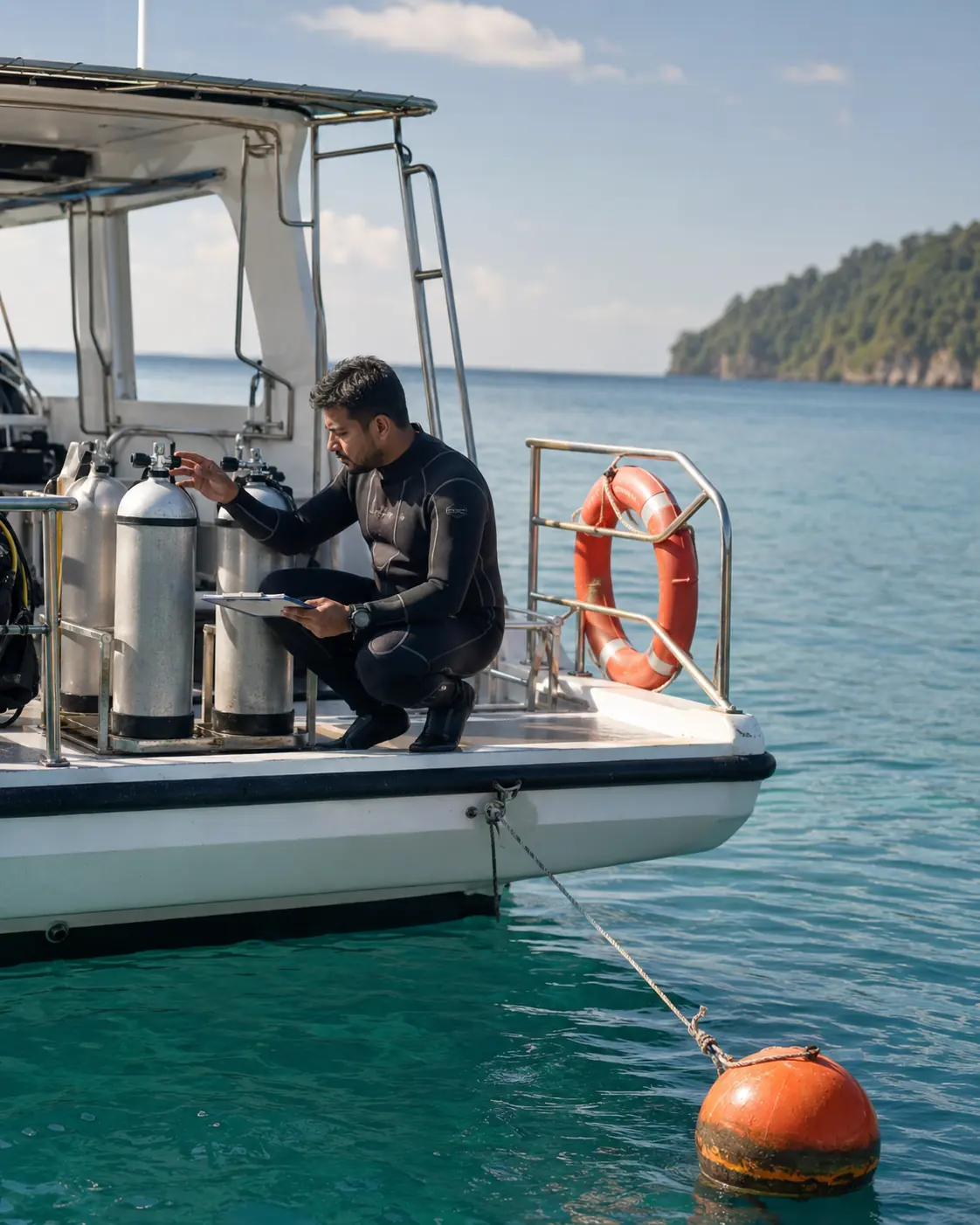
Beginner dives are also restricted to sites with genuinely calm conditions: small waves, weak current, decent visibility, daylight only, stable weather. And there is an actual enforcement team that checks operators at the jetties and water sports hubs, including Havelock. Unlicensed operators find it much harder to survive now, which is exactly how it should be.
The practical takeaway for you: book with a registered dive centre and ask about their instructor ratio for beginners. If the answer for a non swimmer is anything other than one-to-one, go somewhere else.
Where non swimmers actually dive in Havelock
Site choice does a lot of quiet work here. We take first-timers to places that were practically designed for them.
Nemo Reef is the classic first scuba dive for non swimmers in Andaman, and it is where we run most of ours. You walk in from the shore, no boat, no jumping into deep water. (I have compared the two styles properly in my shore dive vs boat dive in Andaman guide.) The bottom is a gentle sandy slope, so you can stand in the shallows and descend gradually as your ears and your nerves allow. Most of the dive happens between 6 and 12 meters. Clownfish guarding their anemones like tiny angry landlords, butterflyfish, the odd peacock grouper. The water sits around 27 to 30 degrees, so cold is not a thing you will think about.
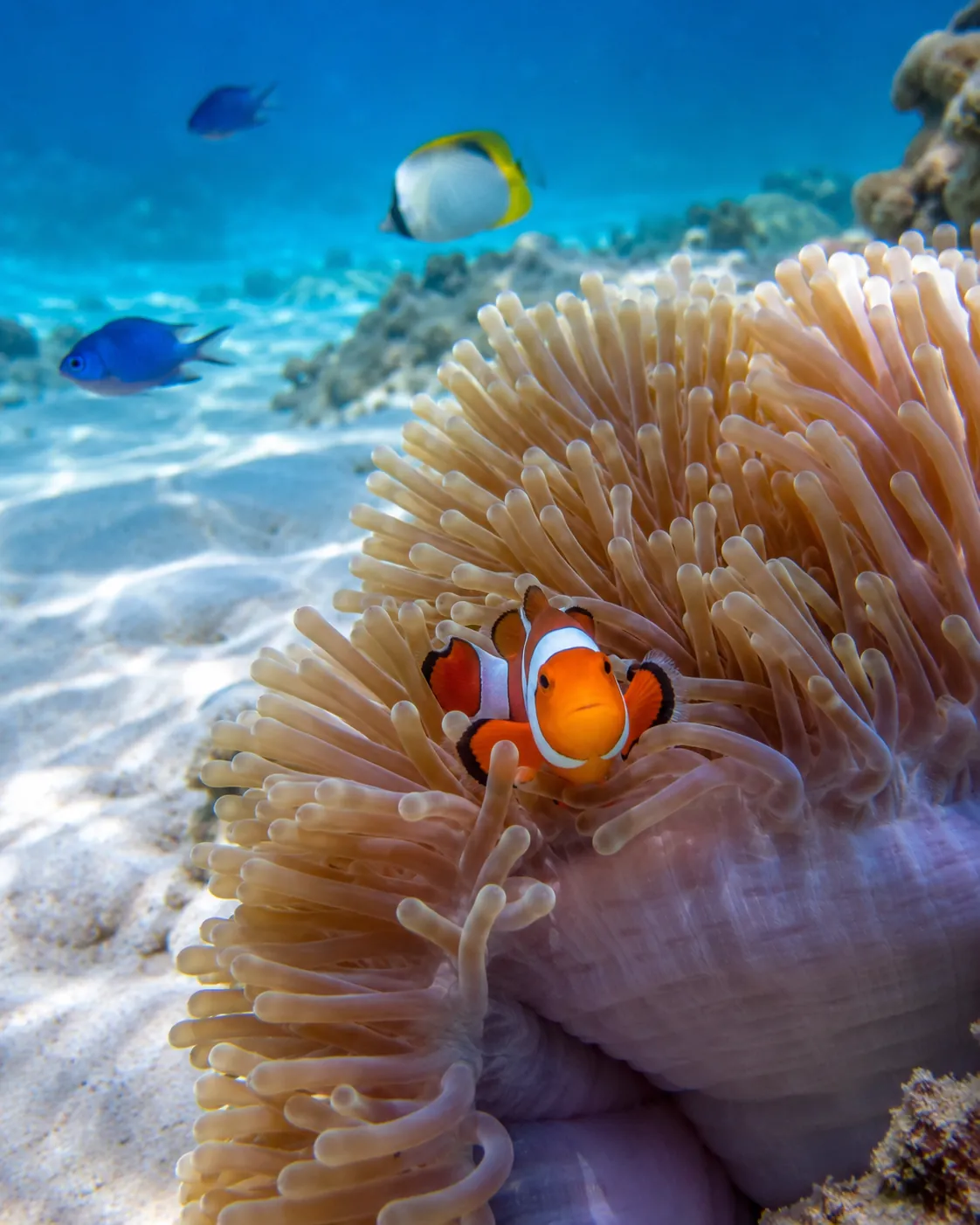
For people who want a little more, sheltered boat-dive sites like Tribe Gate offer an easy step up, still shallow, still protected from current, still one-to-one. The boat ride from Havelock to most sites is about ten minutes, so there is barely time to get nervous.
Who should think twice, and the alternative nobody talks about
I will give you the honest version rather than the sales version.
If you have a medical condition on the no-list and cannot get a doctor’s clearance, do not dive. If you are pregnant, do not dive. Kids need to be at least 10 for a sea dive, and 8 and 9 year olds can do a shallow Try Dive Cadet session up to 2 metres. For older travellers there is no upper age limit, but be honest on the medical form. The gear is heavy on the surface and diving puts a small load on the heart, so any yes on the form means a doctor signs you off first.
If scuba itself feels like too big a step, there is sea walking, also called helmet diving, at spots like Elephant Beach. You climb down a ladder, a helmet goes over your head, normal air is pumped in from the surface, and you simply walk on the sandy bottom at around 7 meters. Your face stays dry. You can even wear your spectacles. Snorkeling is the other middle path: face down on the surface with a guide, no certification needed. I would still rather you tried a proper dive, because hovering beats walking, but I would rather you got underwater somehow than not at all.
Quick answers to the questions I get every week
Do I need to know swimming for scuba diving in Andaman?
No. For an introductory dive, swimming ability is not required and you will not be asked to swim. Your instructor moves you through the water.
How deep will I go on my first dive?
A maximum of 12 meters, and usually less. At Nemo Reef most of your dive happens shallower than that.
What if I panic underwater?
You signal, and we surface together, slowly and calmly. But here is what actually happens in practice: the nerves peak in the shallow water session, not the dive. By the time we head deeper, your body has already learned that the breathing works. Genuine panic on a one-to-one dive is rare because there is never a moment when you are coping alone.
Will my ears hurt?
They will feel pressure as you descend, the same as a flight landing. You equalize every meter or so, and we go down at your pace. If your ears will not clear, we simply stay shallower. Never dive with a heavy cold; rescheduling costs nothing compared to a damaged eardrum.
How much does it cost?
A shore dive for beginners at Nemo Beach costs ₹3,500 with us, including all equipment, training, and your instructor. Boat dives to sites like Tribe Gate cost more. Check our scuba diving in Havelock price list or just message us.
Is it worth it if I will only do it once?
Yes. The first breath underwater is the strangest, best moment of most people’s trip. And I have lost count of how many “just once” divers ended up asking about the Open Water course before they flew home.
Come see for yourself
I have watched people who were genuinely afraid of waist-deep water spend forty minutes at twelve meters watching a school of fusiliers part around them. Not because they were brave, but because the system around them did all the heavy lifting: the screening, the training, the one-to-one instructor, the shallow calm site, the rules that keep operators honest.
So if the only thing holding you back from scuba diving in Andaman is that you cannot swim, you can let that one go. If you are coming to Havelock anyway, do one dive. Message us your travel dates first so we can fit it around the ferries (and your flight home, since you should not fly straight after diving), and tell us you are a non swimmer when you book. We will take it from there, one breath at a time.