
Almost everyone who dives with me in Havelock flies into Port Blair first. Most of them treat it as a transit stop. Land, grab a taxi, race to the jetty, gone. I understand it. You came for the water, not the capital. But if you have even half a day in Port Blair, go to the Cellular Jail. I have been maybe a dozen times now, with family, with friends who came to visit, and it still does something to me every single time.
So here is the honest visitor’s version. What it actually is, the cellular jail timings, what the tickets cost, the light and sound show in the evening, and how to slot the whole thing into your trip without wrecking your ferry plan.
Why a dive trip is the perfect excuse to see it
Here is the thing about the Andamans: Port Blair is the only way in. Flights land at Veer Savarkar International Airport, and every ferry to Havelock and Neil Island leaves from here. So you pass through the city twice, coming and going, whether you planned to or not.
That works in your favour. The Cellular Jail sits at Atlanta Point, about three to four kilometres from the airport and a kilometre or two from Aberdeen Bazaar. Ten, fifteen minutes in an auto. You do not need a whole day set aside for it. You need an evening.
The easiest plan is to see it the day you land, before you ferry across to me. The other clean option is to see it on the way back, on your last night before you fly home. If you have been diving, you are waiting out the gap before you can fly anyway (here is why you cannot fly straight after a dive), so a slow afternoon walking through history is exactly the right way to spend that time.
What Kala Pani actually was
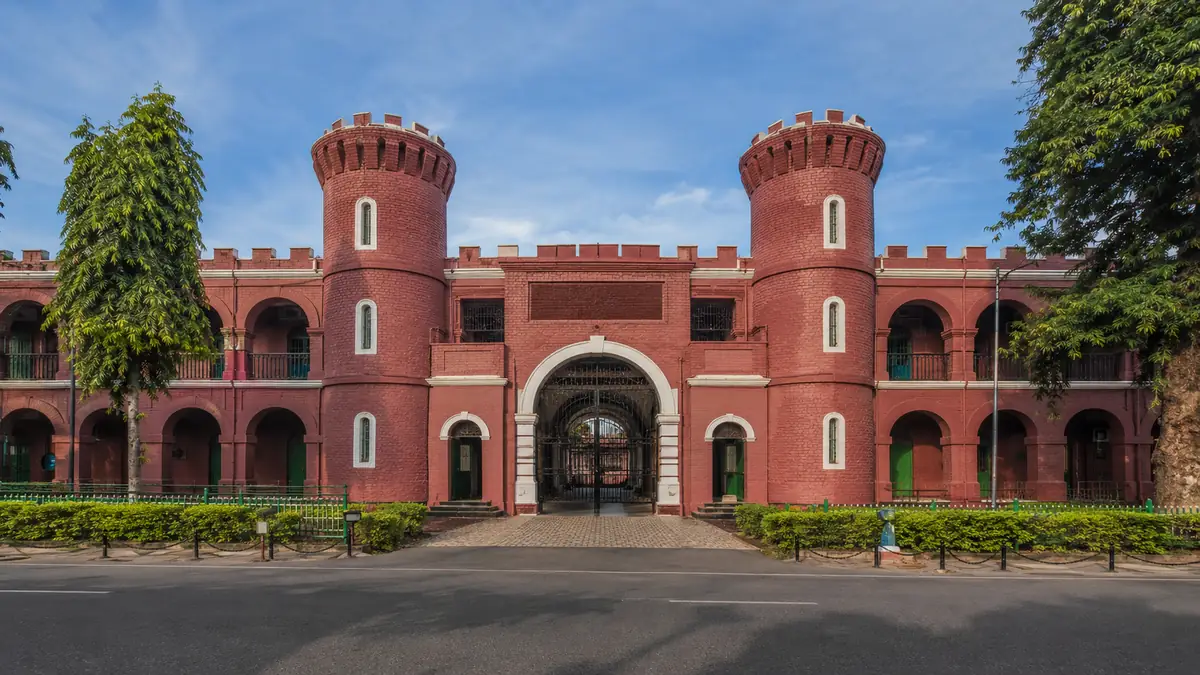
You will see the name “Kala Pani” everywhere here. It means black water. And the ocean itself was half the punishment.
For a lot of Hindus in that era, crossing the ocean meant losing your caste, being cut off from your family and your place in the world. So shipping a man fifteen hundred nautical miles out into the Bay of Bengal did two things at once. It locked him up, and it erased him from home. No escape, no contact, often no record that he was ever there. That was the point.
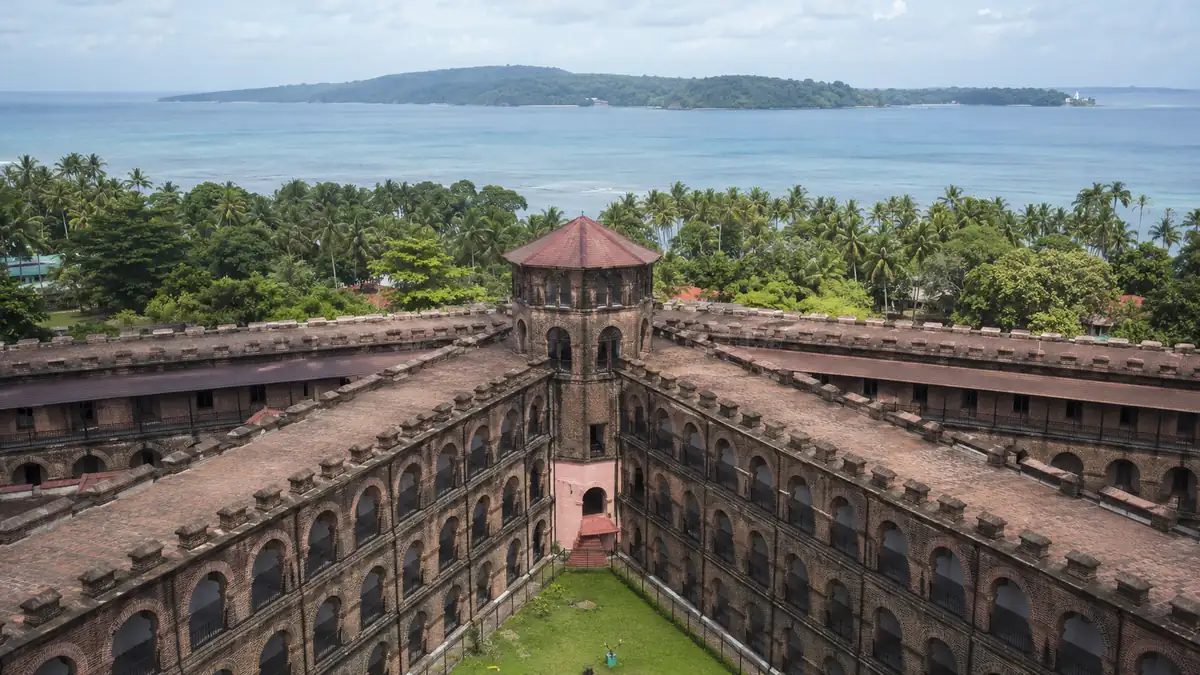
The British built the jail between 1896 and 1906, using the prisoners themselves as the labour, brick by brick, with bricks brought all the way from Burma. It was built for one thing: solitary confinement. Seven wings ran out from a single central watchtower like spokes on a wheel, so a small handful of guards could watch the whole place. And the wings were lined up so the front of one faced the blank back wall of the next. No two prisoners could see each other, or talk, or organise. That is where the word “Cellular” comes from. Individual cells, no shared rooms, by design. Two brothers were once locked in here at the same time and did not know it for nine months.
What you will actually see when you walk in
Only three of the seven wings are still standing today, plus the central tower. An earthquake in 1941 cracked the place, the Japanese pulled bricks out of two wings for wartime bunkers, and a couple more came down after Independence. The surviving freedom fighters protested hard enough that the rest was saved and turned into a national memorial in 1979.
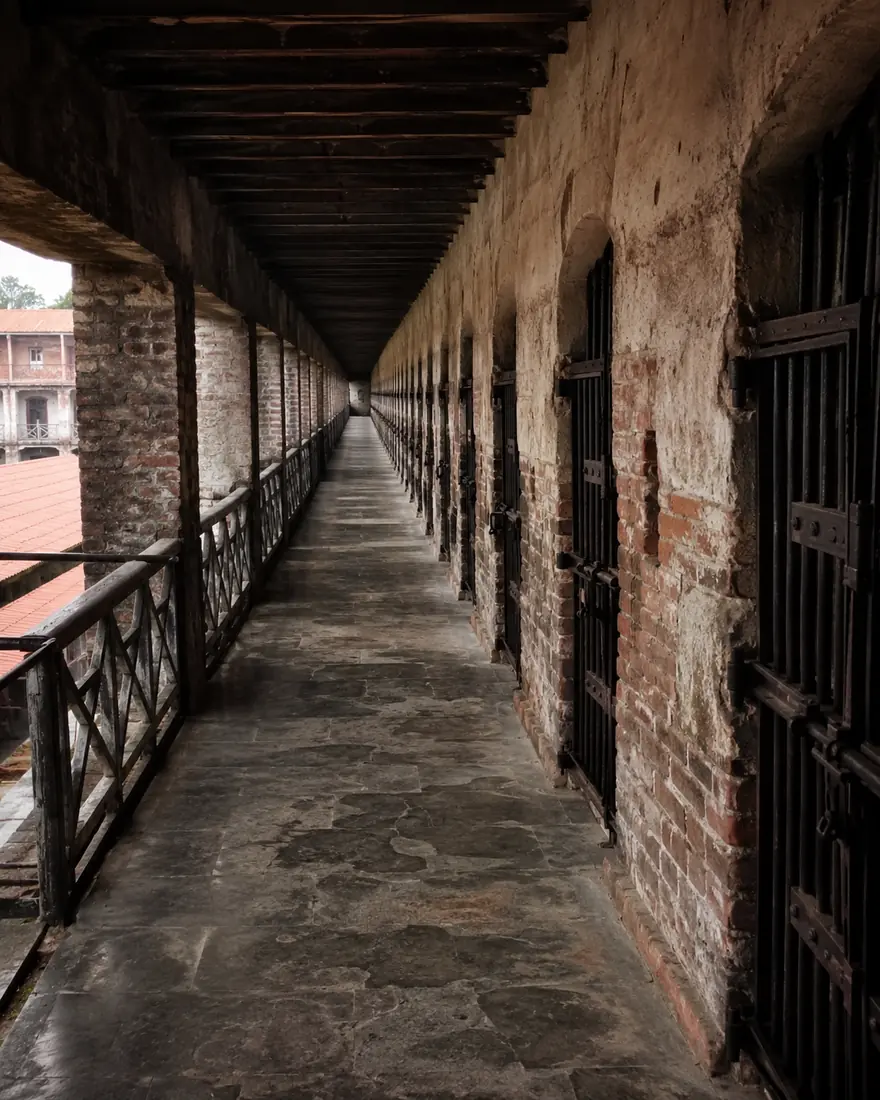
Climb the central tower first. You stand exactly where the guards stood, the three remaining wings fanning out around you, the sea on one side and the old alarm bell above your head. It gives you the whole layout in one look, and you understand the design immediately.
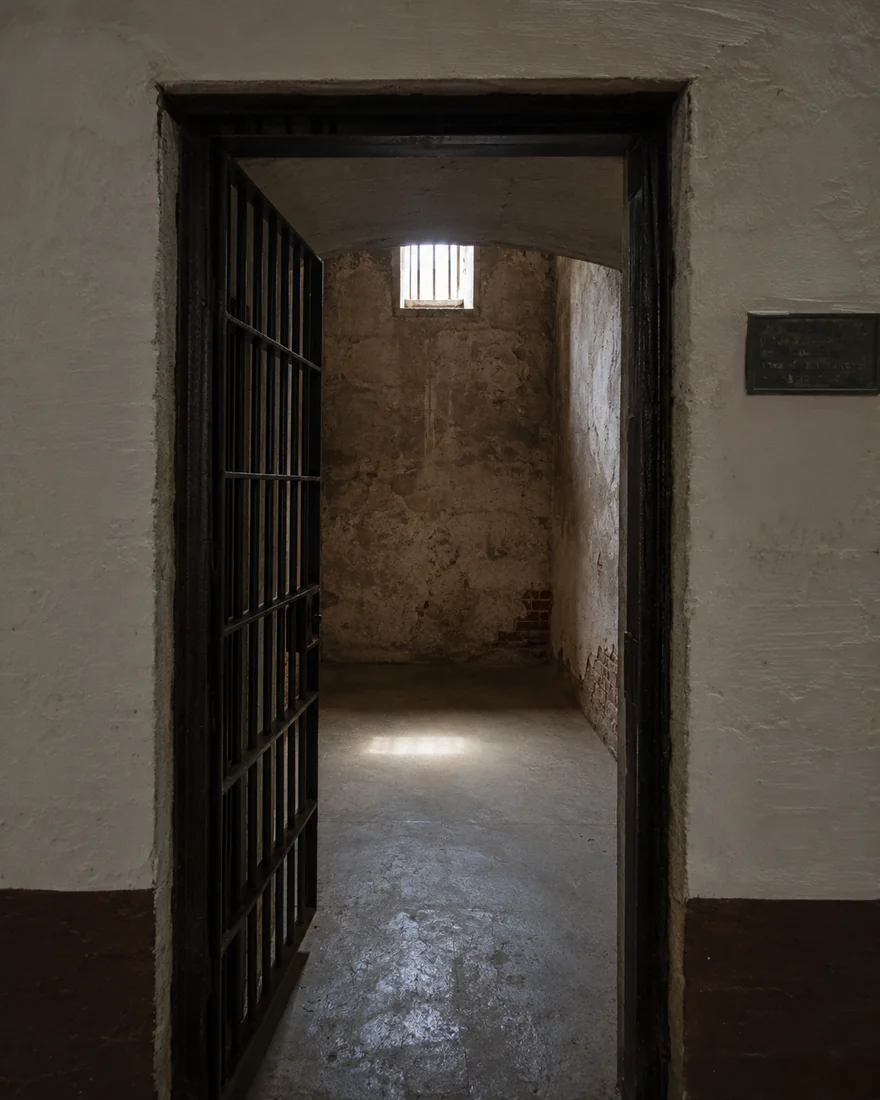
Then there is Cell 50, top floor of Wing 1. That was Savarkar’s cell, kept the way it was. It looks straight out at the gallows, and that was not an accident either. Whatever you make of the politics that get argued about him today, standing in a room that small, knowing a man spent ten years inside it, lands hard. The cells are about four and a half metres by two and a half. One barred door. One tiny window set too high to reach. That is the entire room.
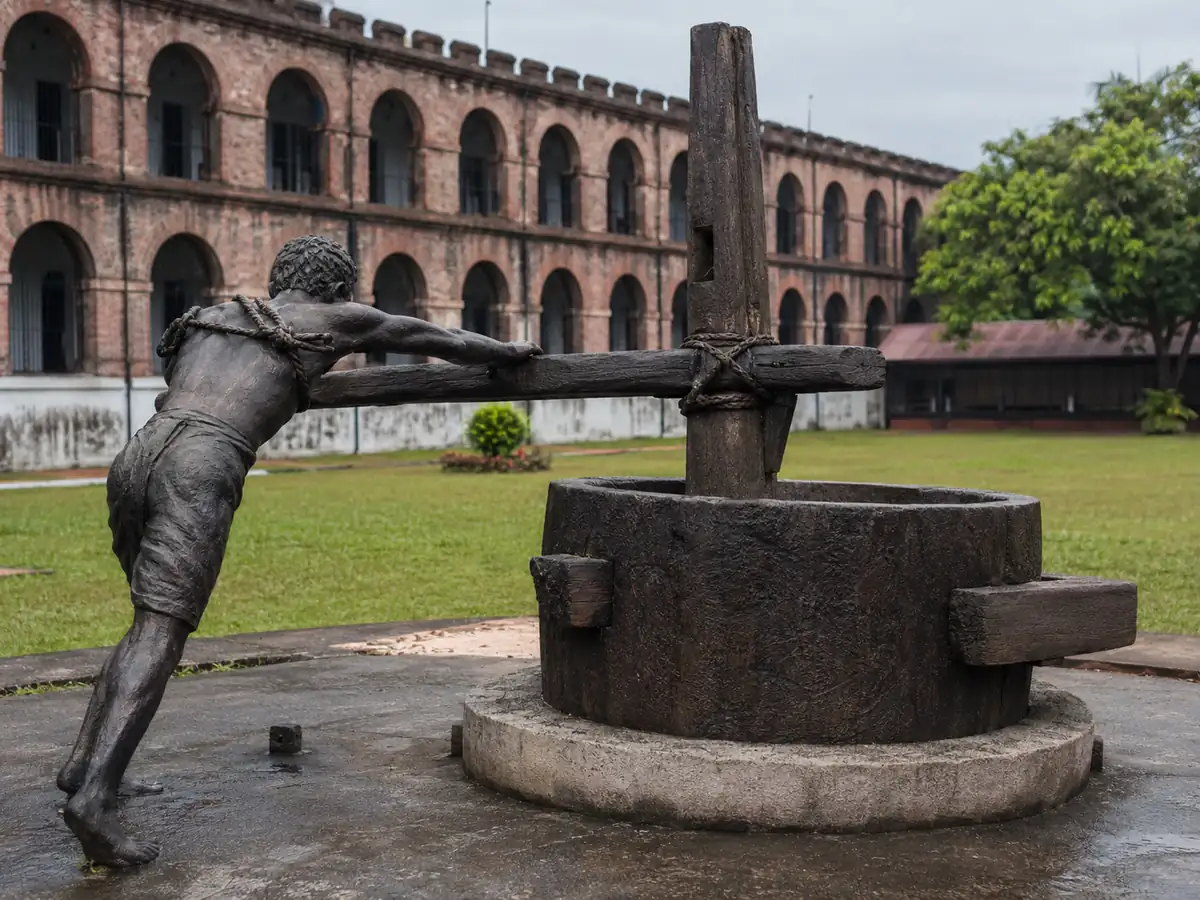
Down in the courtyard you will find the kolu, the oil mill. Educated men, lawyers and writers, were yoked to it like bullocks and made to grind out thirty pounds of oil a day. There is a working replica and some figures set up so you can see how it went. Near the entrance, by an old peepal tree, the eternal flame burns for the men who died here.
Cellular jail timings, tickets, and the bits people get wrong
The cellular jail timings are simple once you know them, but there are two traps.
The complex is open Tuesday to Sunday, roughly 9 in the morning to 12:30, then 1:30 to 5 in the afternoon. They clear the galleries for an hour over lunch, so do not turn up at 12:45 expecting to start. And the first trap: it is closed on Mondays and on national holidays. I have watched people plan their one Port Blair day on a Monday and stand at a locked gate. Do not be that person.
The second trap is the ticket counter. It stops selling entry passes around 4 or 4:30, well before the 5 pm close. So if you want the daytime galleries, get there by mid-afternoon, not at the last minute.
Tickets are cheap. Last I knew it was about ₹30 for Indian adults and ₹100 for foreign nationals, with young children free. A still camera is a small extra fee, and a proper video camera costs more. Prices and timings do shift, so carry some cash and treat these as a guide, not gospel. If you want the real stories instead of just reading the boards, the registered guides at the entrance are worth the small fee. Give the place two to three hours to do it properly.
The light and sound show is the part you do not skip
If you only do one thing here, make it the evening light and sound show. They light up the whole facade and run a 45 to 55 minute show across the dark front of the jail. The clever part is the script. It is told from the point of view of that old peepal tree at the gate, the one thing that stood there and watched all of it happen. The original narration was Om Puri’s voice, and it carries.
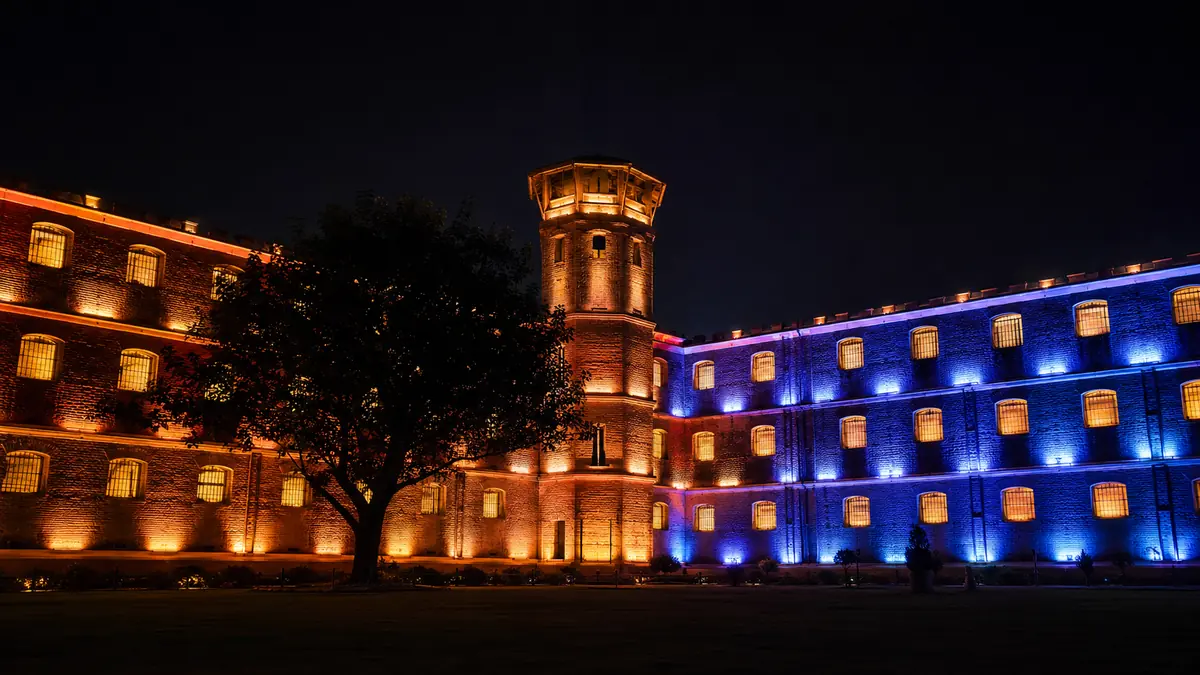
One thing that trips up a lot of foreign visitors: the show runs in Hindi on most nights, and in English only on Mondays, Wednesdays and Fridays, around 6:50 or 7:15 in the evening. So if you need the English show, plan your Port Blair evening for one of those days. A small bonus there: the daytime galleries close on Mondays, but the evening show still runs, so a Monday is not a total write-off.
Seating is limited and it sells out on weekends and holidays, so book ahead on the official Andaman e-Tourist portal (tourism.andamannicobar.gov.in/etourist) rather than gambling on a counter ticket. It is around ₹300 for an adult, half that for a child.
How to plan your cellular jail visit around the ferries
Here is the plan I give people, because it just works.
Land in Port Blair, drop your bags wherever you are staying that first night, and do the cellular jail visit in the late afternoon, say 3 to 5. The light is softer then and the midday crowds have thinned out. Stay on for the show that evening, then catch your morning ferry across to Havelock and come dive with us. By the time you are on the boat, the heavy, important part of your trip is already done, and the rest is pure water.
If your dates do not allow that, flip it. Dive first, keep your last night in Port Blair, and see the jail before your flight out. As I said, you are sitting out the fly-after-diving gap on that last day anyway, so it fits perfectly.
A few practical things people always forget. There is no cloakroom at the jail, none at all, so if you are mid-transit between a ferry and a flight, do not lug your bags here. Leave them at your hotel or a luggage service in town. Wear closed shoes, because the wing staircases are steep and there are a lot of them. Carry water and a hat, since the courtyards are open and Port Blair is humid most of the year. And keep your ID on you, they check it against your ticket.
On season: the comfortable window for the islands, and for diving with me, is roughly October to May. That is also the right time to be wandering an open-air memorial without melting.
What else is right there
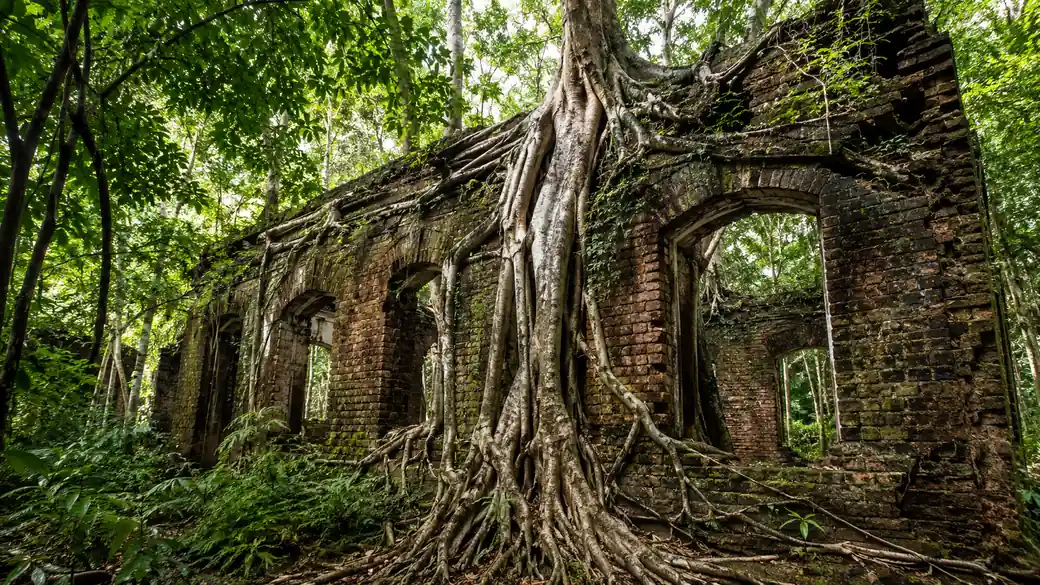
If the jail leaves you wanting more of the history, a few things sit close by. Ross Island, now called Netaji Subhash Chandra Bose Island, is a short ferry from Aberdeen jetty. It was the British officers’ side of the story, all ballrooms and churches, and the jungle has swallowed it whole. Banyan roots growing through colonial ruins. Strange and quiet and worth a couple of hours.
The Rajiv Gandhi Water Sports Complex at Marina Park is a short walk from the jail if you want a bit of green and sea to balance out a heavy morning. Samudrika, the navy’s marine museum, is a good stop if your kids want to see fish before they actually get in the water with us for some snorkelling. And Flag Point, or Tiranga Park, marks the spot where the tricolour was first raised on these islands in 1943, which pairs naturally with everything the jail tells you.
Quick questions people ask me
How long do I need at the Cellular Jail?
Two to three hours for the wings, the museum galleries and the central tower. Add another hour and a bit if you stay for the light and sound show, which you should. Call it half a day total.
What are the cellular jail timings again?
Tuesday to Sunday, about 9 to 12:30 and 1:30 to 5. Closed Mondays and national holidays. Last tickets sell around 4 to 4:30, so do not cut it fine.
Is it worth it if I am short on time and really just came to dive?
Honestly, yes. It is the one thing in Port Blair I tell everyone to make time for. You do not need a full day, just an evening, and it stays with you.
Can I watch the show in English?
Only on Mondays, Wednesdays and Fridays. Every other night it runs in Hindi. Book ahead on the e-Tourist portal, especially on weekends.
Is it okay for kids and older travellers?
Mostly. The grounds and galleries are fine, but the wings have a lot of steep stairs, so go at your own pace. Entry is free for young children.
Do I have to book online?
For the evening show, yes, particularly on weekends and holidays. For daytime entry you can usually just buy at the counter, as long as you beat the 4-ish cutoff.
Come dive once the history is done
The jail stays with you for a while after you leave. So does your first breath underwater, in a completely different way. If you are routing through Port Blair on your way to Havelock, give Kala Pani an evening, then come find us for the other half of the trip.
Message us your travel dates and your ferry plan before you lock everything in, and we will line your dives up around it so you get the most time in the water. You will have stood where the islands’ hardest history happened, and then you will get in the sea and see why people fall for this place. Both are worth your time. I will see you on the boat.