- About us
- For Beginners
- Dive Courses
- For Divers
- Rates
- Blog
- Contact us

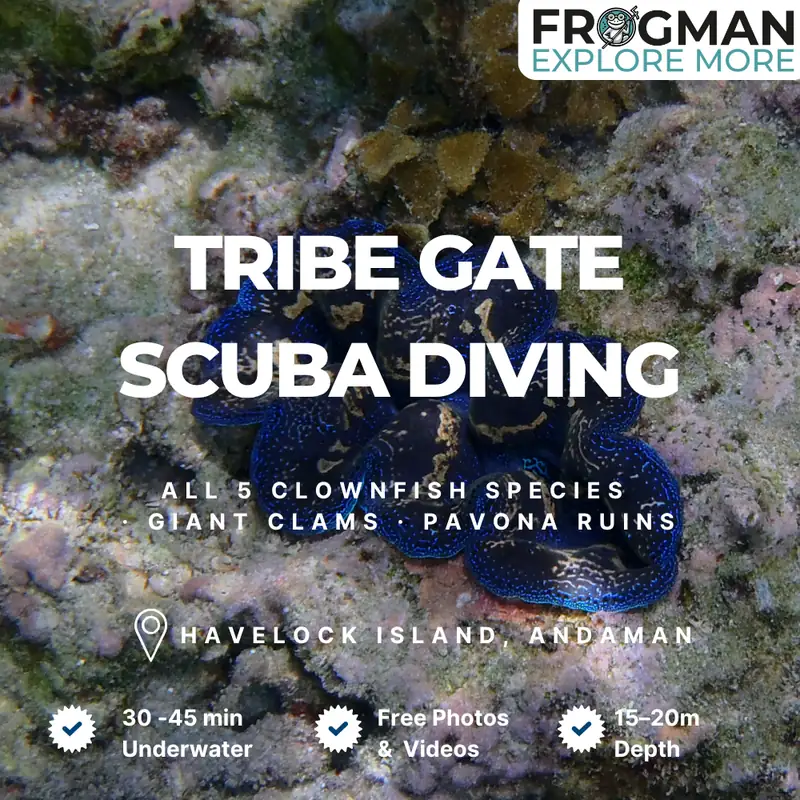
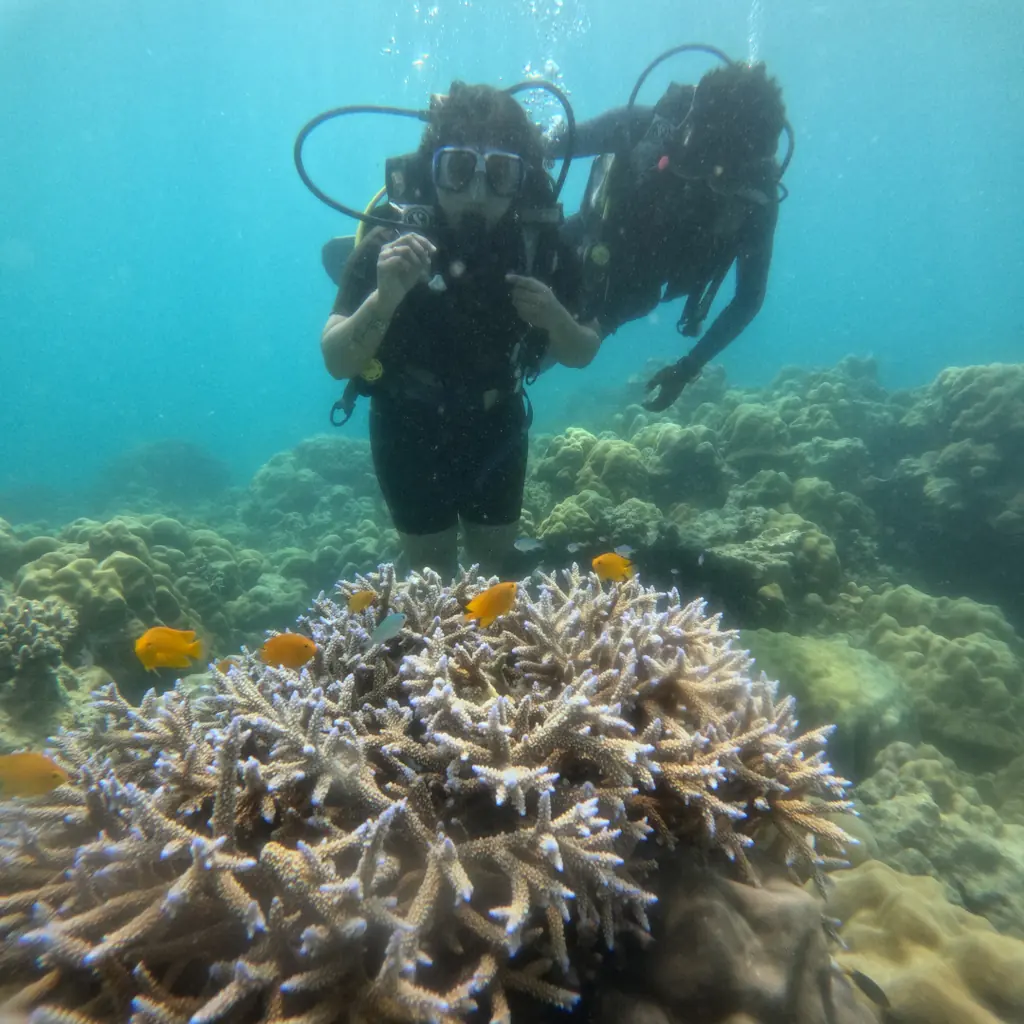
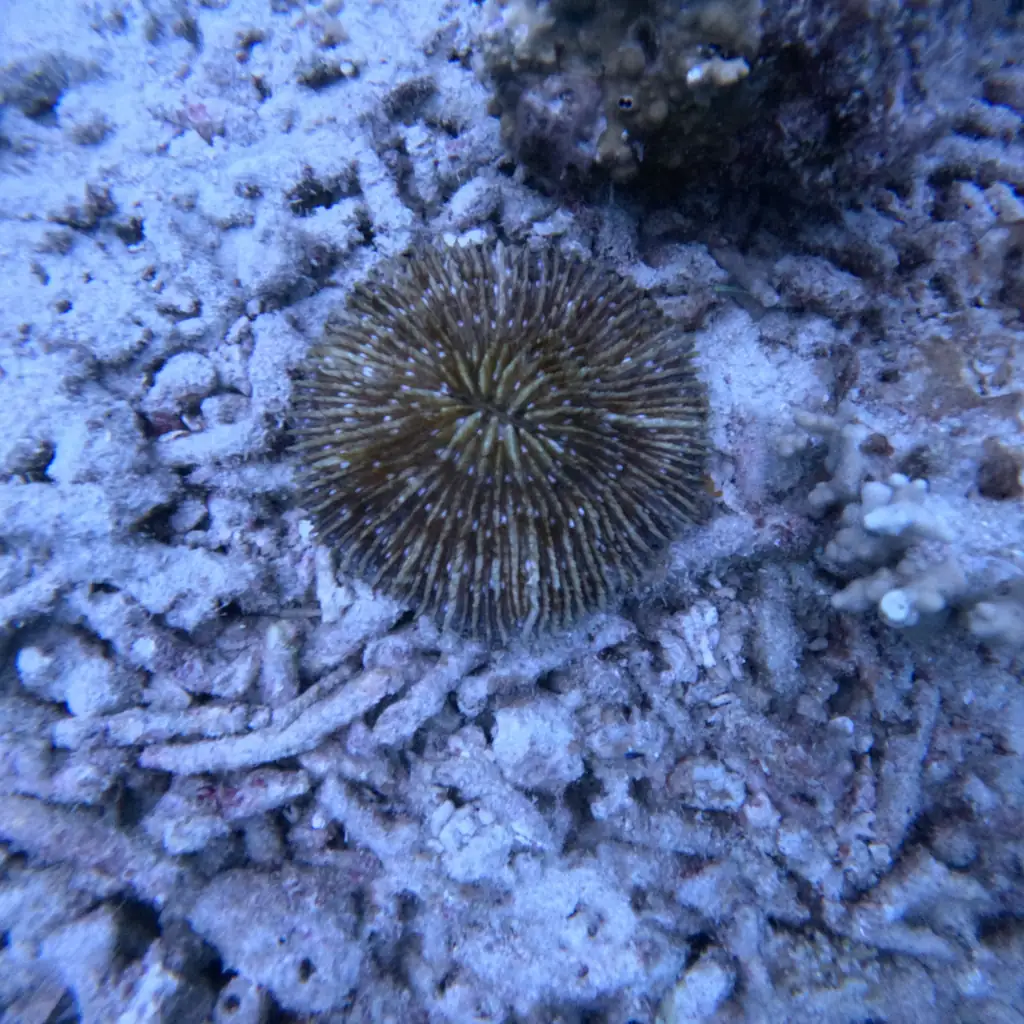
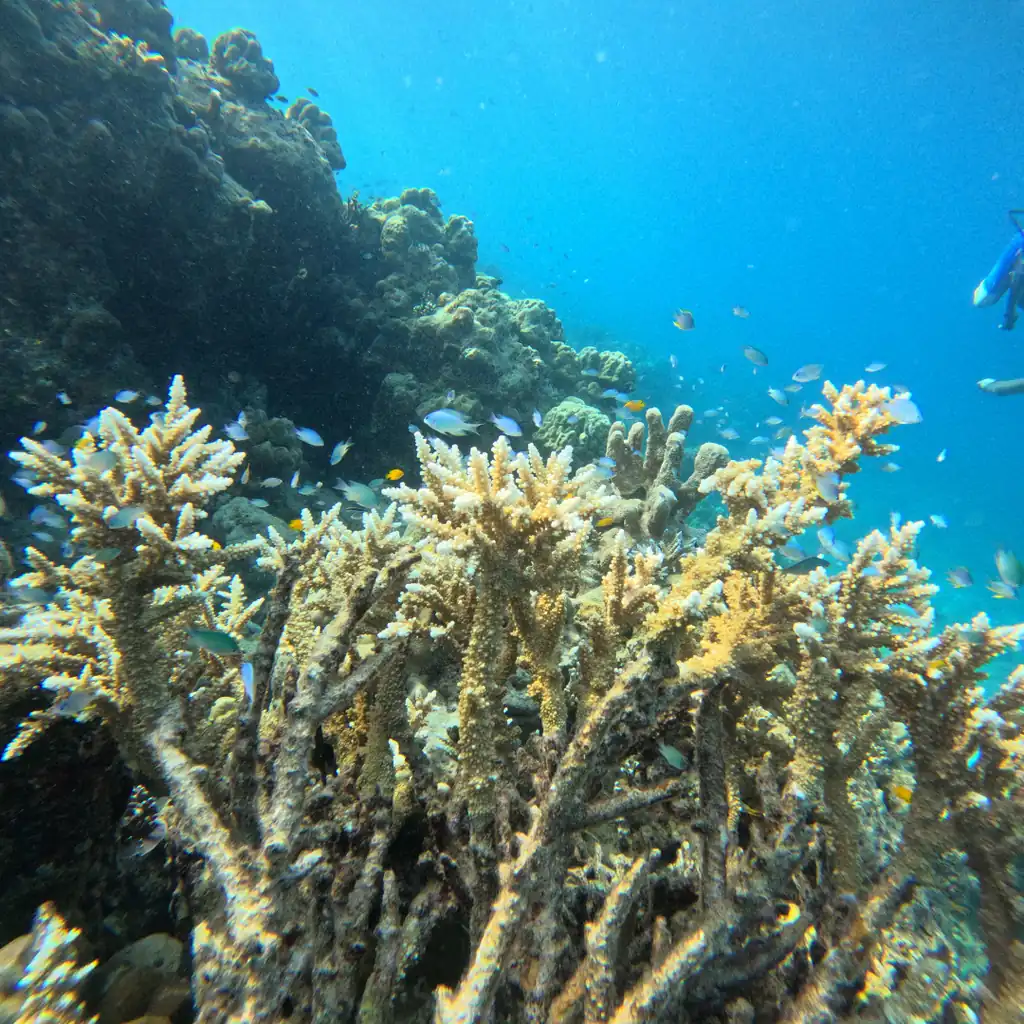
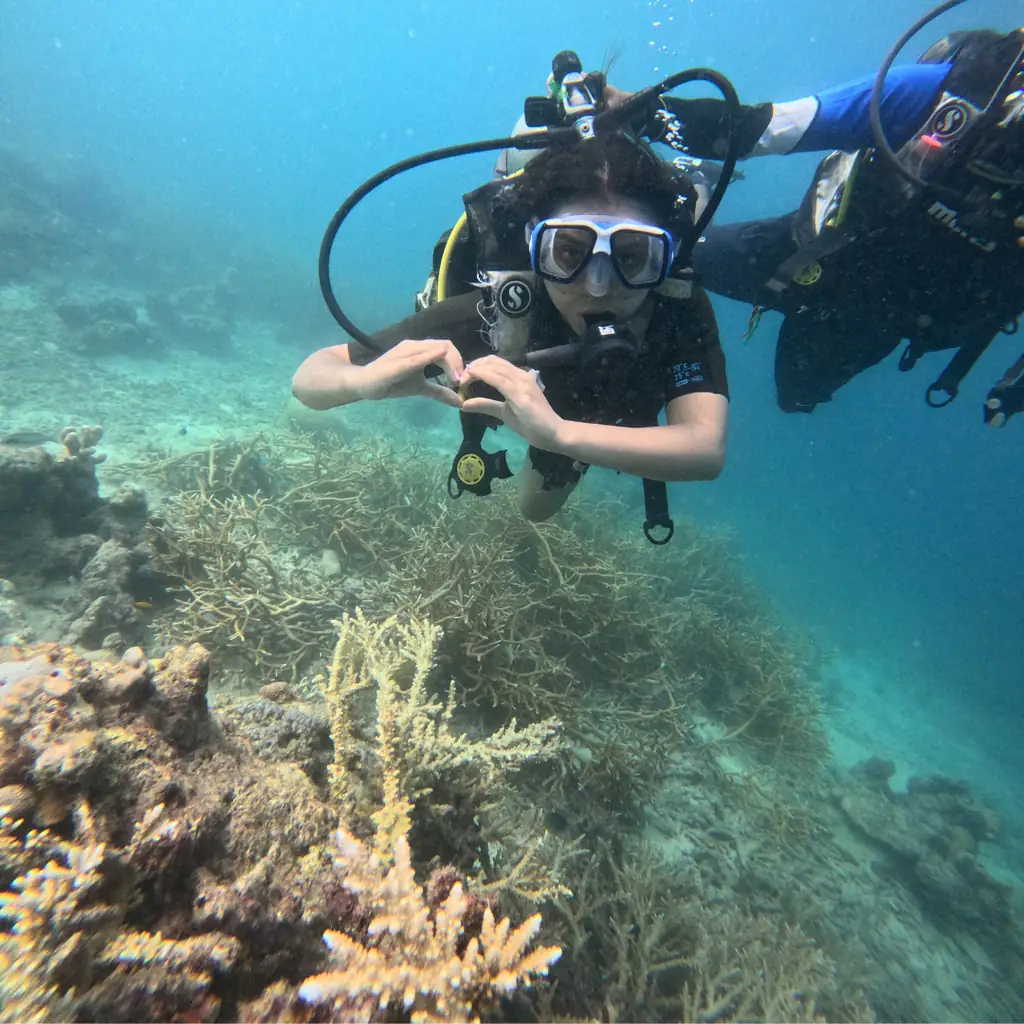
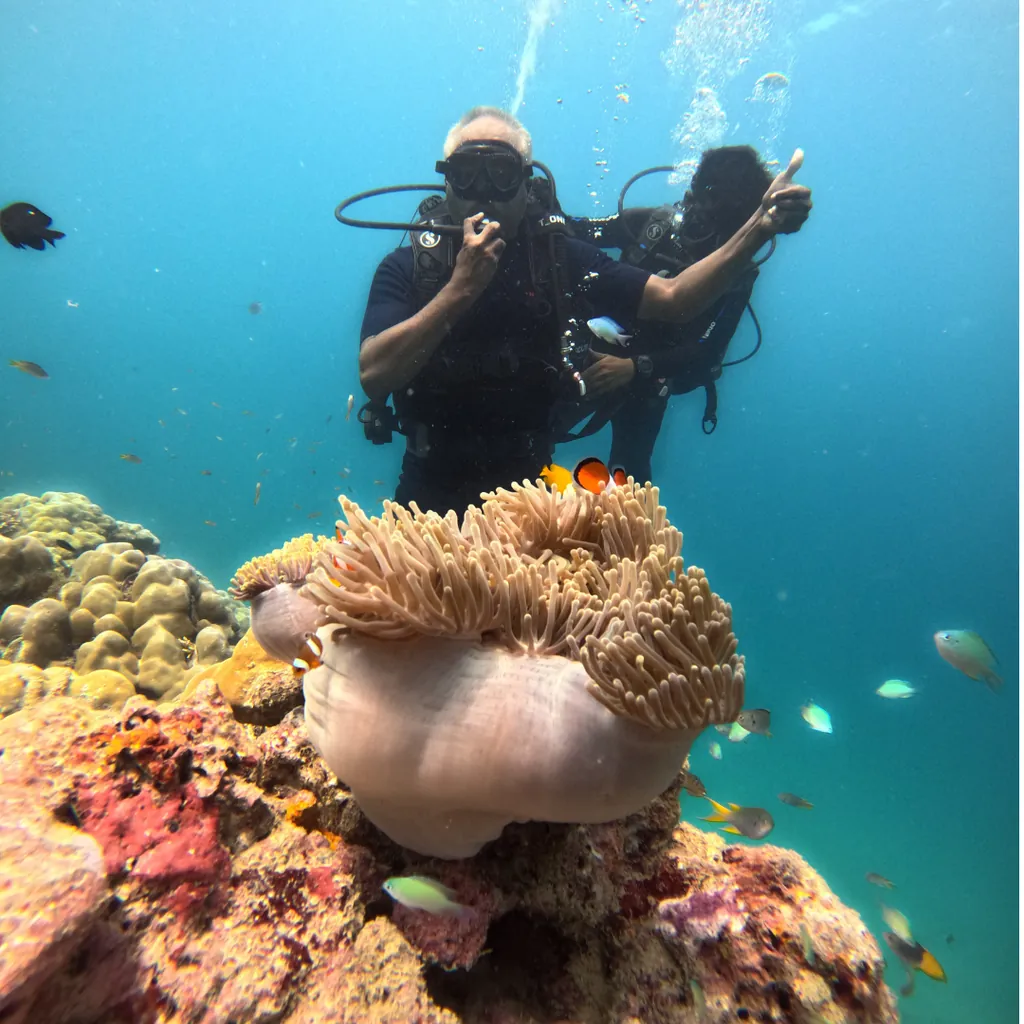
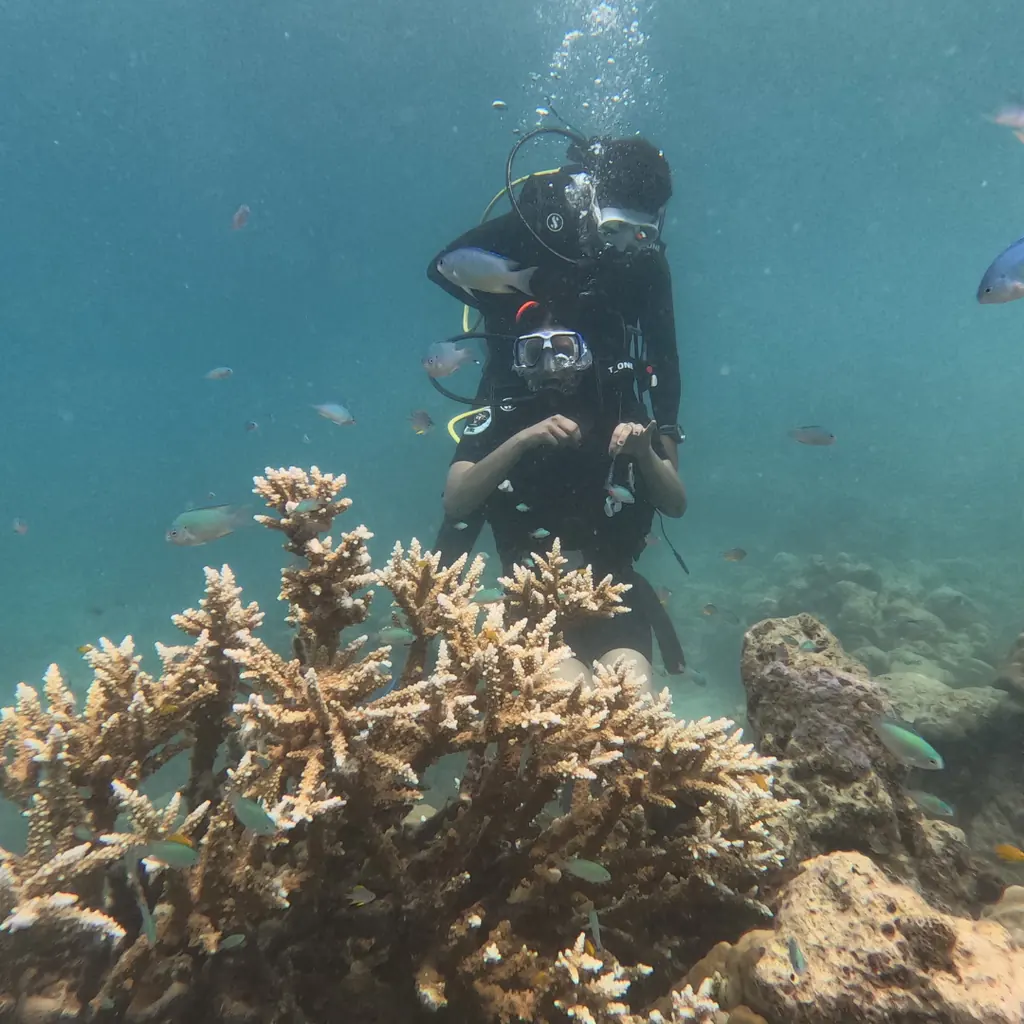
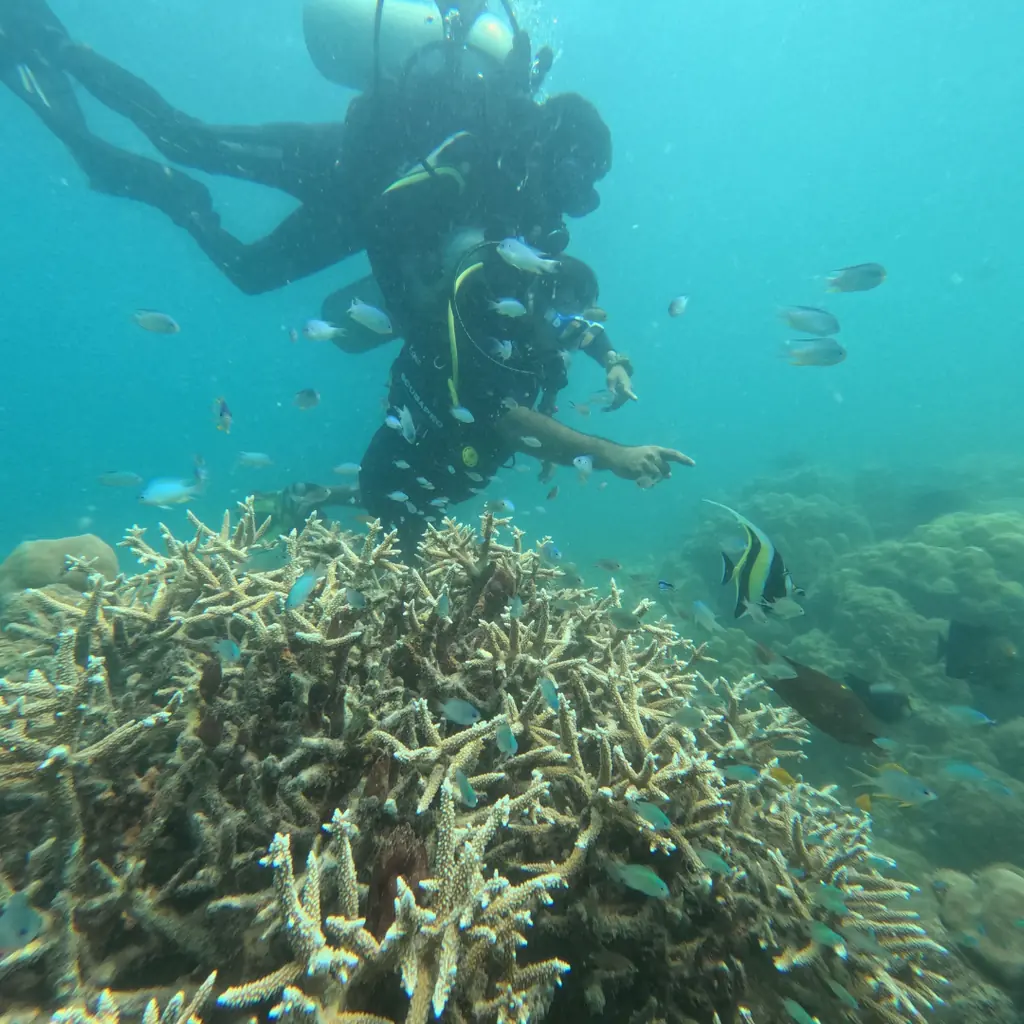
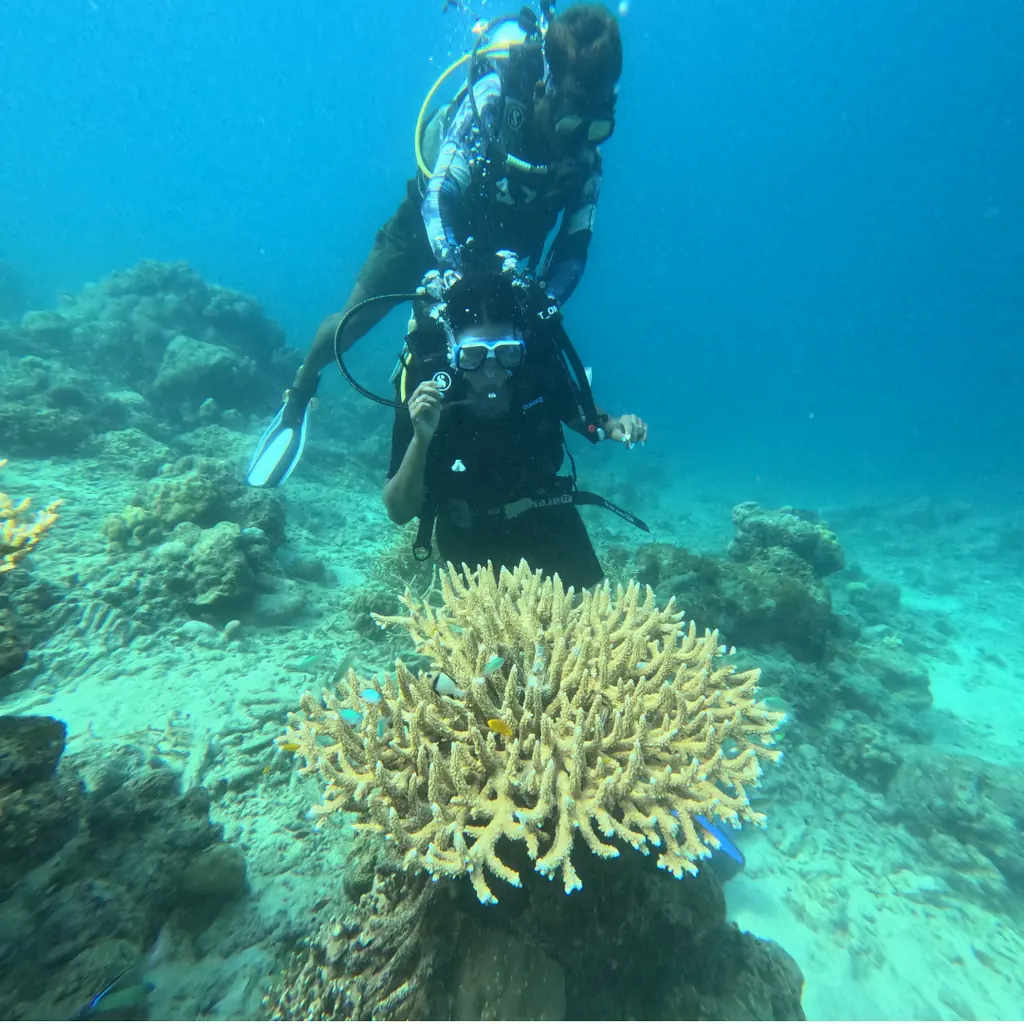
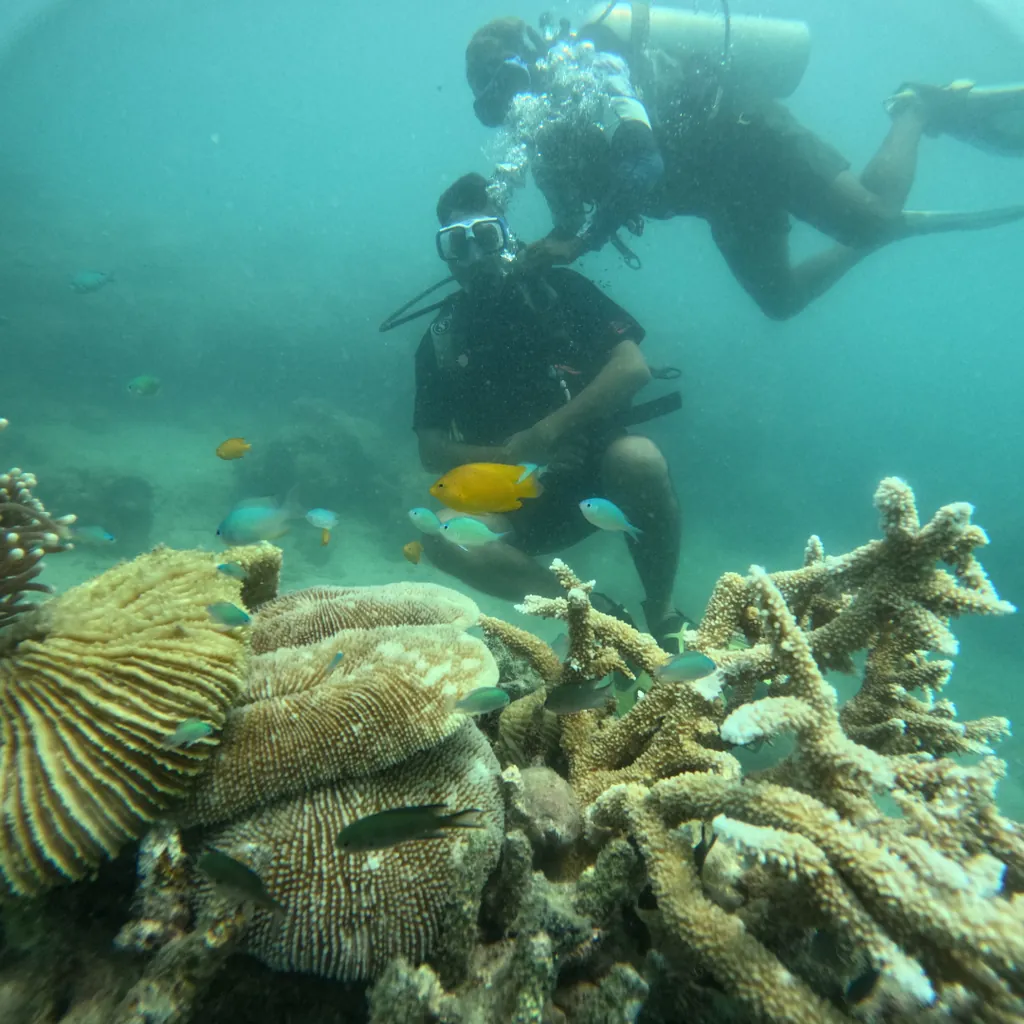
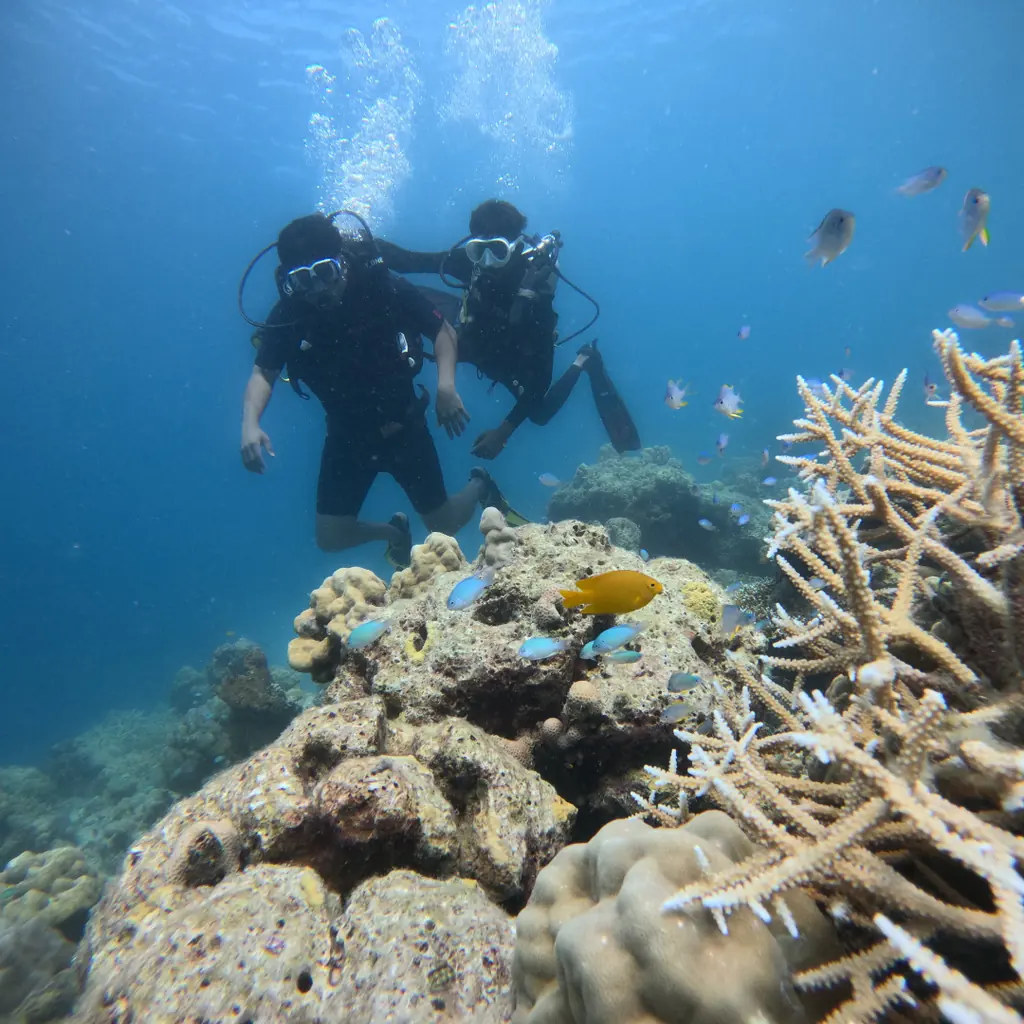
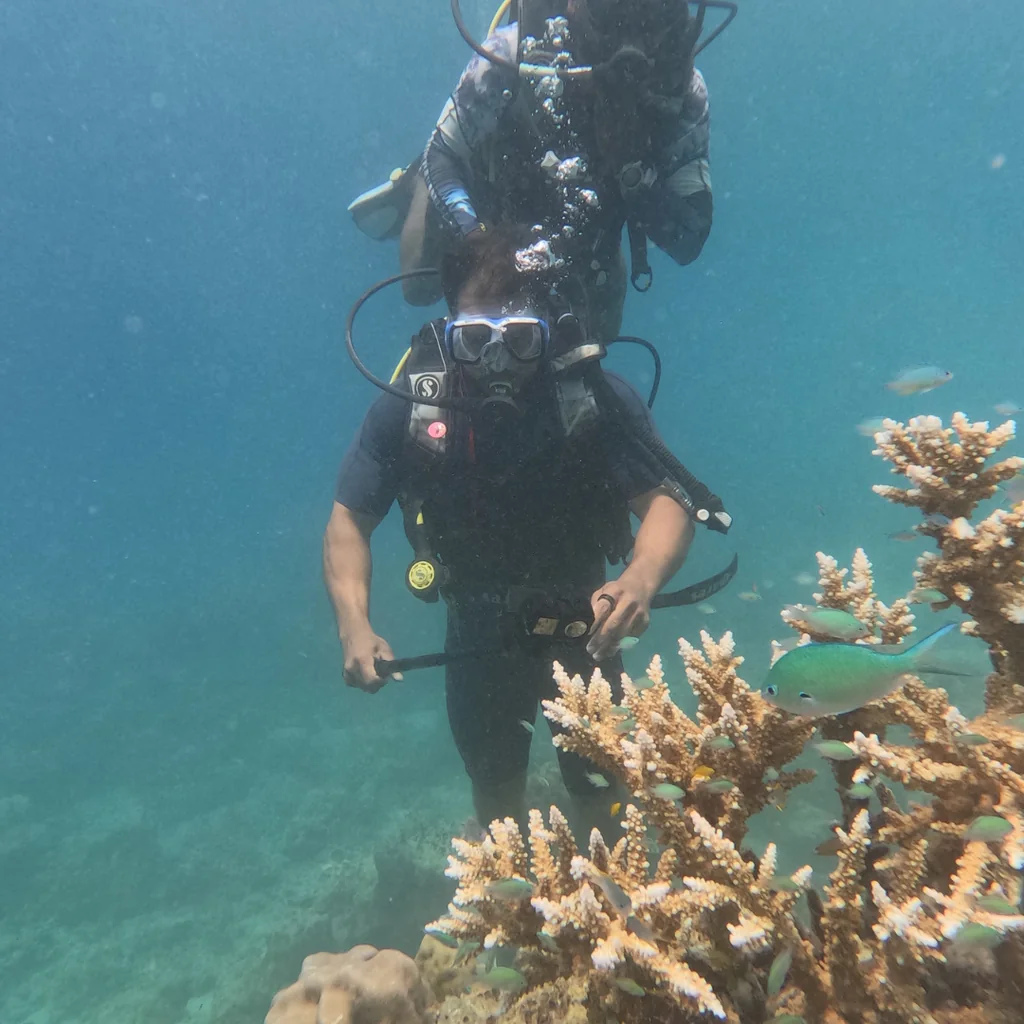
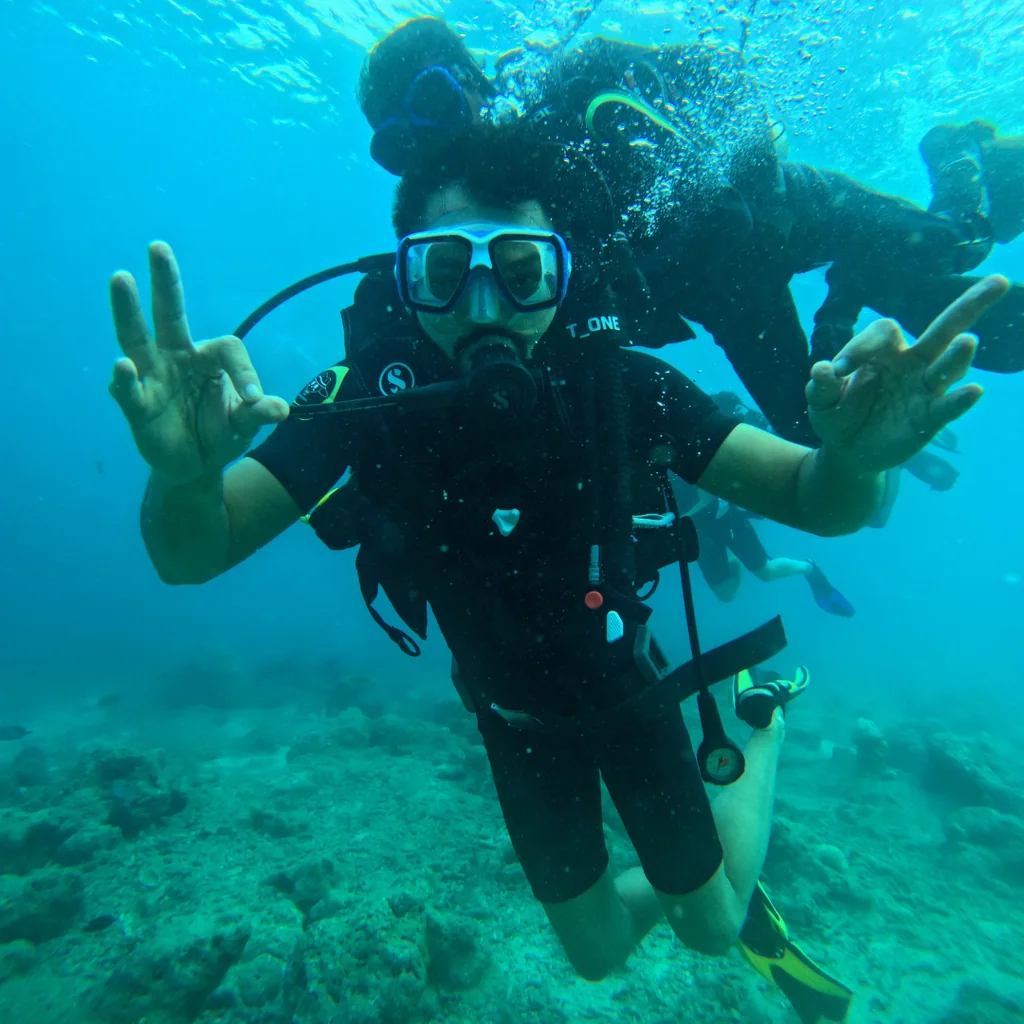
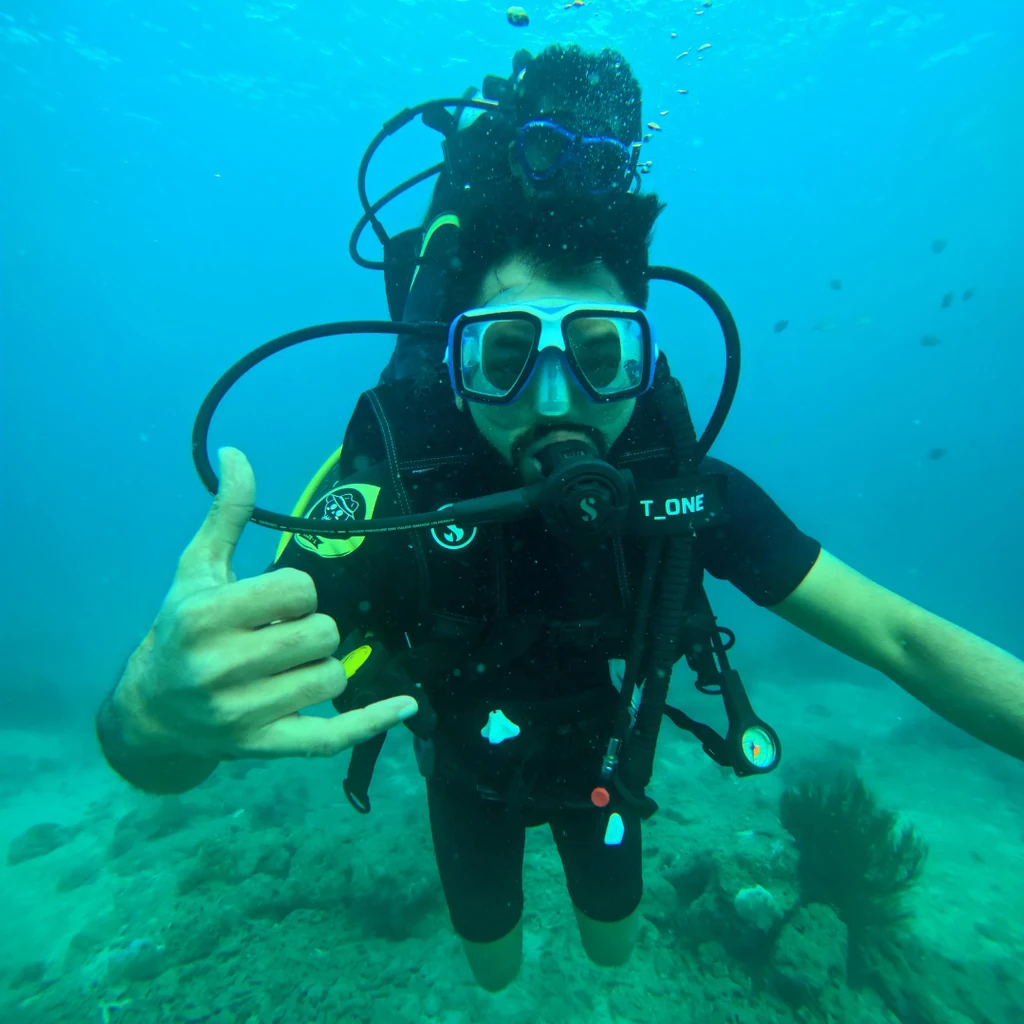
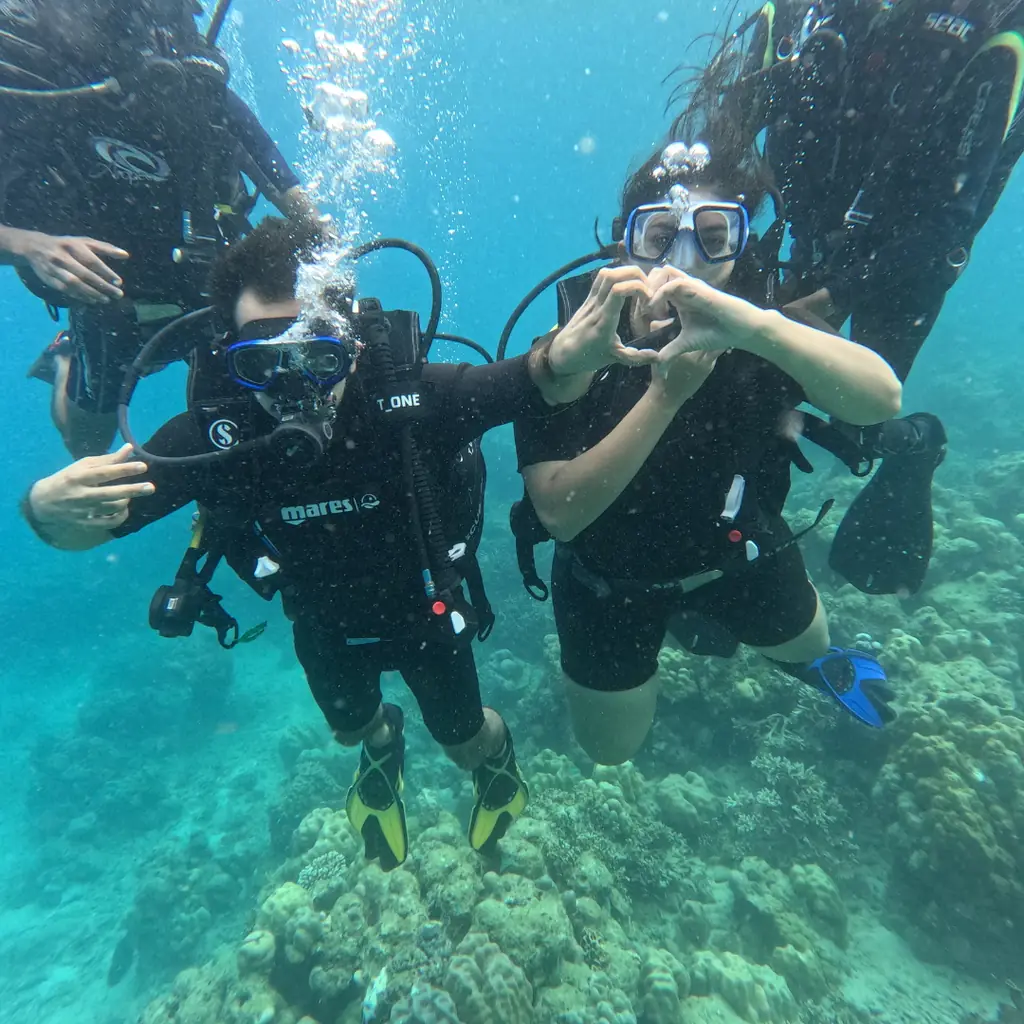
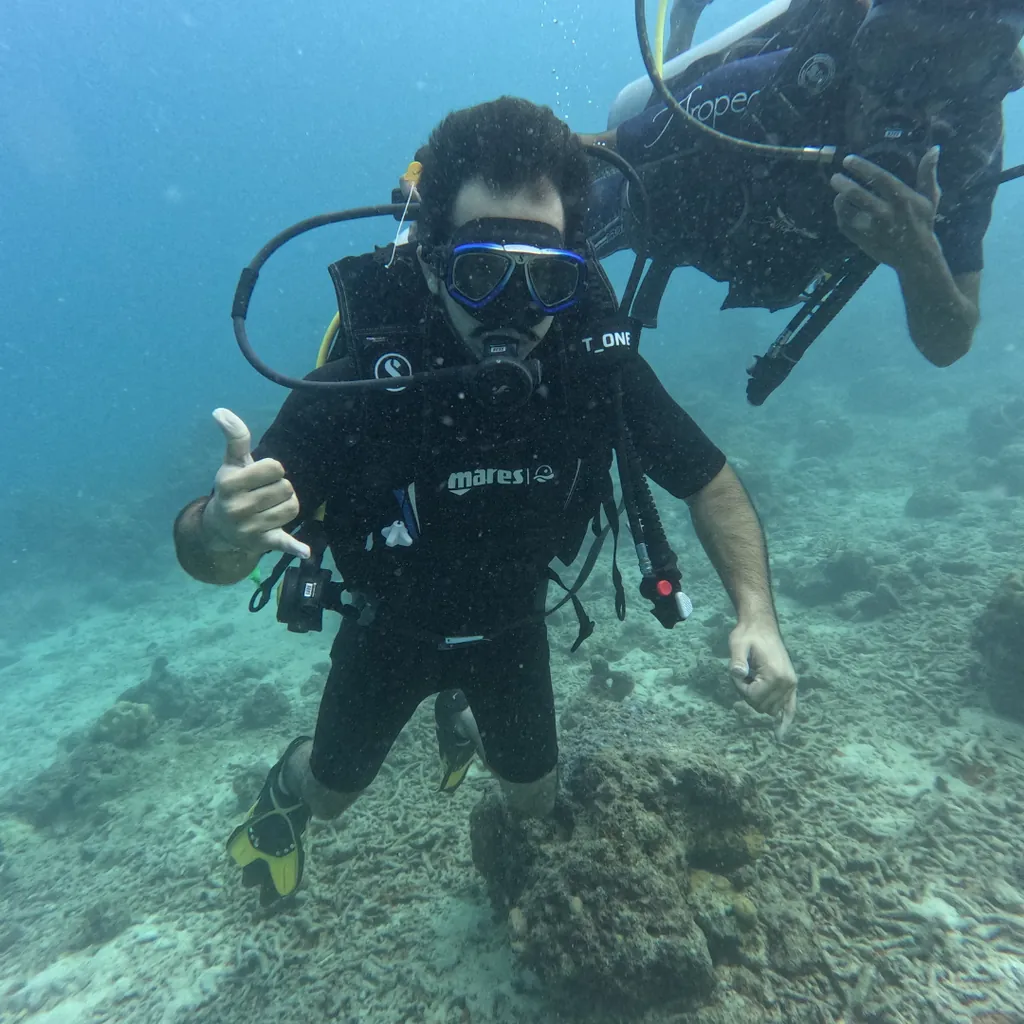
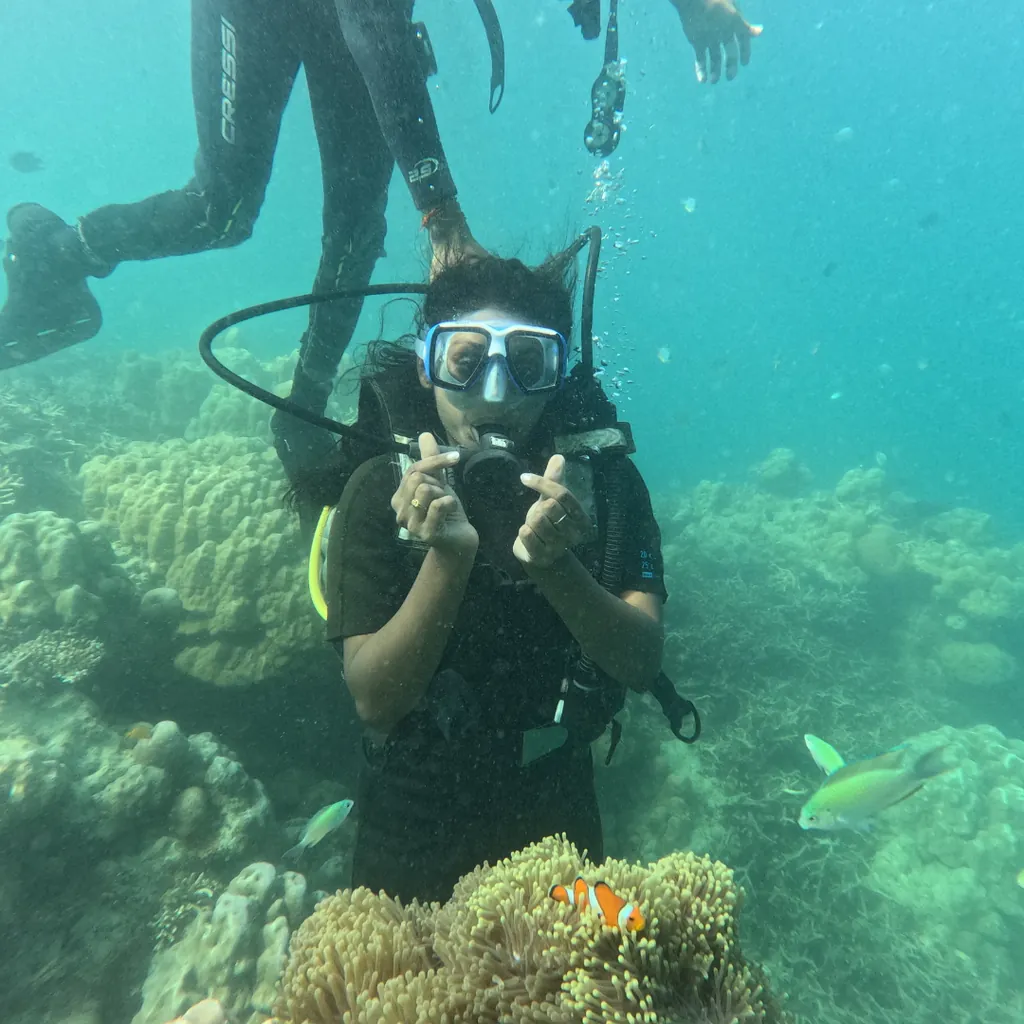
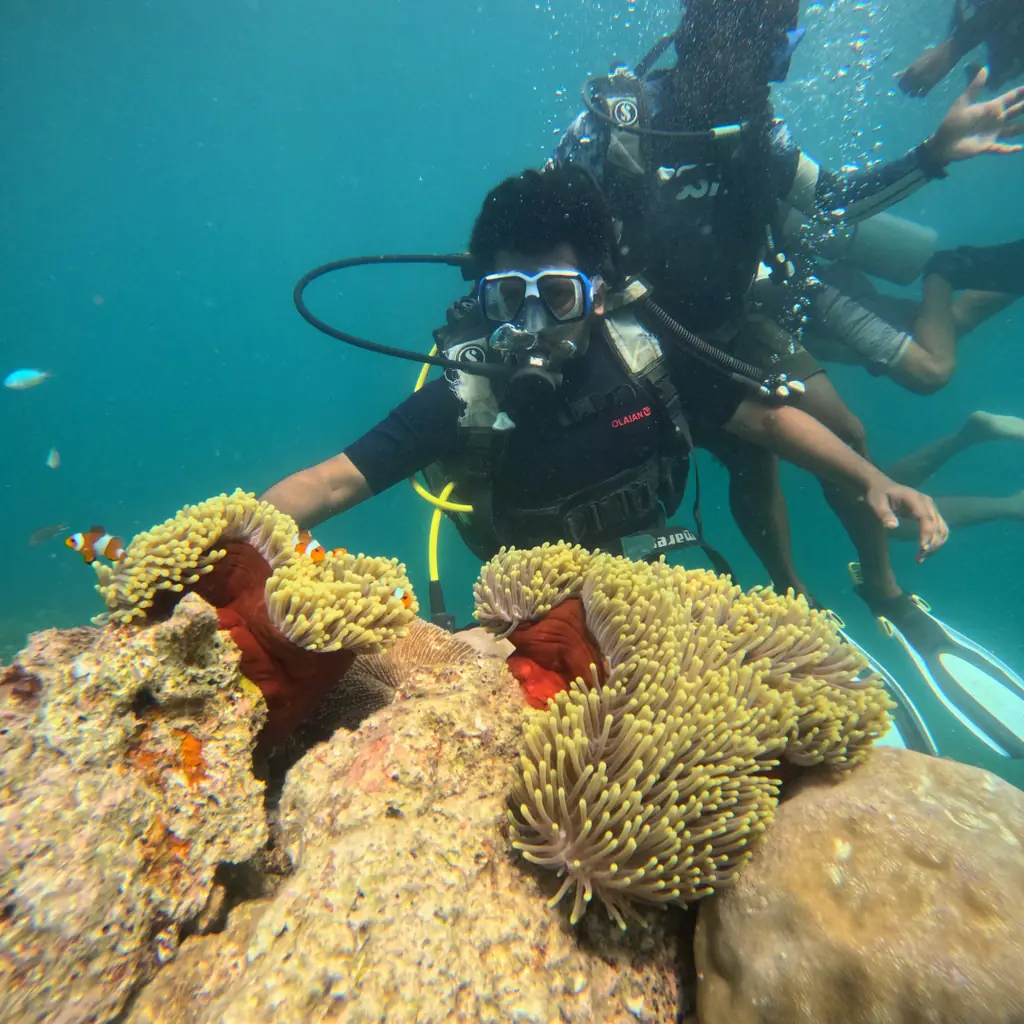
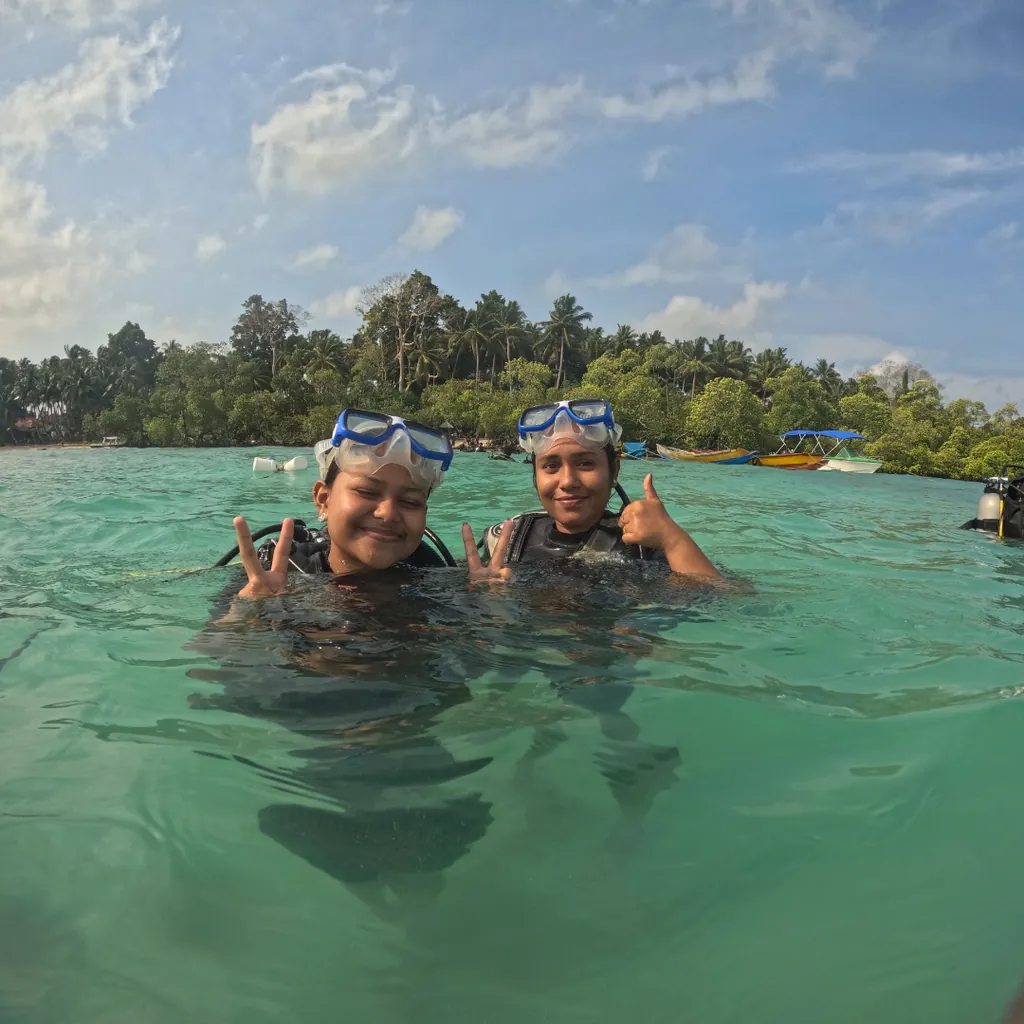
The only site in the Andaman archipelago where you see all 5 clownfish species and giant Tridacna clams in one dive. 5-min speedboat, 15-20 m visibility, non-swimmers welcome, 1-on-1 instructor.
Want more details?Tribe Gate Pro Upgrade
+15 min underwater (45 min total) · 10 extra photos + 2 extra videos
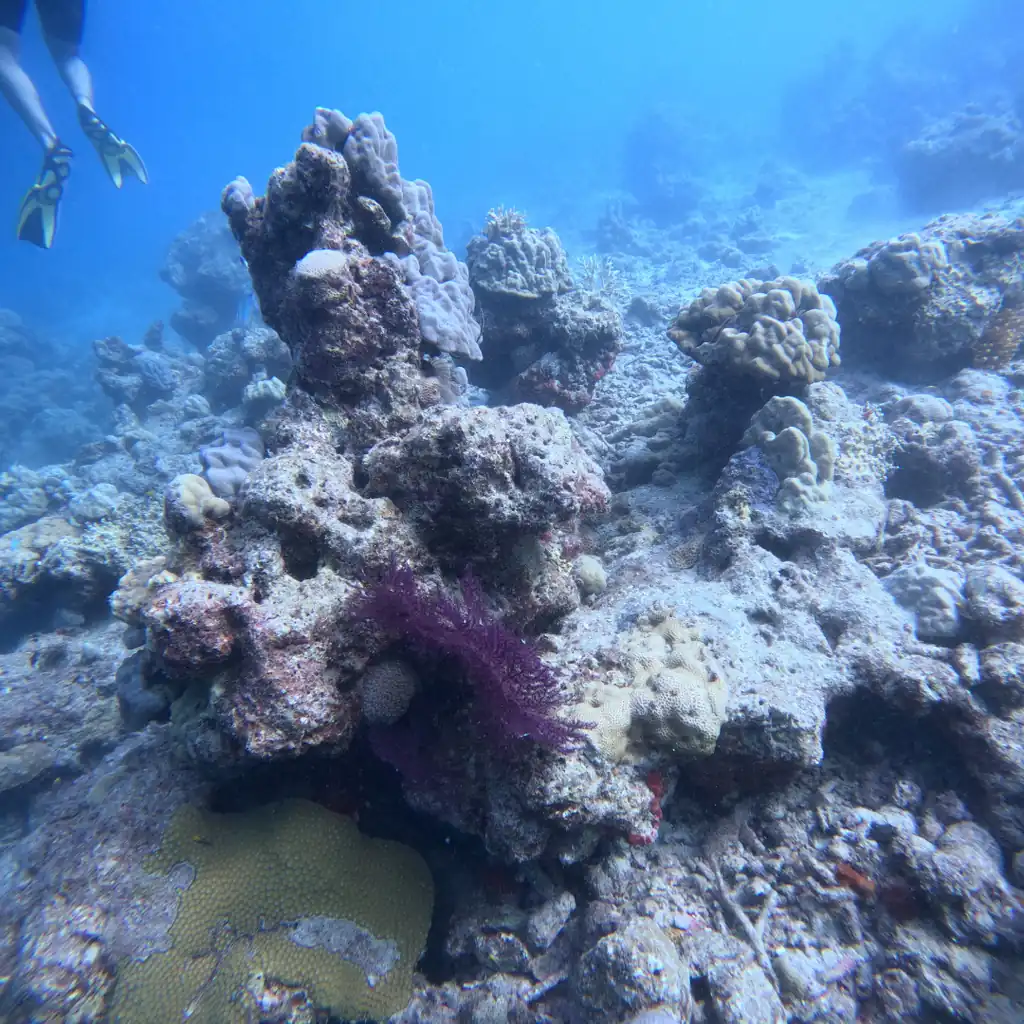
Tribe Gate is a submerged oval seamount five minutes by boat from Havelock's main dive base. The reef rises from the sandy seabed in concentric shelves from 3 to 15 metres. It has all five clownfish species found in Andaman waters, and more giant Tridacna clams than any other local dive site. The full topography, marine life list and GPS position are on the Tribe Gate dive site guide.
The other reason people pick Tribe Gate is the Pavona coral ruins, the bleached skeletal remains of a reef that died in the 2010 Indo-Pacific bleaching event. Moray eels live in the crevices now, nudibranchs sit on the pillars, and two-spot snappers school overhead. Most guests surface talking about that part rather than the clams.
Standard vs Pro: The standard dive is 30 minutes underwater with GoPro photos and videos. Upgrade to Pro (+₹1,000) for an extra 15 minutes underwater (45 min total), plus 10 extra GoPro photos and 2 extra videos, covering the deeper Pavona ruins and the full oval reef circuit.
Turn up at the jetty and we handle the rest, including the boat, the gear and your GoPro footage. Tribe Gate is one of seven sites you can choose when you book boat diving in Havelock.
Not suitable for: Anyone with active ear infections, recent surgery, or uncontrolled asthma on the day. Pregnant guests are advised not to dive. Not sure? Call us before booking, we'd rather advise you correctly first.
Most beginner dive sites give you coral and a few reef fish. Tribe Gate gives you two things no other site near Havelock has together: all five Andaman clownfish species in one dive, and the highest density of giant Tridacna clams on any reef here.
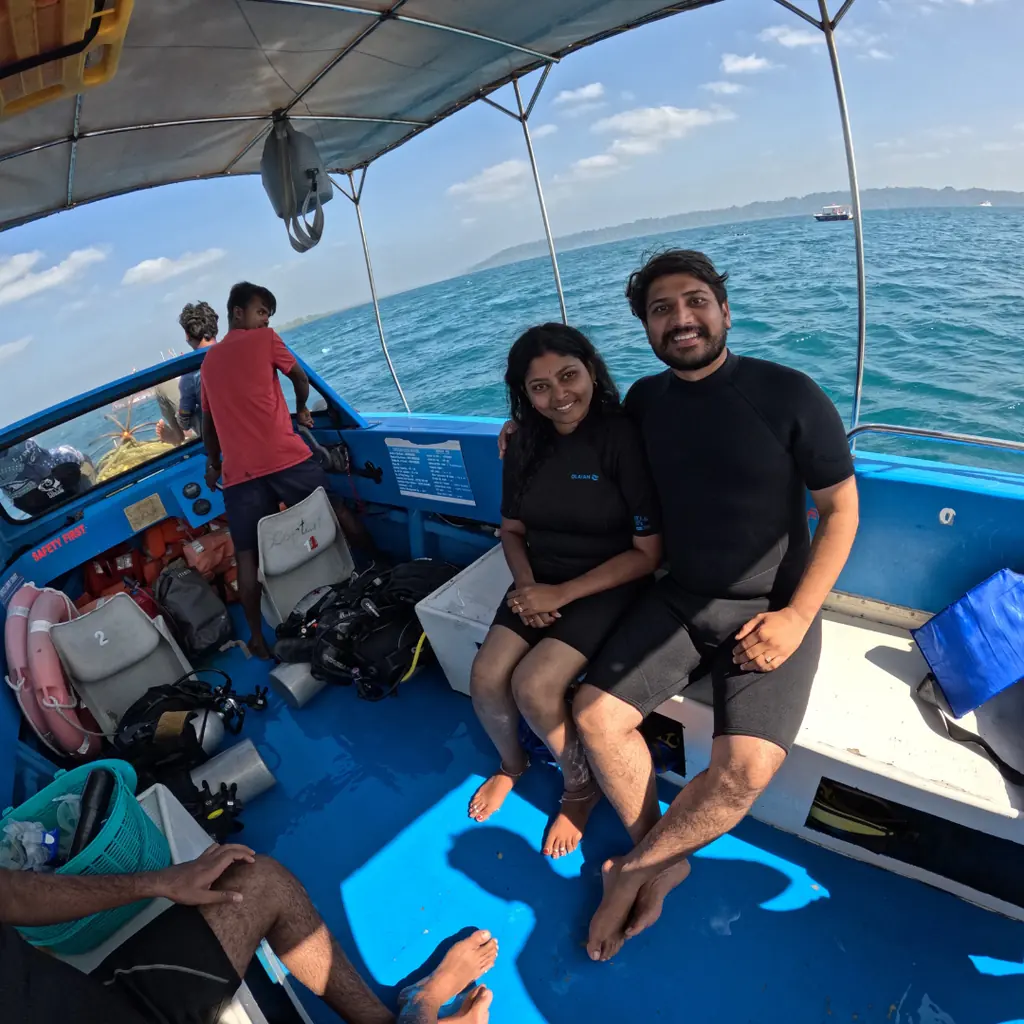
Tribe Gate, also known locally as Oval Reef, is an isolated submerged seamount 3km off Beach No. 3, in a sheltered channel between Havelock Island and John Lawrence Island. The boat takes five minutes from the main dive base, and there is a fixed mooring buoy so nobody has to drop anchor on the reef. Because the reef is a closed oval, you go down the mooring line, follow the edge round and come back up the same line.
Yes. Tribe Gate is a primary training site for first-time and non-certified divers. The average depth is 5 to 8 metres and your instructor is physically with you throughout the entire dive. The mooring line gives a clear reference point for both descent and ascent. No swimming ability is required or assessed.
Both include GoPro photos and videos of your dive. The standard package (₹4,500) is 30 minutes underwater. The Pro upgrade (+₹1,000 = ₹5,500) gives you an extra 15 minutes underwater, 45 minutes total, plus 10 extra photos and 2 extra videos. The extended time lets you cover the full oval reef including the deeper Pavona ruins section, the Tridacna clam beds, and the complete anemone garden circuit.
Almost certainly. Tribe Gate has the highest density of Tridacna giant clams of any dive site in the Andamans, and they're distributed throughout the reef at multiple depths. Your instructor knows exactly where they are. They close up fast when your shadow crosses them, which is worth watching from close range.
The main difference is access: Tribe Gate requires a 5-minute speedboat ride to reach the reef, while Nemo Beach is a direct shore entry from the beach. Tribe Gate is an isolated seamount with different marine life, notably the giant clams and all five clownfish species, and offers better visibility (15 to 20 m against 10 to 15 m). Both work for beginners. Tribe Gate simply shows you more, so on a good-weather day it is the one to pick for a first dive.
October to May is the recommended window, with November to February offering the busiest season and March to May providing the calmest seas and best visibility (18 to 20 m+). Tribe Gate is one of the few sites accessible year-round due to its sheltered position, so even monsoon-season dives are possible, and post-monsoon months (September to October) bring a lot of fish back onto the reef after the spawn. Visibility at Tribe Gate is more influenced by tides than rainfall, so even overcast days can produce clear water.
The Pavona ruins are the remains of a coral formation devastated in the 2010 Indo-Pacific bleaching event. Over 14 years, the skeletal structures have been colonised by an entirely different ecosystem: nudibranchs, moray eels, octopus, cardinal fish, and dense snapper clouds. The ruins now hold more life than the reef immediately beside them, which is not something a standard beginner dive in Andaman gives you.
The listed price of ₹4,500 (standard) or ₹5,500 (Pro) excludes GST. 18% GST applies as per Indian government regulations, bringing the totals to ₹5,310 and ₹6,490 respectively. Your invoice will show the full GST breakdown.

See why we are the top rated dive center in Andaman (Havelock) on Google & TripAdvisor
Tribe Gate scuba diving costs ₹4,500 plus 18% GST, which comes to ₹5,310 for the standard dive. That covers the speedboat both ways, all scuba equipment, a certified instructor who stays one-to-one with you for the whole dive, a theory and shallow-water session before you descend, and GoPro photos and videos sent to your phone the same day. The Pro upgrade adds ₹1,000 and takes you to ₹6,490 including GST, for 45 minutes underwater instead of 30 plus 10 extra photos and 2 extra videos. No certification is needed, non-swimmers are welcome, and the minimum age is 10.
The 30 minutes is time in the water, not time on the boat. Because Tribe Gate is only five minutes from the jetty, the whole outing takes about 1.5 to 2 hours door to door, which is the shortest boat dive we run. That matters more than it sounds: guests who are nervous about seasickness spend almost no time crossing open water, and the short run makes Tribe Gate easy to fit around a ferry or a flight on the same day.
Tribe Gate is a first dive for most of the people who book it. The reef starts at 3 metres, the mooring line gives you something to hold on the way down, and the oval shape means your instructor can circle the whole site and come back to the same point. If you have never dived before and you want the richest reef you can see without a certification, this is the site to pick.
It is not the cheapest way to try scuba in Havelock. If the budget matters more than the marine life, Nemo Beach shore diving starts at ₹2,500 and you walk in from the sand instead of taking a boat. If you are already certified, you do not need an intro dive at all: book fun dives from ₹3,000 and you can go deeper than the 12 metres a beginner is held to. And if you want to see several reefs rather than one, boat diving in Havelock covers seven sites with Tribe Gate among them.
The season runs October to May, and March to May usually gives the flattest sea and the clearest water. Tribe Gate is unusual among the boat sites because it sits in a sheltered channel between Havelock and John Lawrence Island, so it stays diveable on days when the outer reefs are closed for weather. Visibility here tracks the tide more closely than the rainfall, which is why an overcast morning can still give you 15 to 20 metres.
Morning slots fill first and the water is usually calmest before midday, so book a day or two ahead in peak season if you can. One thing to plan for at the end of your trip: leave at least 18 to 24 hours between your last dive and your flight out of Port Blair. If you want the full depth profile, GPS position and marine life list before you decide, the Tribe Gate dive site guide has it, and the Havelock dive sites index compares every reef we run.
We use cookies for analytics and ads (Google & Meta). They stay off until you allow them; essential ones always run. Privacy Policy.